


Why Your Brand Name Is Not Really Yours Until You Register It
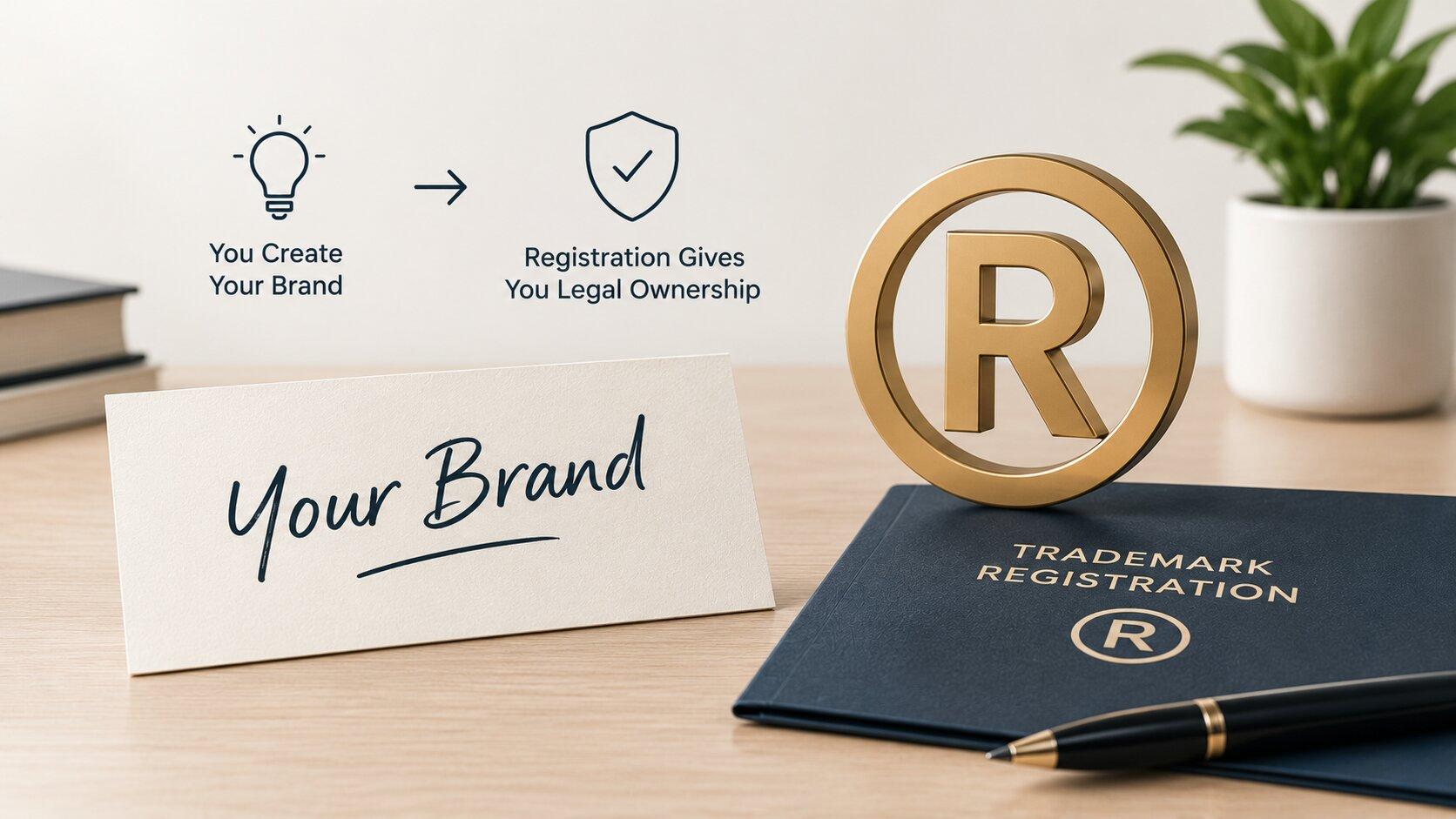
Imagine spending three years building your business from the ground up. The name is on your storefront, your invoices, your social media, maybe even a few billboards. Customers recognize it. Then one day, someone opens a shop two blocks away using a name so close to yours that your regular customers walk in by mistake—and you only discover that your legal options are surprisingly limited.
That scenario plays out more often than most business owners expect, and the reason is simple: using a name doesn't automatically mean you own it in the eyes of the law. Registration is what gives your brand legally enforceable trademark rights. Using proper trademark registration services in Pakistan early on is what turns a name people recognize into something a court will step in to protect.
This piece walks through what a trademark protects, who can apply, how the process unfolds, and the mistakes that most often derail an application.
What a Trademark Actually Does
A trademark is any word, logo, slogan, or combination of these that tells a customer exactly whose product or service they're looking at. Think about how instantly a swoosh, a script font, or a particular shade of red tells you who made something — without a single word of explanation needed.
Once that identifier is formally registered, the owner gains recognized legal rights across the country: the ability to stop unauthorized use, license the mark to others, and build long-term value around it. A name that's only ever been used informally — never filed, never certified — carries far weaker protection, and it becomes especially fragile the moment an actual dispute lands in front of a tribunal.
Registration doesn't create a brand's reputation. It gives whatever reputation already exists a legal backbone.
What's Actually at Stake Without It
Skipping registration isn't just a paperwork gap — it puts years of built-up trust at risk. A registered mark does several things an unregistered one simply can't:
- Puts the world on notice of your ownership, so anyone searching the register sees your claim before adopting something similar
- Shifts the burden of proof onto whoever challenges the mark later, rather than leaving it on you
- Grants exclusive nationwide rights to use, license, and commercially exploit the mark, including franchising arrangements
- Provides real legal grounds — injunctions, damages, and other remedies — against anyone copying it
- Strengthens how investors, buyers, or lenders value the business, since a properly owned mark is a transferable asset
In markets where lookalike branding and counterfeit products are common, a registration certificate is what actually gets enforced in court — not a claim made on a social media page.
Who's Actually Eligible to Apply
There's a common assumption that you need an established, registered company before you can even start. That's not true. Applicants can include:
- Individuals, even those not yet actively trading, provided there's a genuine intention to use the mark
- Sole proprietors and early-stage startups
- Partnerships and private limited companies
- Foreign companies and non-resident applicants planning to use or license a brand within Pakistan
Where a business does already exist, the documentation simply needs to match up — the applicant's identity and business proof should be consistent across the application.
The Legal Backbone Behind the System
Trademark protection in Pakistan operates under a dedicated ordinance, administered through a specialized registry, with goods and services organized under the internationally recognized NICE Classification System spanning 45 distinct classes.
One detail that surprises a lot of first-time applicants: protection is territorial. Registering in Pakistan protects you only within Pakistan — it doesn't automatically extend anywhere else. If you've already filed in your home country, a priority claim can often be made within six months of that original filing, thanks to international treaty arrangements Pakistan is part of. There's also a separate international filing route available through a global treaty system, useful for businesses planning genuine expansion beyond Pakistan's borders, though it works alongside direct local filing rather than replacing it.
What Qualifies for Protection — and What Doesn't
Trademarks cover far more than a plain name and logo. Generally registrable categories include:
- Words, brand names, and slogans
- Logos and visual devices
- Service marks, for businesses selling services rather than physical goods
- Certification marks, indicating a product meets a defined standard
- Collective marks, used by members of an association
- In some cases, distinctive colours, three-dimensional shapes, or even sounds
On the other hand, certain things generally can't be registered:
- Purely generic or descriptive terms
- Marks that lack any real distinctiveness
- Geographic names used descriptively
- Flags, state emblems, or symbols of international bodies
- Marks that offend public order or moral sensitivities
- Applications filed in bad faith
If a brand name closely describes what it sells, it's far more likely to run into an objection — worth resolving before filing, not after.
Picking a Name That Can Actually Survive Examination
Not every name carries the same legal strength. Roughly speaking, from strongest to weakest:
- Invented or made-up words offer the strongest protection, since they carry no prior meaning at all
- Arbitrary names — a real word applied to something unrelated — are also strongly protectable
- Suggestive names, which hint at a benefit without stating it outright, are usually registrable
- Descriptive or geographic names face a much harder path
- Purely generic terms are typically not registrable at all
Before spending money on packaging, signage, or a new website built around a name, a clearance search is a fraction of the cost of a forced rebrand later.
Choosing the Right Class
Registration only protects the specific category of goods or services listed in the application. File under the wrong class, and a business could end up holding a certificate that protects something entirely unrelated to what it actually sells. Businesses operating across multiple categories may need more than one class filed.
There's also a choice between registering plain text (a wordmark) versus text combined with a logo — each carries a different scope of protection, and getting this decision right before filing matters more than most applicants realize going in.
How the Process Actually Unfolds
Broadly, a trademark application moves through these stages:
- Clearance search — confirming the mark isn't identical or confusingly similar to something already registered or pending
- Filing — submitting the application with the mark's representation and the correct class of goods or services
- Formalities check — a review for completeness, with any gaps needing correction within a set window
- Substantive examination — checking the mark for distinctiveness and conflicts with existing rights
- Publication — an accepted mark is published for public notice
- Opposition window — third parties get a limited period to formally object; if someone does, a response process follows
- Certificate issuance — once unopposed or resolved favourably, the registration is finalized
- Renewal — valid for ten years, renewable indefinitely in further ten-year blocks
Timelines vary depending on examiner workload and whether an opposition is filed, but a straightforward, unopposed application commonly takes somewhere between six months and roughly two years.
Filing Online
Electronic filing is available as an alternative to filing in person or by courier. It doesn't remove any of the substantive steps above — the same examination, publication, and opposition process still applies — but it does shorten administrative delays and makes tracking an application considerably easier, particularly for applicants located outside the major regional office cities.
Registering in Local Script
If a brand is recognized locally by an Urdu name or another local script, registering that version alongside — or instead of — the Latin-character version can strengthen recognition and protection in markets where customers primarily encounter the brand that way.
TM vs. the Registered Symbol
- The TM symbol simply signals a claim to a mark, whether or not it's gone through formal examination — anyone can use it while an application is pending, or even before filing.
- The registered symbol can only be used once registration has actually been granted. Using it prematurely is misleading and can weaken your position in a later dispute.
What Happens if Someone Copies Your Mark
Using an identical or confusingly similar mark on the same or related goods generally amounts to infringement, with available remedies including injunctions, damages, and an account of profits. Registration itself doesn't actively police the market, though — enforcement is the owner's responsibility. That typically starts with monitoring new filings, watching for copycats, and issuing a formal notice, often before matters escalate into a full legal proceeding.
A Registered Company Isn't the Same as a Registered Trademark
This is one of the most common misunderstandings out there. Registering a company gives you a recognized legal entity name — nothing more. It grants no nationwide rights over a logo, tagline, or brand name. Only formal trademark registration does that. Plenty of businesses operate for years under the mistaken belief that incorporating their company already protected their brand.
Common Reasons Applications Get Rejected
Most refusals trace back to a handful of avoidable issues:
- Too similar to an existing registered or pending mark
- Filed under the wrong class of goods or services
- Wording that's too descriptive or generic to qualify as distinctive
- Incomplete forms or missing details that trigger a formalities objection
- Ignoring an objection notice until the deadline to respond has passed
None of these are difficult to avoid with a properly prepared filing from the outset — which is usually the difference between a smooth registration and months of unnecessary delay.
Firms such as Khatri IP Attorneys work through these filings regularly, and the value of experienced guidance tends to show up most clearly at exactly the stages where self-filed applications run into trouble — classification, distinctiveness, and objection responses.
Conclusion
A brand name only becomes a real, enforceable asset once it's formally registered. Until then, it's just something you've been using — vulnerable to a competitor adopting something confusingly similar, with very little a court can do to help. Registration doesn't take years to accomplish, and the cost of doing it properly is small compared to the cost of a forced rebrand or an unwinnable dispute later. If your brand name, logo, or slogan has real commercial value to your business, it's worth treating its legal protection with the same seriousness you'd give any other core asset.
Frequently Asked Questions
Is trademark registration legally required in Pakistan?
No, it's not mandatory. But an unregistered mark carries only limited, informal protection, and defending it in a genuine dispute becomes far harder without a certificate behind it.
How long does the registration process usually take?
Typically somewhere between six months and two years, depending on whether the examiner raises objections and whether any third party files an opposition.
How long does a registered trademark stay valid?
Ten years from the filing date, and it can then be renewed indefinitely in further ten-year terms.
Can an individual or freelancer register a trademark without owning a company?
Yes. Sole proprietors, freelancers, and individuals can apply directly, without needing a registered company behind them.
Does registering in Pakistan protect my brand internationally?
No — protection is territorial. A Pakistani registration only covers Pakistan, though priority claims and international filing treaties can help extend protection to other countries through separate, coordinated filings.

 English
 Arabic
 French
 Spanish
 Portuguese
 Deutsch
 Turkish
 Dutch
Dutch
 Italiano
 Russian
 Romaian
 Greek
Greek