


Custom Internal Tools for Secure Business Data Management
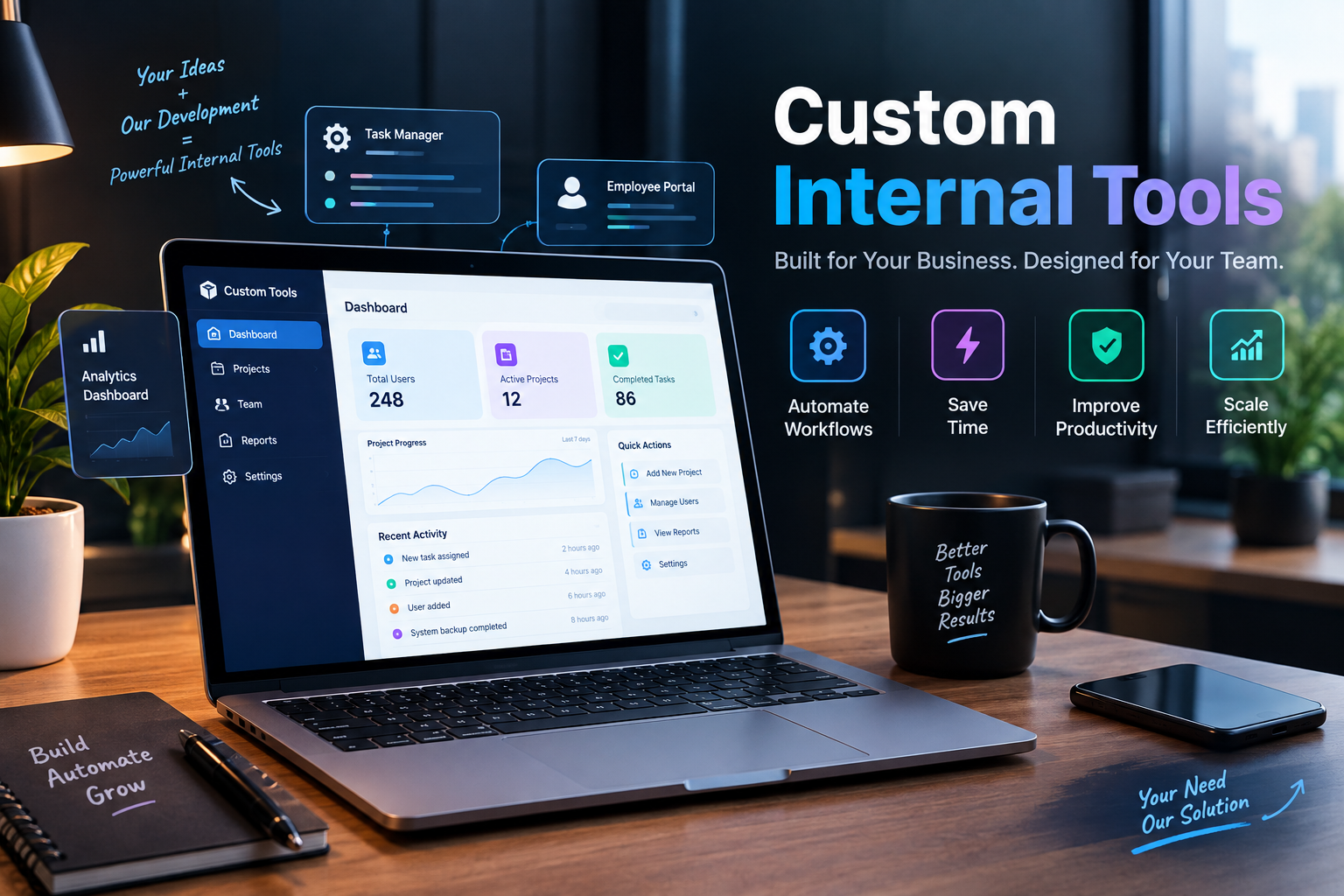
Data has become one of the most important resources for modern businesses. Companies manage customer records, employee information, financial data, project details, documents, and operational records every day.
When this information is stored across unrelated spreadsheets and applications, managing access and maintaining consistency can become challenging. Custom internal tools can provide organizations with a structured environment for managing internal information.
Centralized Data Management
A custom application can bring relevant business information into a centralized system.
Instead of relying on multiple spreadsheets, employees can use a dedicated interface to search, update, and manage records.
Centralization can make information easier to access while reducing unnecessary duplication.
Role-Based Access
Not every employee needs access to every piece of information.
A custom internal tool can be designed around different user roles.
For example, a sales employee may access customer records, while a finance employee may have access to financial information.
Administrators can have broader permissions when required.
This approach supports the principle of giving users access appropriate to their responsibilities.
Authentication
Authentication is an important part of internal software.
Businesses can implement appropriate login systems and identity management based on their requirements.
Additional security measures may also be considered for sensitive applications.
Security should be included during the architecture and development stages rather than treated as an afterthought.
Data Validation
Incorrect information can create problems throughout an organization.
Custom tools can include validation rules that help ensure employees enter information in an appropriate format.
For example, required fields can prevent incomplete records, while predefined options can reduce inconsistent entries.
Better data quality can improve reporting and operational decisions.
Activity Tracking
Businesses may need to understand who changed information and when.
An internal tool can include activity logs for relevant actions.
This can help administrators investigate unexpected changes and provide greater visibility into important workflows.
The exact logging requirements should depend on the sensitivity and purpose of the application.
Secure Integrations
Internal tools often need to communicate with external applications.
APIs can connect the tool with CRM platforms, accounting software, databases, cloud services, and other business applications.
These integrations should be designed carefully to protect authentication credentials and business information.
Managing Documents
Many businesses handle internal documents as part of daily operations.
A custom system can organize documents according to departments, projects, customers, or workflows.
Search and access controls can make it easier for authorized employees to find the information they need.
Reducing Spreadsheet Risks
Spreadsheets can be useful for many tasks, but they can become difficult to manage when several people edit large files.
Version conflicts, accidental changes, and inconsistent formatting can create operational problems.
A structured internal application can replace selected spreadsheet workflows with controlled forms and databases.
Backup and Recovery
Data protection also requires planning for unexpected incidents.
Businesses should consider appropriate backup and recovery strategies for their internal applications.
The exact approach depends on the infrastructure, data sensitivity, and business requirements.
Regular testing can help ensure that recovery procedures work when they are needed.
Privacy Considerations
Internal tools may contain personal or commercially sensitive information.
Organizations should understand what information the application stores, who can access it, and how it is processed.
Privacy and compliance requirements vary by location and industry, so businesses should consider relevant legal and regulatory obligations.
Security Testing
Before deploying an internal application, organizations should test important security controls.
Testing can help identify weaknesses in authentication, authorization, input validation, integrations, and other areas.
Ongoing security reviews may also be necessary as the application evolves.
Updating the Tool
Security is not a one-time task.
Software dependencies, infrastructure, integrations, and business requirements can change.
Regular updates and maintenance help keep the internal tool aligned with current operational and security needs.
Conclusion
Custom internal tools can provide businesses with greater control over internal data, workflows, and user access.
By combining centralized information, role-based permissions, validation, activity tracking, secure integrations, and appropriate backup practices, organizations can build more structured internal systems.
The specific security architecture should always reflect the application's purpose and the sensitivity of the information it handles. Careful planning from the beginning can create a stronger foundation for reliable long-term internal software.

 Arabic
 French
 Spanish
 Portuguese
 Deutsch
 Turkish
 Dutch
Dutch
 Italiano
 Russian
 Romaian
 Portuguese (Brazil)
 Greek
Greek