


Japanese Hair Care Routine: 7 Steps for Smooth, Healthy Hair
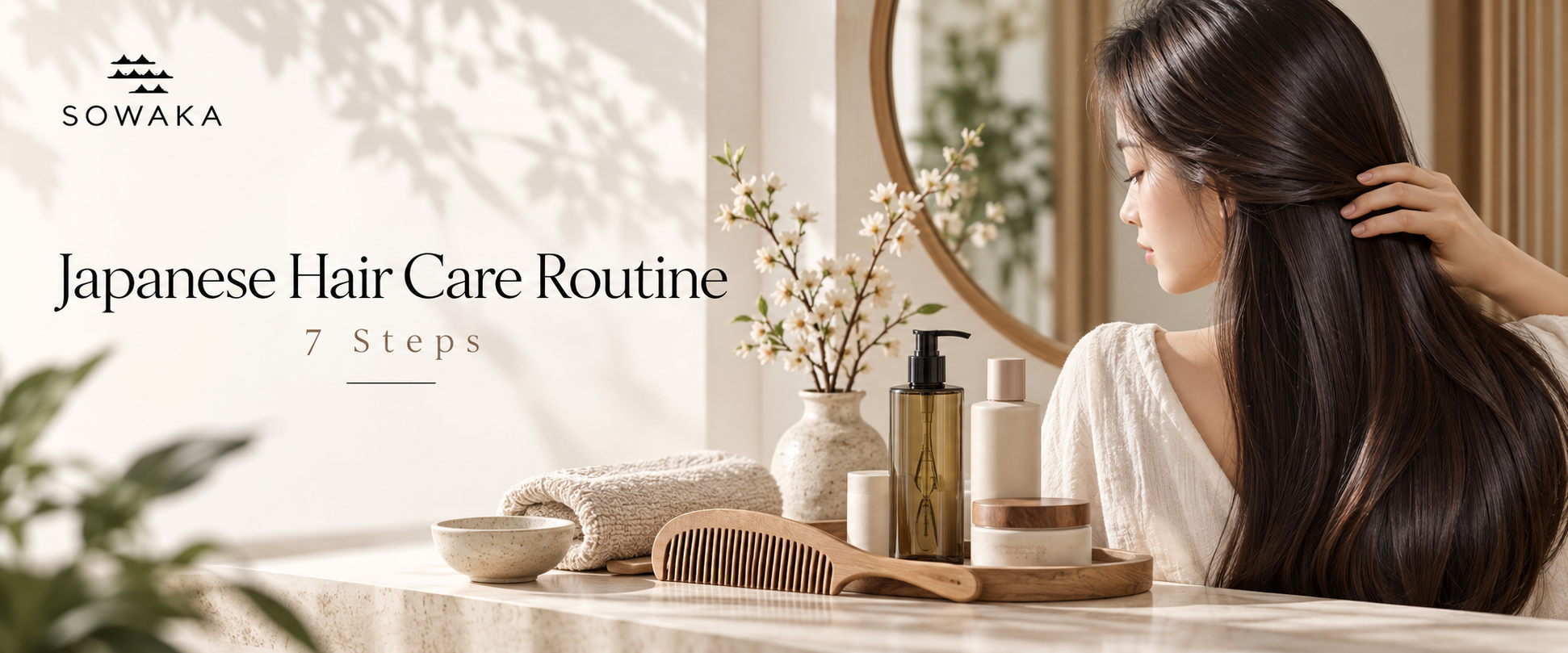
Japanese hair care focuses on scalp health, gentle cleansing, and steady moisture rather than heavy styling. The seven steps below cover brushing, scalp massage, mild shampooing, conditioning, leave-in care, low-heat drying, and a weekly treatment. Together they help reduce frizz and breakage, and many people see softer, shinier hair after a few weeks of consistency.
Why the Japanese Approach Works
In Japan, hair care is treated as an extension of skin care. Healthy hair grows from a balanced, clean, well-circulated scalp, so the routine starts at the roots instead of chasing damage at the ends. Stylists at Sowaka NYC often tell clients that patience and gentle handling do more for hair than any single product.
Step 1: Detangle Before You Wash
Start with dry hair and a wide-tooth comb or a soft boar-bristle brush. Work from the ends upward, holding the hair above the knot so you don't pull at the roots. Hair is most fragile when wet, and detangling first means less snapping in the shower. It also loosens surface buildup and spreads natural oils.
Step 2: Massage Your Scalp
Spend two to three minutes massaging your scalp with your fingertips, using slow circular motions. Some people apply a light pre-wash oil first, and camellia (tsubaki) oil is a traditional Japanese choice. Massage boosts circulation and helps lift dead skin and product residue. Keep the pressure gentle. Nails and scrubbing irritate the scalp.
Step 3: Cleanse Gently With Lukewarm Water
Hot water strips moisture and can leave the scalp tight and reactive. Use lukewarm water and a small amount of mild shampoo, focusing it on the scalp rather than the lengths. The lather rinsing down will clean the ends well enough. Look for amino acid–based cleansers, which are common in Japanese formulas and tend to be softer than harsh sulfates. If you're shopping for Japanese hair care products, check the ingredient list for these gentle surfactants and avoid choosing by packaging alone.
Step 4: Condition the Mid-Lengths and Ends
Squeeze excess water from your hair, then apply conditioner from the mid-lengths down, keeping it off the scalp. Leave it on for two to three minutes and rinse thoroughly. Ingredients such as rice bran, green tea extract, and silk-derived proteins are popular in Japanese formulas for adding softness and shine. Fine hair may prefer a lighter conditioner, while thick or coarse hair usually benefits from a richer one.
Step 5: Blot, Don't Rub
Press your hair gently with a microfiber towel or soft cotton T-shirt instead of rubbing it. Rubbing roughens the cuticle, which causes frizz. Then apply a leave-in cream or light oil to damp hair, concentrating on the ends. This step seals in moisture and makes the hair easier to style.
Step 6: Dry With Low Heat
Air-dry as much as you can, or use a hair dryer on a medium-low setting, keeping it about six inches from your hair. Point the nozzle down the hair shaft so the airflow smooths the cuticle. Use a heat protectant if you style with hot tools, and try to cut back on flat irons and curling irons. Reducing heat is one of the simplest ways to keep hair healthy.
Step 7: Add a Weekly Treatment
Once a week, use a deep-conditioning mask or a hair oil treatment. Apply it to damp hair, leave it on for the time on the label, and rinse well. At night, a silk pillowcase or a loose braid reduces friction while you sleep. Skip heavy masks if your hair is fine and gets weighed down easily, and use them every other week instead.
Common Questions
How often should I wash my hair?
It depends on your scalp. Oily scalps may need washing daily or every other day, while dry or curly hair often does well with two to three washes a week. Adjust based on how your scalp feels, not a fixed rule.
Can this routine work for all hair types?
Yes. The steps are gentle and adaptable. Straight, wavy, curly, and coily hair can all follow the same order, with product weight and wash frequency adjusted to suit the texture.
How long until I see results?
Hair grows slowly, so give it at least four to eight weeks. Softness and reduced frizz often show up before visible changes in strength.
Final Thoughts
You don't need a dozen products to get healthy hair. A calm scalp, gentle washing, light heat, and regular moisture make the biggest difference over time. That's the heart of Japanese hair care, and it's why the approach works across so many hair types. For a personalized recommendation, a consultation with the team at Sowaka NYC can help you match this routine to your hair's texture and needs.

 Arabic
 French
 Spanish
 Portuguese
 Deutsch
 Turkish
 Dutch
Dutch
 Italiano
 Russian
 Romaian
 Portuguese (Brazil)
 Greek
Greek