


How to Choose a Storage Unit Without Overspending
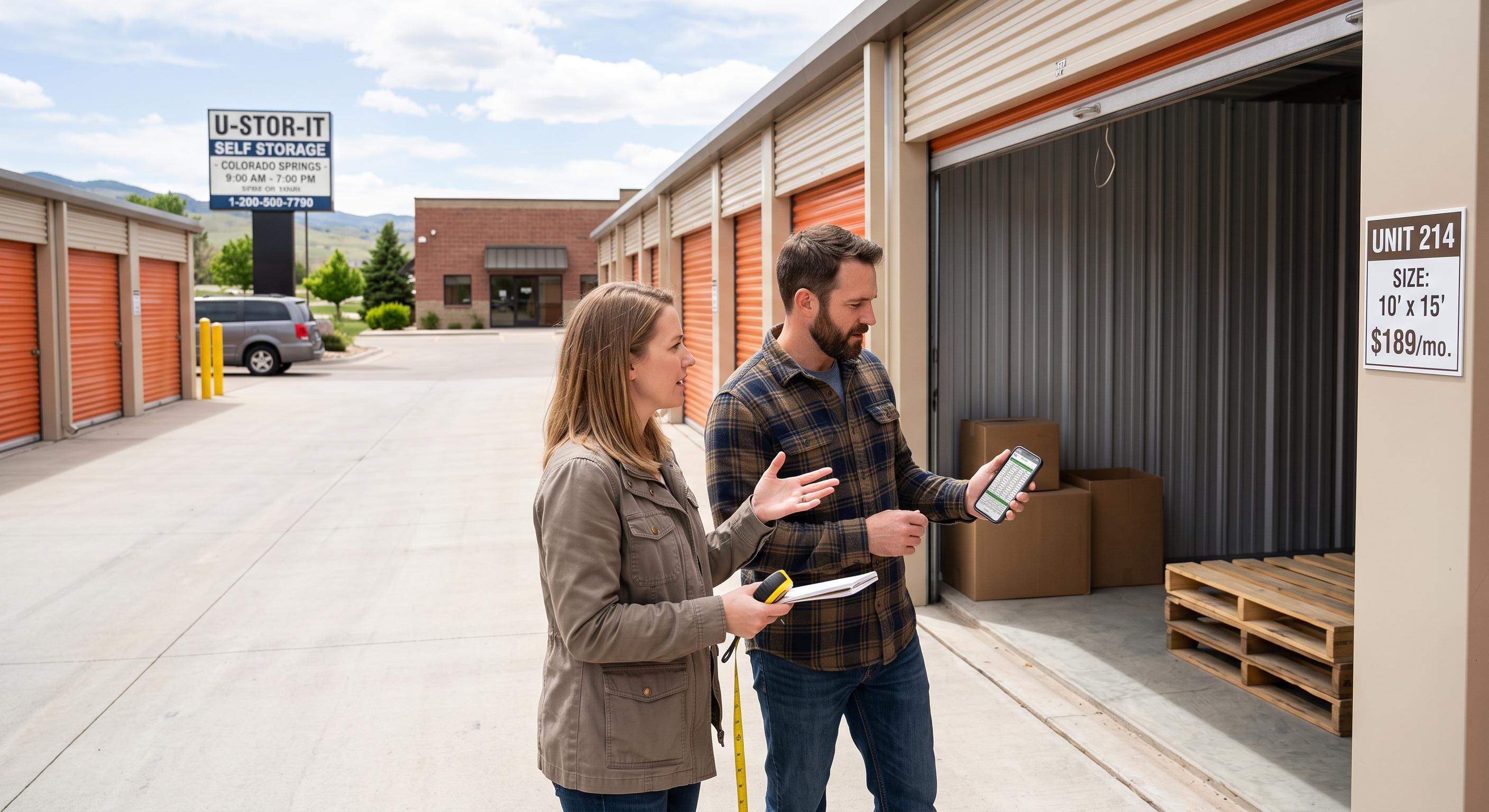
Choosing a storage unit can feel simple at first. You find a facility, pick a unit size, pay the monthly fee, and move your belongings inside. But storage costs can add up quickly when you choose too much space, overlook extra fees, or keep items stored longer than planned.
A clear storage budget can help you avoid these problems. Before signing a rental agreement, you need to understand the size of the unit, monthly rent, access rules, insurance, moving expenses, and possible price increases. A few smart decisions can make a noticeable difference over several months.
This guide explains seven practical ways to choose storage without overspending. You'll learn how to estimate the right amount of space, compare facilities, identify hidden charges, reduce moving costs, and build a realistic storage budget.
Why a Storage Budget Matters
A storage unit isn't just a monthly rental expense. Your actual cost may include the unit itself, administrative fees, insurance, locks, transportation, packing supplies, moving labor, and eventual delivery.
For example, a unit advertised at $100 per month may seem affordable. However, if you need $25 of insurance, $15 in administrative charges, and several hundred dollars for transportation, your first-month cost can be much higher than expected.
That's why your storage budget should cover the complete storage experience rather than just the advertised rental price.
A good budget should answer five basic questions:
- How much space do I actually need?
- How long will I need it?
- What will the storage unit cost each month?
- What additional fees will I pay?
- How much will moving items into and out of storage cost?
When you answer these questions before renting, you have a much better chance of avoiding unpleasant surprises.
The goal isn't always to find the cheapest storage facility. Instead, you're looking for the best value for your particular situation.
Calculate How Much Storage You Really Need
The first and most important way to protect your storage budget is choosing the right unit size.
A unit that's too small creates frustration. You'll struggle to organize boxes, may need to stack items unsafely, and could eventually need a second unit. On the other hand, a unit that's too large means you're paying every month for empty floor space.
Before visiting a storage facility, make a basic inventory of everything you intend to store.
Start With a Home Inventory
Walk through each room and write down the furniture, appliances, boxes, seasonal items, tools, and other belongings that will go into storage.
Group everything into categories such as:
- Bedroom furniture
- Living room furniture
- Dining furniture
- Kitchen appliances
- Electronics
- Clothing
- Books
- Holiday decorations
- Sports equipment
- Tools
- Business inventory
- Moving boxes
This simple exercise gives you a better idea of how much space you'll need.
Don't Store Everything You Own
Storage is often a good opportunity to declutter.
Before putting something into a box, ask yourself:
Would I pay to store this item for another year?
If the answer is no, consider donating, selling, recycling, or disposing of it before renting your unit.
This matters because the cheapest storage unit is often the one you don't need.
Storage Unit Size Guide
The following table provides general examples. Actual capacity varies by facility, unit shape, ceiling height, and how efficiently you pack.
| Storage Size | Approximate Use | Best For |
|---|---|---|
| 5 × 5 ft. | Small storage | Boxes, documents, seasonal items |
| 5 × 10 ft. | Small room | Bedroom furniture and boxes |
| 10 × 10 ft. | Medium storage | Apartment or small-home contents |
| 10 × 15 ft. | Larger storage | Multi-room household contents |
| 10 × 20 ft. | Large storage | Larger home or major move |
| 10 × 30 ft. | Very large storage | Large household or business inventory |
These are only planning estimates. You should confirm capacity with the storage provider.
Avoid Paying for Empty Space
Good organization can sometimes allow you to rent a smaller unit.
Use uniform boxes when possible. Label each box clearly and create an aisle so you can reach items without unloading the entire unit.
Place large furniture around the edges and smaller boxes toward the center. Use shelves or stackable containers if the facility permits them.
However, don't stack heavy items dangerously or block ventilation, doors, or access points.
Think Vertically
Many storage units have substantial ceiling height. Using vertical space efficiently can reduce the amount of floor space you need.
For example, instead of spreading 20 boxes across the floor, stack them safely in stable columns.
You should still keep fragile belongings protected and avoid placing extremely heavy boxes above items that could be damaged.
Compare the Total Storage Cost, Not Just the Monthly Price
Watch for Common Storage Fees
Depending on the facility, you may encounter:
- Administration fees
- Security deposit
- Insurance or protection plan
- Required lock purchase
- Late payment fees
- Access fees
- Moving truck charges
- Elevator or equipment fees
- Special handling charges
- Climate-control premiums
Not every facility charges all of these. That's why it's important to ask for a complete price breakdown before committing.
Ask for the "All-In" Price
Instead of asking only, "How much is a 10 × 10 unit?" ask:
"What will I actually pay each month, including required fees and protection?"
This question can reveal differences between competing facilities.
Be Careful With Promotional Pricing
Storage companies sometimes advertise discounted introductory rates.
A promotional rate can be useful if you're storing belongings for a short period. But if you expect to rent for a year, you should ask what happens after the promotion ends.
Ask:
- What is the regular monthly price?
- How long does the promotional rate last?
- Can the rent increase later?
- How much notice will I receive?
- Are there annual administrative fees?
The goal isn't to avoid promotions. It's to understand them.
A low first-month price doesn't necessarily mean a low long-term price.
Choose Only the Storage Features You Actually Need
Storage facilities offer many features. Some are extremely useful, while others may not matter for your belongings.
Your storage budget should reflect your actual needs.
Climate-Controlled Storage
Climate-controlled storage can help protect certain belongings from extreme temperature or humidity changes.
It may be worth considering for:
- Wooden furniture
- Important documents
- Electronics
- Artwork
- Musical instruments
- Photographs
- Certain antiques
- Sensitive business inventory
However, you may not need climate control for every item.
Plastic outdoor equipment, basic tools, patio furniture, and some durable household items may have different storage requirements.
Always follow the manufacturer's storage recommendations for valuable or sensitive products.
Security Features
Security should be part of your decision, but don't automatically pay for every premium feature.
Look for practical protections such as:
- Controlled entry
- Good lighting
- Surveillance cameras
- Secure gates
- Individual unit alarms where available
- Well-maintained grounds
You should also ask about the facility's access hours.
A cheaper unit isn't necessarily better if you need frequent access and the facility makes that difficult.
Drive-Up Access
Drive-up units can be especially convenient if you're storing heavy furniture, appliances, tools, or business inventory.
Instead of carrying everything through hallways or elevators, you can often park near the unit.
If you'll only visit the unit once, this feature may not be important. If you'll visit weekly, it could save time and effort.
Choose a Storage Location That Fits Your Budget
Location has a direct impact on both convenience and transportation costs.
A storage facility close to your home may charge more than one farther away. But a cheaper unit 30 minutes away could cost more overall if you're constantly driving back and forth.
Calculate Transportation Costs
Suppose a distant facility saves $30 per month.
That sounds good.
But if you make four round trips each month and spend significantly more on fuel and travel time, the savings may disappear.
Consider:
- Distance from your home
- Fuel costs
- Tolls
- Parking
- Truck rental
- Mileage charges
- Your time
- Frequency of visits
This is particularly important when you're using storage for several months.
A Simple Location Formula
Think of your total storage cost as:
Storage rent + fees + transportation + moving labor = real storage cost
This gives you a more realistic picture.
Consider Storage Near Your New Home
If you're moving across the country and won't need your belongings immediately, storage near your destination may make sense.
For example, a household moving from Atlanta to Austin may temporarily store furniture near Austin while waiting for the new home to become available.
In this situation, coordinating the storage facility with your moving company can make the process smoother.
This is one reason a moving directory such as My Good Movers can be useful when researching moving providers for different stages of a relocation.
Reduce Moving and Transportation Costs
Your storage unit may be affordable, but moving your belongings into it can create another major expense.
You can protect your storage budget by planning transportation carefully.
Compare Your Moving Options
Depending on the size and distance of your move, you might consider:
- Full-service movers
- Labor-only movers
- Moving truck rental
- Portable storage containers
- Trailer rental
- Help from friends and family
The right choice depends on your location, shipment size, timeline, and physical ability.
For larger household moves, compare multiple moving estimates rather than accepting the first quote.
The Federal Motor Carrier Safety Administration recommends getting written estimates and comparing movers carefully. For interstate moves, consumers should also verify that the mover is properly registered.
Don't Forget Loading and Unloading
People often budget for transportation but forget labor.
You may need help:
- Carrying furniture
- Loading boxes
- Unloading at the storage facility
- Moving items upstairs
- Navigating elevators
- Rearranging a storage unit
Ask movers whether labor, stairs, long carries, or other services can change your final price.
Read the Storage Contract Before Signing
A storage agreement may contain important information that isn't obvious from the advertisement.
Take a few minutes to review the contract carefully.
Check These Terms
Before signing, look for:
- Monthly rental amount
- Due date
- Late payment policy
- Notice requirements
- Deposit terms
- Insurance requirements
- Access hours
- Lock requirements
- Cancellation policy
- Rent increase policy
- Rules about prohibited items
- Unit condition requirements
- Payment methods
If something isn't clear, ask the facility to explain it.
Understand Insurance and Protection
Don't assume that your homeowner's or renter's insurance automatically covers everything in storage.
Check your existing policy and ask your insurer whether stored belongings are covered and under what conditions.
If additional coverage is offered, understand exactly what it protects.
This is especially important for valuable belongings.
Understand What Cannot Be Stored
Storage facilities typically prohibit certain dangerous or unsuitable items.
Rules may cover things such as:
- Flammable liquids
- Explosives
- Perishable food
- Illegal substances
- Certain chemicals
- Living animals
- Other hazardous materials
Read the facility's prohibited-item list before packing.
Create a Long-Term Storage Plan
The best way to control storage costs is to know when the storage period will end.
Temporary storage can become expensive when "a few weeks" quietly turns into two years.
Set a Target End Date
When you rent the unit, write down:
Expected move-in date: __________
Expected storage end date: __________
Maximum acceptable storage period: __________
This simple step creates accountability.
If your move is delayed, review your budget rather than automatically renewing the unit without considering alternatives.
Reevaluate Your Belongings
Every few months, ask whether you still need everything in storage.
You may discover that:
- Some items can be sold
- Some can be donated
- Some can be given to family
- Some can be recycled
- Some no longer fit your new home
Reducing the number of belongings may allow you to move into a smaller unit.
Use the One-Year Rule
If you've stored something for a year without using it, reconsider whether it deserves continued storage.
There are exceptions, of course. Important family belongings, seasonal equipment, business inventory, and valuable keepsakes may be worth storing.
But everyday items that you haven't touched for a year deserve another look.
A Practical Storage Budget Example
Let's say you're storing household belongings for six months.
Your estimated expenses might look like this:
| Expense | Estimated Cost |
|---|---|
| Storage rent | $120/month |
| Six-month storage | $720 |
| Required protection/insurance | $20/month |
| Six-month protection | $120 |
| Lock and setup | $30 |
| Moving labor | $300 |
| Transportation | $200 |
| Packing supplies | $100 |
| Estimated total | $1,470 |
This example isn't a universal price list. Actual costs vary by city, facility, unit size, season, services, and moving distance.
The important lesson is that $120 per month doesn't necessarily mean your storage project costs only $120 per month.
Your real budget should include all related expenses.
How to Save Money on Storage Without Cutting Corners
You don't need to choose the lowest-quality facility to save money.
Instead, look for practical savings.
1. Declutter Before Renting
Less stuff can mean less space.
2. Compare Several Facilities
Don't rely on one quote.
3. Ask About Long-Term Rates
Some facilities may have different pricing structures for longer rentals.
4. Avoid Unnecessary Features
Don't pay for climate control or premium access if your belongings don't require them.
5. Pack Efficiently
Better organization can help you use a smaller unit.
6. Choose a Convenient Location
A slightly higher rent may be worthwhile if it dramatically reduces transportation expenses.
7. Review Your Unit Regularly
If your belongings shrink, your storage unit may be able to shrink too.
Frequently Asked Questions
What is the best way to create a storage budget?
Start with the monthly rental price, then add insurance, fees, transportation, moving labor, packing supplies, and any other expected expenses. Multiply recurring expenses by the number of months you expect to rent the unit.
How do I choose the right storage unit size?
Create an inventory of everything you plan to store and compare it with the facility's size recommendations. Avoid choosing a unit based only on the number of rooms in your home because furniture, boxes, and belongings vary considerably.
Is a larger storage unit worth the extra money?
Usually, you should avoid paying for unused space. However, a slightly larger unit may be worthwhile if it allows you to organize belongings safely and access them without unloading everything.
Should I choose climate-controlled storage?
Climate-controlled storage can be useful for belongings that may be sensitive to temperature or humidity changes, such as certain wooden furniture, documents, electronics, artwork, and photographs. Consider the value and sensitivity of your belongings before paying for the upgrade.
Can storage prices increase?
Yes, storage rental prices can change depending on the facility's policies and agreement. Before renting, ask how and when rates may change and whether you'll receive advance notice.
How can I lower my storage costs?
Declutter first, choose the smallest practical unit, compare several facilities, ask about all fees, use promotional rates carefully, and set an end date for storage. You can also reduce transportation costs by selecting a facility that's convenient for your move.
Is cheap storage always the best choice?
No. A very cheap unit may have limited access, poor convenience, fewer security features, or a location that increases transportation costs. Look at the total value rather than the advertised monthly rent.
Can a moving company place my belongings in storage?
In certain interstate moving situations, a mover may place household goods in storage under specific circumstances. FMCSA explains that storage-in-transit can involve additional charges depending on why the goods are stored and the circumstances of delivery.
Should I use a moving company to take items to storage?
It depends on the size of the move, distance, number of heavy items, and your available help. Compare full-service moving, labor-only help, truck rental, and other options before deciding.
How can My Good Movers help with a storage-related move?
My Good Movers is a moving directory designed to help people research and compare moving companies. When storage is part of a relocation, comparing moving providers alongside your storage costs can help you build a more complete moving budget.
Final Thoughts: Build a Storage Budget Before You Rent
Choosing a storage unit without overspending doesn't require complicated math. It requires planning.
Start by deciding what you actually need to store. Then estimate the amount of space required, compare several facilities, review all fees, and consider transportation costs. Don't be distracted by a low introductory price if the regular rate doesn't fit your long-term budget.
Most importantly, create an exit plan. Storage should solve a temporary problem rather than become a permanent expense by accident.
Your storage budget should give you enough room to protect your belongings without paying for space, services, or months of storage that you don't need.
If you're moving at the same time, consider the entire process rather than storage alone. Researching moving companies, comparing estimates, and planning transportation can help you keep the complete relocation cost under control. A moving directory such as My Good Movers can be part of that research process, helping you explore moving options as you plan the next stage of your move.
With the right unit size, careful comparison, and a realistic budget, you can store your belongings confidently without letting storage costs get out of hand.

 English
 Arabic
 Spanish
 Portuguese
 Deutsch
 Turkish
 Dutch
Dutch
 Italiano
 Russian
 Romaian
 Portuguese (Brazil)
 Greek
Greek