


The Key Snapped in Your Ignition: What to Do Before the Damage Gets Worse
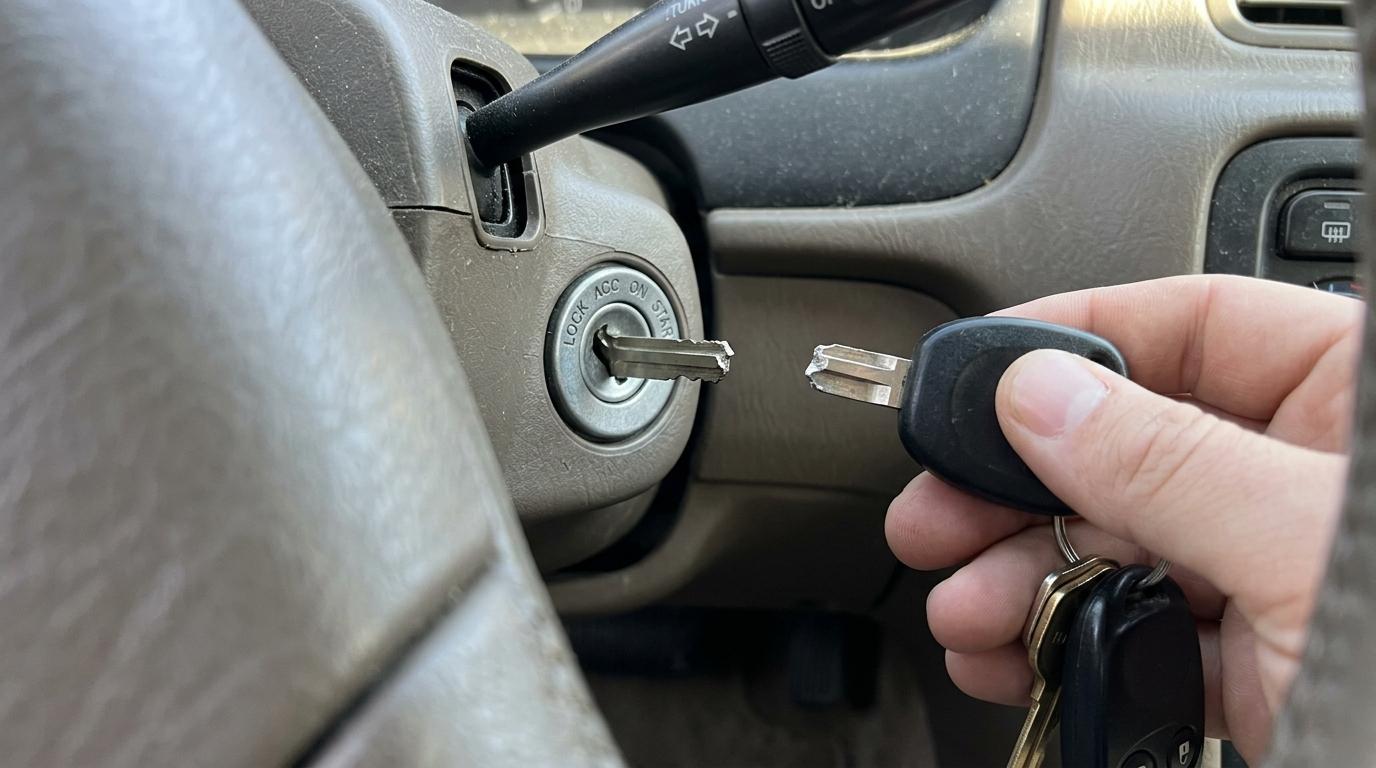
You turn the car key as usual, feel a sudden snap, and realize the plastic head is still in your hand. The metal blade has broken off inside the ignition. Your first instinct might be to grab a pair of pliers or find something thin enough to pull the remaining piece out. That reaction is understandable, but it can make a straightforward problem considerably harder to repair.
A broken ignition key doesn't automatically mean the entire ignition system is damaged. Sometimes, an automotive locksmith can remove the metal fragment and make a suitable replacement without changing the cylinder. In other cases, the key broke because the ignition mechanism was already worn or binding.
What happens next depends on where the key broke, whether the ignition was turning normally beforehand, and what you do before a technician examines it.
First, Stop Turning the Ignition
The most important thing to do after a key snaps is to stop applying pressure to the remaining fragment. Even if part of the blade is visible, attempting to turn it with pliers can damage the internal locking components. The broken metal may bend, shift farther into the keyway, or become trapped against parts of the cylinder. A fragment that was initially accessible can become much harder to remove after several unsuccessful attempts.
Keep the portion of the key that remains in your hand. It may help a locksmith identify the blade profile and determine whether a replacement can be produced from the existing key information. Don't insert that piece back into the ignition to push against the broken section. Joining the two pieces by hand will not restore their original strength, and additional pressure could worsen the obstruction.
If the vehicle is safely parked, secure it according to the owner's manual and avoid further ignition operation. If the key broke while the ignition was in an accessory or ON position, tell the technician. Electrical accessories may remain powered, and the ignition's position can affect the removal procedure. If the engine remains running or the vehicle cannot be secured safely, request immediate roadside assistance rather than attempting to force the ignition.
Why Do Car Keys Break Inside the Ignition?
Car keys endure repeated mechanical stress. Each time you insert and turn a traditional key, its metal blade transfers force to the lock cylinder. Years of use can gradually wear the blade, especially around narrow sections where its grooves and cuts reduce the amount of metal. A key that has become bent, cracked, or noticeably worn may eventually snap when additional force is applied.
However, the condition of the key isn't always the whole explanation. An ignition cylinder can develop internal wear, contamination, or mechanical resistance. When the cylinder stops turning smoothly, the driver may compensate by twisting the key harder. The added force places more stress on an already weakened blade. Understanding whether the resistance came from the key or the ignition helps prevent the same failure from happening again.
A Key That Was Difficult to Turn Before Breaking
A stiff ignition should be investigated before the key fails completely. If you previously needed to wiggle the key, pull it slightly outward, or try several times before the ignition would turn, those symptoms may indicate wear or misalignment inside the locking mechanism. A damaged key can also produce similar behavior, which is why both parts need inspection.
The steering-wheel lock can sometimes make a perfectly functional ignition difficult to turn. On certain vehicles, pressure against the steering lock prevents normal key movement until the steering wheel is repositioned according to the manufacturer's instructions. This situation doesn't necessarily indicate a defective cylinder. However, once the key has broken, the normal adjustment should not be attempted by forcing the remaining fragment.
What if the Broken Piece Is Still Visible?
A fragment protruding from the ignition may seem easier to remove than one lodged deep inside. That can be true, but visibility alone doesn't establish whether the metal is free to move. The blade might be held in position by the cylinder's internal components, particularly if the ignition was turned when the key broke. Pulling at the wrong angle can bend the fragment or damage the mechanism holding it.
If the metal is flush with the ignition opening, there is even less room to work safely. Household tools are not designed to fit inside narrow automotive keyways without interfering with nearby components. Tweezers, paper clips, and screwdrivers may push the fragment farther inward rather than extracting it. A damaged ignition cylinder can require additional work beyond removing the broken blade, so preserving its condition matters.
For someone searching broke key in ignition, the safest next step is usually an assessment by an automotive locksmith equipped for broken-key extraction. The technician can inspect the exposed fragment, evaluate the cylinder position, and decide whether removal is possible without dismantling or replacing the ignition. That decision should come before any attempt to force the metal out.
Why Common Household Removal Tricks Can Cause More Damage
Online suggestions sometimes make key extraction look like a simple household repair. The problem is that an automotive ignition is a precision mechanism with narrow internal clearances. A method that works on a basic padlock may not be suitable for a vehicle ignition. Adding foreign materials or applying force without understanding the mechanism can turn a removable obstruction into a damaged cylinder.
Several commonly suggested methods deserve particular caution:
-
Superglue: Adhesive can spread onto internal components and bond the fragment to the cylinder.
-
Screwdrivers and improvised picks: Hard tools can scratch internal surfaces or push the broken metal farther inside.
-
Drilling: Removing material without the proper procedure can permanently damage the cylinder and surrounding parts.
-
Excessive lubricant: An unsuitable product may leave residue, attract debris, or interfere with the locking mechanism.
-
Repeated twisting: Applying force to an already broken blade can cause additional breakage or internal damage.
None of these approaches addresses why the key snapped in the first place. Even if an improvised technique removes the fragment, the original wear or binding may remain. A proper repair should preserve the usable components and identify the condition that caused the failure, rather than simply getting the metal out by any available means.
How Does a Locksmith Remove a Broken Ignition Key?
Professional extraction begins with an inspection of the visible key fragment and the ignition cylinder. The technician considers how much metal remains inside, whether the lock is in its normal key-removal position, and whether previous removal attempts have caused damage. Different vehicle keyways and ignition designs may require different extraction tools, so one method isn't suitable for every situation.
Specialized key extraction equipment is designed to work within the limited space available around a broken blade. The purpose is to remove the obstruction while protecting the internal locking components. Depending on the vehicle and the condition of the cylinder, this may be possible without dismantling the ignition assembly. More complicated cases may require additional access or repair work, particularly when the fragment is deeply lodged or the mechanism is damaged.
Once the metal has been removed, the technician should examine the ignition before installing another key. If worn components or an obstruction caused the original blade to snap, simply cutting a replacement may lead to another failure. Checking the mechanism after extraction helps establish whether the job is finished or whether further repair is necessary.
What Happens if the Fragment Cannot Be Removed Normally?
Some cases are more complicated because the key has broken into several pieces or become trapped in a damaged cylinder. Previous attempts with glue, drilling, or improvised tools may also make ordinary extraction impractical. The technician may need to remove or service parts of the ignition assembly using the appropriate manufacturer procedure. Work around the steering column also requires care because some components are located near vehicle safety systems.
If removal cannot be completed without damaging the lock cylinder, replacement may become necessary. However, that decision should be based on the condition of the mechanism rather than an automatic assumption that every broken key requires a new ignition. The technician should explain why extraction alone is unsuitable and what additional work is required before proceeding.
Does a Broken Key Mean the Ignition Cylinder Is Damaged?
A snapped key and a failed ignition cylinder are two different problems. The key may have broken because its blade was already weakened, while the cylinder remains in good mechanical condition. In that situation, removing the fragment and providing a correctly made replacement may restore normal operation. There is no reason to replace a functioning cylinder simply because a damaged key broke inside it.
The situation changes when the ignition was difficult to operate before the incident. Repeated sticking, irregular rotation, or excessive resistance can indicate wear within the mechanism. A new key may temporarily work but begin showing the same symptoms if the cylinder's condition isn't addressed. Testing with a properly cut key after extraction can help distinguish a key-related failure from a mechanical problem.
A useful distinction is whether the ignition works smoothly after the fragment is removed. If a suitable key operates normally, the original blade may have been the primary problem. If the cylinder continues binding, further inspection is necessary. This prevents unnecessary replacement of good hardware while avoiding the opposite mistake of ignoring a damaged mechanism.
Will You Need a Completely New Car Key?
A key that has snapped should not be glued together and returned to regular use. The broken blade has lost its original mechanical integrity, and an improvised repair cannot be trusted to withstand repeated turning. A replacement is usually needed, but that doesn't always mean replacing every electronic component associated with the key.
Many traditional automotive keys contain a transponder chip inside the plastic head. The chip provides electronic authorization for the vehicle's immobilizer system, while the metal blade operates the mechanical ignition. If the blade breaks but the electronic component remains intact, the locksmith can assess whether the original transponder can be safely retained in a compatible replacement arrangement.
Other vehicle keys combine electronic components and mechanical blades in ways that make replacement more involved. A damaged housing, defective chip, or incompatible replacement may require a new electronic key and appropriate vehicle programming. These decisions depend on the key's construction and the vehicle's security requirements.
Why Copying the Broken Key May Not Be the Best Option
A worn key can contain rounded cuts or altered edges from years of use. Making a direct copy of that worn blade may reproduce its existing problems rather than restore the intended key shape. When suitable information is available, a locksmith may be able to produce a replacement according to the vehicle's original key specifications instead of relying entirely on the damaged blade.
The key's electronic features should also be verified before the job is completed. A replacement that turns the ignition may still fail to start a vehicle equipped with an immobilizer if its transponder is missing or unauthorized. Mechanical cutting and electronic registration should be treated as separate requirements whenever the vehicle's design makes that distinction necessary.
What if the Key Broke While the Ignition Was Switched On?
The position of the ignition at the moment of failure affects what the driver should do next. If the key snapped while the ignition was OFF, the vehicle may remain safely parked without additional electrical activity. If it broke in the accessory position, the radio or other electrical components may continue receiving power. Leaving the vehicle in that condition for an extended period could discharge the battery.
If the key broke while the engine was running, the situation requires more caution. A driver should not attempt to extract the fragment or interfere with the ignition while the vehicle is moving. Once safely stopped, avoid forcing the mechanism or disturbing steering-column components. If the engine cannot be switched off normally, contact appropriate roadside assistance for vehicle-specific guidance.
The same caution applies when the transmission cannot be placed into the required parking position or the vehicle cannot be secured. Do not attempt to overcome the problem by dismantling the steering column or manipulating electrical connections. The appropriate response depends on the vehicle's design and the condition of its ignition controls.
How Much Work Is Usually Involved?
The difficulty of a broken-key repair depends on the condition of both the fragment and the ignition. A single accessible piece inside an otherwise healthy cylinder may require much less work than multiple fragments lodged inside a damaged mechanism. If the key was already worn, producing a proper replacement may also be necessary. Vehicles with electronic security systems can introduce additional requirements when the original transponder cannot be reused.
Before approving a repair, ask the technician to explain which services are included. An estimate might cover extraction alone, while another may include cutting a replacement, checking the ignition cylinder, or programming a new electronic key. These are separate tasks, and their costs can vary according to the vehicle and the work required. A universal repair price would not accurately represent every situation.
It is also worth asking whether the existing cylinder can be retained. Replacement may be justified when the mechanism is seriously worn or damaged, but it should not be the default recommendation when extraction alone can restore normal function. A clear explanation of the inspection findings is more useful than a quote that lists parts without explaining why they are needed.
What Information Should You Give the Locksmith?
Providing the right details before the technician arrives can help determine which tools and replacement components may be needed. Vehicle ignition systems vary, and some models require equipment that differs from ordinary door-lock tools. Explaining whether the metal is visible, whether the engine remains running, and whether you have a working spare allows the technician to assess the likely scope of the job.
Have the following information ready:
-
Vehicle details: Make, model, model year, and vehicle identification number if available.
-
Key condition: Whether the blade broke near the plastic head or farther inside the ignition.
-
Ignition position: Whether the switch was OFF, in accessory mode, or ON when the key snapped.
-
Previous symptoms: Any sticking, difficult turning, or repeated problems before the break.
-
Available keys: Whether another tested, working key is available.
-
Ownership verification: Identification and appropriate vehicle documentation when required.
A photo of the broken key head and ignition opening may also help explain the situation, provided it can be taken without disturbing the fragment. Do not remove steering-column covers or insert tools merely to get a better photograph. The technician can conduct a closer inspection after arriving with the appropriate equipment.
What Should Be Tested Before You Drive Away?
Removing the fragment is not the final measure of a successful repair. The ignition needs to work smoothly with a suitable key, and the vehicle should complete its normal starting and shutdown operations. If the original problem involved binding, the technician should confirm that the replacement does not require unusual force. Resistance during the final test may indicate that the cylinder still needs attention.
If a transponder-equipped key has been replaced, the vehicle should recognize the electronic authorization and start normally. Remote locking buttons, where included in the replacement service, may require separate testing. A key that unlocks a door is not necessarily authorized to start the engine, so both functions should be checked where applicable.
The technician should also explain whether the original ignition cylinder was retained, repaired, or replaced. If a new cylinder was installed, confirm which keys operate the ignition and other vehicle locks. These details matter because some repairs can result in separate keys for different locks unless the replacement arrangement is specifically designed to preserve compatibility.
How Can You Prevent Another Key From Breaking?
A key rarely becomes seriously worn in a single day. Small signs often appear first, including a bent blade, visible cracks, rounded cuts, or difficulty turning the ignition. Replacing a damaged key before it fails is usually less disruptive than removing a broken piece from the cylinder. If the ignition has become stiff, have the cause investigated instead of compensating with extra turning force.
Avoid using the key as a general-purpose tool or carrying it in ways that repeatedly bend the blade. A crowded key ring can also place additional leverage on some ignition keys, particularly when a heavy collection of accessories hangs from the ignition. The effect depends on the vehicle design, but reducing unnecessary weight and mechanical strain is a sensible precaution.
Keep a properly cut and tested spare key in a secure location. The spare should operate the ignition smoothly and, when applicable, be electronically authorized to start the vehicle. If it shows the same resistance as the original, the ignition may need attention rather than another duplicate key.
Conclusion
A key breaking inside the ignition is inconvenient, but it doesn't automatically require a complete ignition replacement. The best outcome comes from leaving the fragment undisturbed, identifying why the blade failed, and checking the cylinder before installing a new key. Many mechanical automotive locks use principles associated with a wafer tumbler lock, where small internal components must align correctly for the key to turn. Damage or obstruction within that mechanism can explain why forcing a broken fragment makes extraction more difficult. Careful removal, proper key replacement, and inspection of the original fault help prevent the same problem from happening again.

 English
 Arabic
 French
 Spanish
 Portuguese
 Deutsch
 Turkish
 Dutch
Dutch
 Italiano
 Russian
 Romaian
 Greek
Greek