


Garbage Disposal Repair or Replacement: How to Decide When Your Sink is Stuck
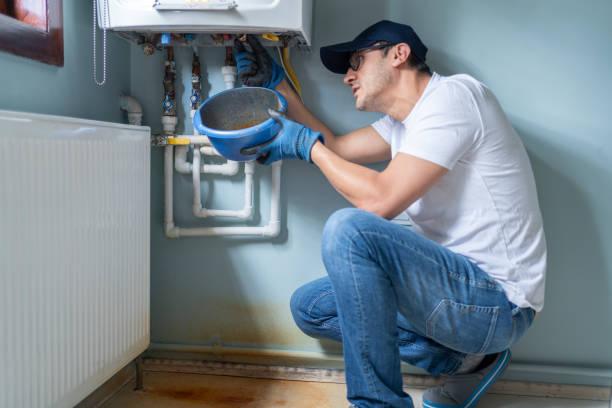
You rinse a few dishes, flip the switch, and get a hum, a click, or nothing at all. Now the sink is backing up, the kitchen smells odd, and you’re wondering whether to fix the thing or just buy a new one.
This guide walks you through that decision with real signs, rough costs, and a few checks you can do yourself in ten minutes.
Garbage Disposal Repair or Replacement services from Insta Service help keep your kitchen clean, hygienic, and running smoothly. Whether your garbage disposal is clogged, leaking, making unusual noises, or has stopped working, professional technicians can identify the issue and provide the right solution. From quick repairs to complete unit replacement, Insta Service offers reliable and convenient service to restore your kitchen's functionality.
First, Figure Out What Kind of Problem You Have
Most disposal troubles fall into three groups: a jam, an electrical issue, or a leak. Each one points toward a different answer, so start by listening and looking.
It hums but the blades don’t spin. This is the most common issue. Something is wedged against the flywheel, such as a bone, fruit pit, bottle cap, or a stray piece of silverware. This is usually a quick fix.
It’s completely silent. The unit may have tripped its reset button, or the outlet or switch may have failed. Often this is cheap to solve.
It runs but the sink drains slowly. The clog may be past the disposal, in the drain line, rather than in the unit itself.
Water is leaking underneath. Where the leak comes from matters a great deal. A loose flange or worn gasket is a small repair. A crack in the housing is not.
Quick Checks You Can Do Before Calling Anyone
Turn the power off first. Switch the disposal off at the wall, and if you can, unplug it or flip the breaker. Never put your hand inside the chamber, even when you think the power is off.
- Look inside with a flashlight. Use tongs or pliers to pull out anything visible.
- Find the hex socket. Under the unit, at the center of the bottom, there’s a small hex-shaped hole. Put the Allen wrench that came with the disposal (usually 1/4 inch) into it and work it back and forth until the flywheel turns freely.
- Press the red reset button. It’s on the bottom or side of the motor. If it pops out, push it back in firmly and wait a few minutes before testing.
- Check the outlet. Plug in a lamp or phone charger to be sure it has power. Also look at the GFCI outlet nearby, since a tripped one is a classic culprit.
- Run cold water, then test. Turn the power back on, run cold water, and flip the switch.
If it works after those steps, you probably just had a jam. If it jams again within a week, something deeper is going on.
When Fixing Makes Sense
A fix is usually the smart move when:
- The unit is under about 7 years old
- The problem is a jam, a tripped reset, or a loose connection
- The leak comes from the sink flange, the dishwasher inlet, or the drain pipe connection
- The motor still sounds strong and spins freely when cleared
- A clog sits in the pipe rather than in the disposal
Plenty of homeowners replace a perfectly good disposal because they assumed a jam meant the end. Don’t be one of them. A freed flywheel and a fresh gasket can give you years more.
When Replacing Is the Better Choice
Sometimes there’s no point in patching. Think about replacing when:
- The unit is 10 or more years old. Most residential disposals last roughly 8 to 12 years. Past that, the next breakdown is only a matter of time.
- The housing is cracked or leaking from the body. Water seeping from the casing can’t be sealed.
- The motor burns out. If you smell something like hot rubber and the unit keeps cutting out even after a reset, the motor is probably done.
- Rust has set in. Corrosion inside the grinding chamber or on the seams means the metal is failing.
- Repairs keep repeating. If you’ve fixed it twice in a year, the third fix is wasted money.
- You want something better. A stronger motor, quieter operation, or better jam resistance can be a good reason to upgrade even when the old one still works.
Repair vs. Replace: Side-by-Side Comparison
| Factor | Repair | Replace |
|---|---|---|
| Typical cost | $75 – $200 | $250 – $600+ (unit and labor) |
| Best for | Jams, tripped reset, minor leaks | Cracked housing, burned-out motor, old units |
| Unit age | Under 7 years | 10+ years |
| Time needed | 30 minutes to 1 hour | 1 to 2 hours |
| Lifespan after job | Varies, often 2–5 more years | 8–12 years |
| Warranty | Short or none on parts | Often 1–7 years from the maker |
| Risk of repeat trouble | Moderate | Low |
Prices vary by region, brand, and plumbing setup, so treat these as ballpark figures.
A Simple Rule of Thumb
Here’s a quick way to decide. Multiply the unit’s age by the repair cost. If the number is over $1,000, replace it. A 12-year-old disposal needing a $120 repair scores $1,440, so replacing wins. A 4-year-old unit needing the same repair scores $480, so fix it.
It isn’t perfect, but it keeps emotion out of the decision.
What a New Disposal Will Cost You
Many people only look at the sticker price. The real total includes a few things:
- The unit itself. Basic 1/3 HP models start around $80 to $120. A 3/4 HP unit runs about $150 to $300. Premium 1 HP models can go beyond $400.
- Installation. Expect $100 to $250 if a plumber does the work.
- Extras. A new power cord, mounting ring, or drain fittings can add $20 to $50.
- Electrical work. If there’s no outlet under the sink, an electrician may need to add one.
Horsepower matters. For a small household that rinses plates and little else, 1/2 HP is fine. For a family that cooks often, 3/4 HP or more handles the load without constant jamming.
Habits That Make a Disposal Last Longer
Whichever way you go, the same habits protect your investment:
- Run cold water for 15 seconds before, during, and after use
- Feed scraps in small amounts rather than a big pile
- Skip grease, oil, coffee grounds in bulk, pasta, rice, and fibrous things like celery or corn husks
- Never drop in bones, fruit pits, or hard shells
- Toss in a handful of ice cubes and a few citrus peels once in a while to clear buildup and freshen the chamber
- Never pour harsh chemical drain cleaners into the unit, since they can damage seals and pipes
When to Call a Professional
Some jobs are worth handing off, especially anything involving electrical wiring, a persistent leak, or a unit that won’t come free after you’ve tried the hex key. If you’re unsure whether you’re facing a repair or a swap, a licensed plumber can inspect the unit in minutes and give you an honest price for both options. Local teams like Insta Service can look at the motor, the seals, and the drain line together, so you don’t end up paying twice for the same problem.
Final Thoughts
Weighing Garbage Disposal Repair or Replacement comes down to three questions: how old is the unit, what exactly is wrong, and how much would the fix cost compared to a new one? Jams and tripped resets are cheap to handle. Cracked housings, dead motors, and units past their tenth birthday are rarely worth saving.
Start with the simple checks. If they don’t work, use the table and the age-times-cost rule to make a calm, practical call. Your sink will be back in working order sooner than you think.
Frequently Asked Questions
1. How long does a garbage disposal usually last?
Most last between 8 and 12 years with normal use. Heavy use, poor habits, or hard water can shorten that.
2. Why is my disposal humming but not spinning?
That sound usually means the flywheel is jammed. Turn the power off, use the hex key underneath to rotate it back and forth, and remove whatever is stuck.
3. Is it safe to fix a disposal myself?
Basic tasks like clearing a jam or pressing the reset are safe if the power is off. Wiring, motor repair, and leak sealing are better left to a professional.
4. Where is the reset button?
It’s a small red button on the bottom of the unit. If it has popped out, press it in and wait a few minutes before running it again.
5. Can I use chemical drain cleaner in my disposal?
It’s best not to. Strong chemicals can corrode seals and metal parts, and they’re hazardous if you later need to reach into the unit.
6. Why does my disposal smell bad even after cleaning?
Trapped food in the baffle (the rubber splash guard) is often the cause. Scrub the underside with a brush and dish soap, then grind ice and citrus peels.
7. Does a bigger motor mean fewer clogs?
Usually, yes. A 3/4 HP or 1 HP motor grinds more finely and handles tougher scraps, which means fewer jams.
8. Will replacing my disposal need new plumbing?
Often not. Many new units use the same mounting system as older ones, so the swap is quick. Different drain heights or outlet positions may need minor adjustments.

 English
 Arabic
 French
 Spanish
 Portuguese
 Deutsch
 Turkish
 Dutch
 Italiano
 Russian
 Portuguese (Brazil)
 Greek