


Training Lab Puppies: A Practical Guide to Raising a Confident, Eager Retriever
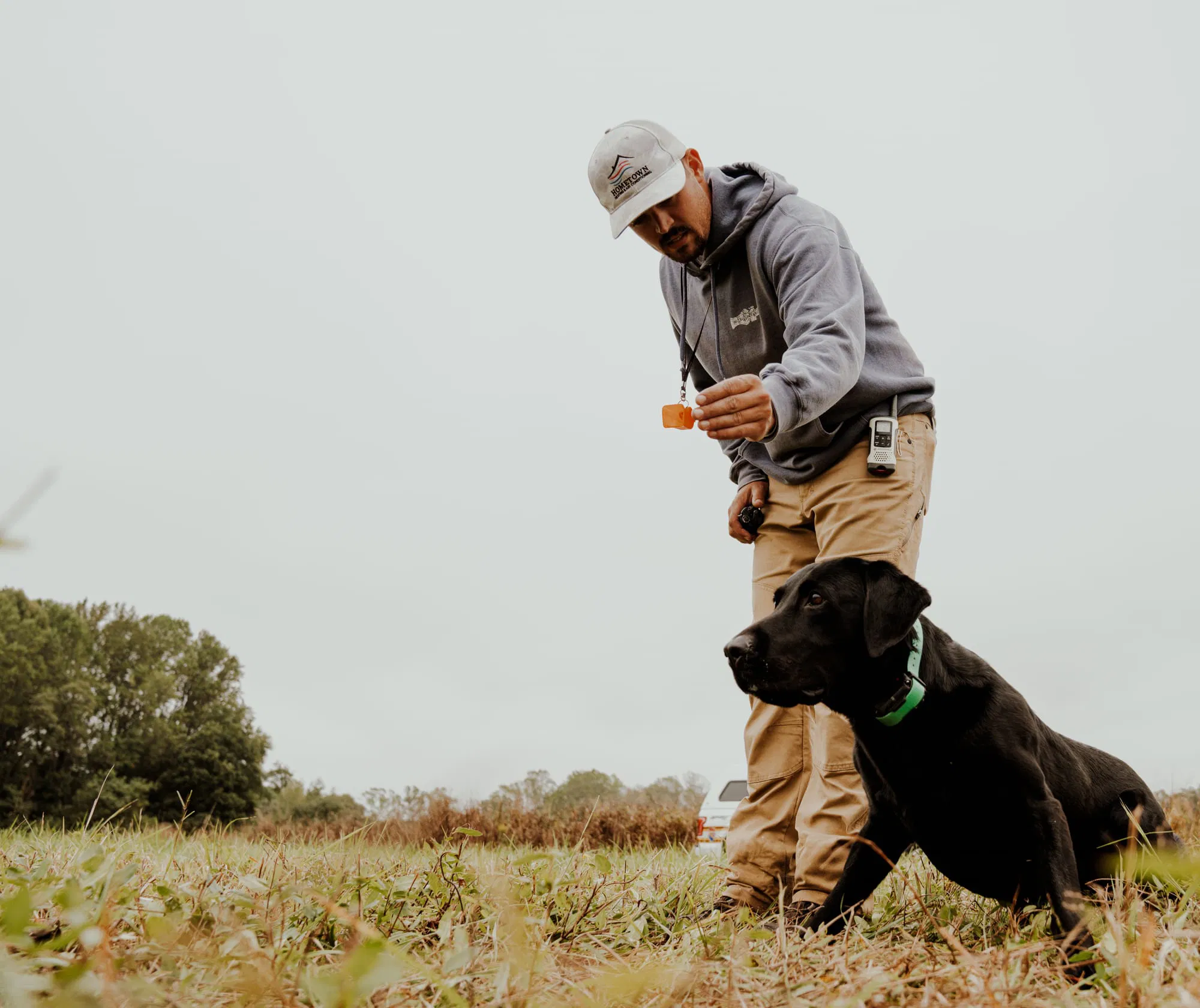
Your Lab puppy is chewing your shoe, ignoring your “sit,” and looking at you as if you’re the best thing in the world. All at the same time.
If that sounds familiar, you’re in good company. Labradors were America’s most popular breed for roughly three decades, and for good reason: they’re smart, loyal and built to work with people. But that same intelligence and energy means training lab puppies well from day one matters more than most owners realize.
I’ve worked with animals for almost 50 years. I’ve trained retrievers for field trials, detection dogs for military, police and anti-poaching work, and even birds of prey. The biggest lesson I’ve learned is simple: the best training doesn’t feel like a fight. It feels like a game your puppy is dying to play.
Let’s walk through how to start.
Why Early Training Matters for Labs
Labs mature slowly, and their puppy years shape the adult dog they become. Retrievers typically live about 10 to 12 years, so the habits you build in the first few months stay with you for a decade or more.
Behavioral research has long pointed to a key socialization window in the first few months of life, roughly 3 to 12 weeks, when puppies are most open to new people, places and sounds. Your vet can tell you when it’s safe to expose your pup to other dogs and public spaces after vaccinations.
Early training also helps in practical ways:
- Prevents bad habits like jumping, mouthing and pulling before they set in
- Builds confidence, so your pup handles new situations calmly
- Strengthens your bond, which makes every later lesson easier
- Channels natural retrieving instincts into skills you can use
The Motivation-First Approach to Training Lab Puppies
Early in my career, I trained the way many people do: a mechanical “do what I say” approach. It worked, but slowly, and neither of us enjoyed it.
Then I shifted my thinking. Obedience should be the dog’s path to what he wants, not an obstacle in the way. Once I trained that way, my dogs learned faster and we both enjoyed the process.
For a Lab, whose desire to retrieve is practically hardwired, this is a perfect fit. Instead of fighting that drive, you use it.
What Motivation-Based Training Looks Like
- Sit before the toss. Your puppy learns that good behavior makes the fun thing happen.
- Reward what you want, quickly. Puppies live in the moment, so timing is everything.
- Keep sessions upbeat. End while your pup still wants more.
If you want a structured plan built on this philosophy, my Retriever from the Pup Up course walks you through molding good character traits, building a love for training and laying a solid foundation of field skills.
Step-by-Step: Training Lab Puppies in the First Months
Step 1: Set Up Your Home for Success
Before formal training, manage the environment. Use a crate, baby gates and a designated potty area. Remove temptations. A puppy who can’t practice bad habits can’t develop them.
Step 2: Build Name Recognition and Eye Contact
Say your puppy’s name in a happy tone. When he looks at you, reward him. Repeat this a dozen times a day. This is the foundation for every command that follows.
Step 3: Teach the Basics
Start with these in a quiet space:
- Sit: Hold a treat above the nose and move it back slightly. When the rear hits the floor, reward.
- Come: Crouch down, use an excited voice, and reward generously when he arrives. Never call your puppy to scold him.
- Place or settle: Teach him to relax on a mat. This is a huge help for a high-energy breed.
- Leave it: Reward your pup for ignoring something tempting.
Step 4: Make Crate and Potty Training Routine
Take your puppy out after waking, eating, playing and napping. Praise and reward immediately when he goes in the right spot. Most accidents happen because of schedule gaps, not stubbornness.
Step 5: Introduce Retrieving the Right Way
This is where Labs shine. Keep early retrieves short, fun and successful. Use play, not pressure. Once your puppy loves to chase and bring things back, you’ve built the engine for everything else.
My Complete Retrieve course explains how to build play retrieves into a reliable, enjoyable skill using a clear three-step plan.
How Much Time Should You Spend Training?
This surprises many new owners: you don’t need hours. Twenty to thirty minutes a day makes a big difference. Split that into several short sessions of 3 to 5 minutes, since young puppies have short attention spans.
Consistency beats intensity. Five minutes every day does more than a three-hour weekend marathon.
You also don’t need to hire a trainer or send your puppy off to “boarding school.” When you understand the principles behind the training, you can do it yourself. As I tell my students, if you don’t understand the principles, you become a slave to techniques.
Memory and Marking: A Fun Skill to Start Early
Labs are natural markers: they watch a bird or bumper fall and remember where it landed. You can strengthen this skill early with simple games in a backyard or park.
My Memory & Marking Drill is a quick, low-equipment exercise that improves your retriever’s working memory. It needs very little space or time, which makes it ideal for busy owners.
Common Mistakes When Training Lab Puppies
Even experienced dog owners fall into these traps.
Mistake 1: Waiting Too Long to Start
Training begins the day your puppy comes home, not at six months. Early lessons can be gentle and playful, but they should begin immediately.
Mistake 2: Skipping Socialization
A well-socialized Lab is more confident and less likely to develop fear-based problems. Introduce new surfaces, sounds, people and (vet-approved) experiences in a positive way.
Mistake 3: Repeating Commands
If you say “sit, sit, SIT,” your puppy learns to wait for the third one. Say it once, help him succeed, and reward.
Mistake 4: Training When You’re Frustrated
If you feel your patience slipping, stop. End on an easy success and try again later. Training should reduce stress at both ends of the leash.
Mistake 5: Too Much Conflicting Advice
The internet is full of contradictory tips. Pick one proven, principle-based program and follow it consistently rather than jumping between methods.
When to Move Beyond the Basics
Once your puppy has a solid foundation, you can progress to more advanced skills, including structured obedience, lining and field work.
If you’re working with an older pup or planning to use electronic collar training for field reliability, take your time. Used correctly, with proper conditioning, an e-collar is a communication tool, not a punishment. My E-Collar Conditioning for the Field course teaches a three-step process so your dog responds reliably to basic obedience commands in all situations. Never introduce it to a young puppy before the foundation work is done.
For a more complete path, you can explore my full retriever training programs, including the Basics in Drive platform that combines e-collar conditioning, T drills on land and water, and The Complete Retrieve.
Quick-Start Checklist for New Lab Owners
- ✅ Schedule a vet visit and confirm the vaccination plan
- ✅ Set up the crate, gates and a potty routine
- ✅ Start name games and short daily sessions (20 to 30 minutes total)
- ✅ Socialize safely and positively
- ✅ Begin gentle play retrieves
- ✅ Choose one training program and stay consistent
Frequently Asked Questions
At what age should I start training lab puppies?
Right away, from about 8 weeks old. Start with short, fun, reward-based sessions.
Is it too late to train an older Lab?
No. Labs of any age can learn. Older dogs just need patience and clear, consistent communication.
Do I need a professional trainer?
Not necessarily. With the right program and about 20 minutes a day, most owners can train their own dog successfully.
Conclusion: Make Training Something You Both Love
Training lab puppies isn’t about dominating your dog or winning a battle of wills. It’s about building a partnership where your puppy wants to do what you ask because it leads to something great.
Start early, keep sessions short, reward what you like, and stay consistent. The effort you put in now pays off for 10 to 12 years of companionship, whether your Lab becomes a field champion or simply the best-behaved dog on the block.
Ready to take the next step? Explore the courses at PatNolan.com and discover how enjoyable training can be when you and your dog are on the same team.
About the author: Pat Nolan has worked with animals for almost 50 years, training retrievers for field trials, detection canines for military, police and anti-poaching work, and animals for commercials. He’s passionate about the art and science of canine training.

 English
 Arabic
 French
 Spanish
 Portuguese
 Deutsch
 Turkish
 Dutch
 Italiano
 Russian
 Romaian
 Greek