


Real Estate Token Development: What New Opportunities Could Emerge for Property Businesses?
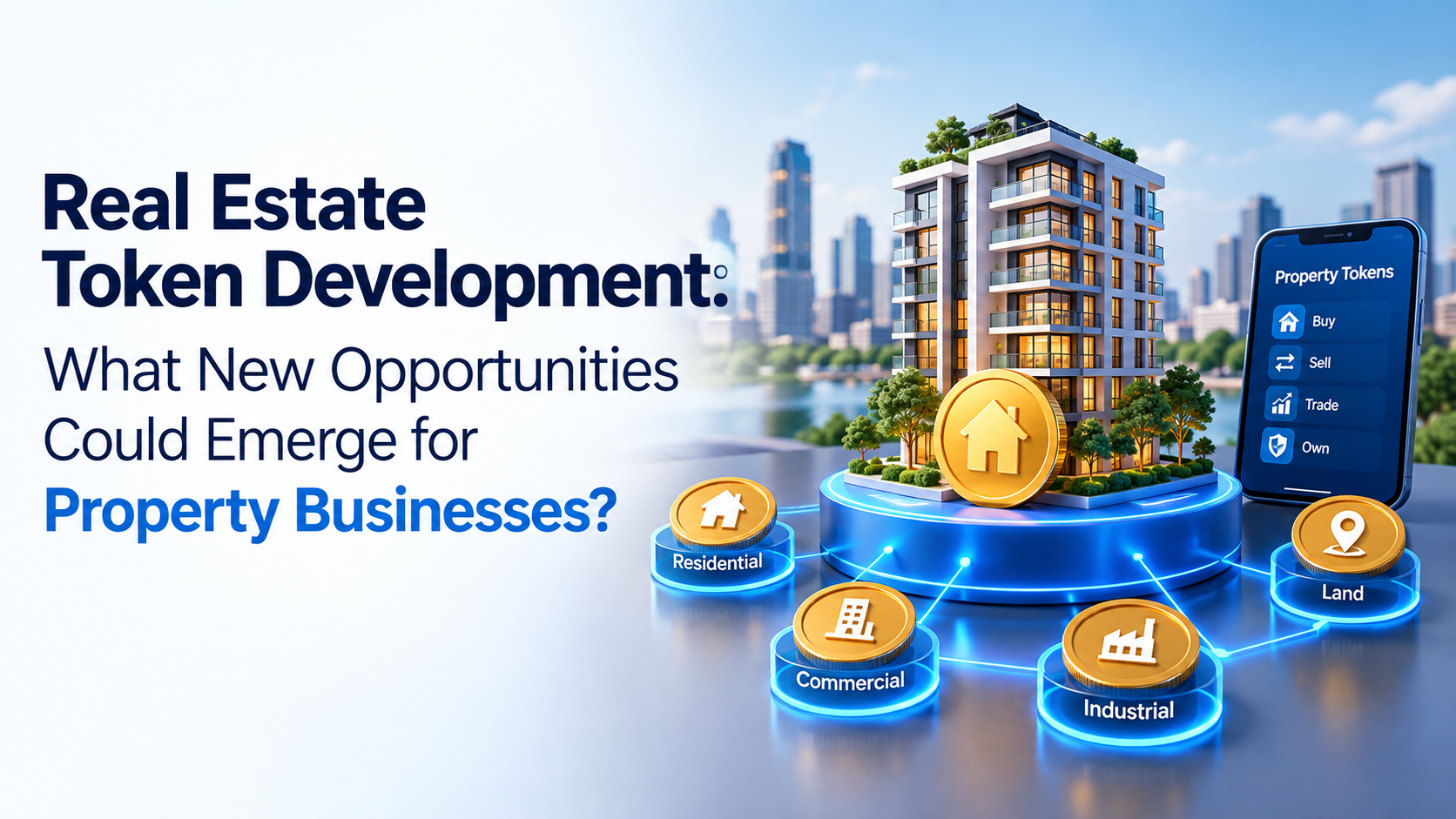
Real estate has traditionally been associated with large capital requirements, lengthy transactions, extensive paperwork, and limited access to property ownership. Real estate token development is introducing another way for property businesses to structure ownership, fundraising, investment, and asset management through blockchain networks. By representing property-related rights through digital tokens, businesses can create new participation models for investors while giving property owners more options for raising capital.
The growing interest in real estate tokenization comes from several market changes. Investors are looking for smaller entry points into property markets, property businesses are seeking alternative funding models, and blockchain infrastructure is becoming more suitable for handling digital ownership records. For developers, landlords, real estate funds, property managers, and investment firms, tokenization can support new business models that were difficult to operate through conventional property structures.
What Is Real Estate Token Development?
Real estate token development refers to the process of creating blockchain-based tokens that represent ownership, economic rights, revenue participation, debt interests, or other claims connected to real estate assets. The token itself does not automatically transfer legal ownership of a property. Its rights depend on the legal structure, agreements, jurisdiction, and asset-holding arrangement established by the business.
A property business may place an asset into a legal entity and issue digital tokens representing shares or economic interests in that entity. Investors can then acquire tokens according to the applicable offering rules. Depending on the model, token holders may receive rental income, participate in property appreciation, or gain other financial rights. This approach creates a connection between conventional property structures and blockchain-based ownership records.
Fractional Property Participation Could Reach More Investors
One of the most discussed opportunities in real estate tokenization is fractional participation. Traditional property investment can require substantial capital because purchasing an entire property or joining a large property fund may involve a significant financial commitment. Tokenization can divide an eligible property interest into smaller digital units.
For property businesses, this can create access to a wider investor base. Instead of approaching only a limited group of high-value investors, a business may structure offerings for investors who want exposure to a particular property with a smaller allocation. The actual minimum investment depends on the legal structure, jurisdiction, offering terms, and compliance requirements.
Fractional participation can also give investors more choice. Someone interested in commercial buildings may prefer office properties, while another investor may prefer hospitality, residential, industrial, or student housing assets. Property businesses can create different offerings around individual assets or groups of assets based on their business strategy.
Property Businesses Could Access New Funding Models
Real estate businesses frequently require capital for acquisitions, construction, renovations, refinancing, and portfolio expansion. Bank financing and private investment remain important sources, but tokenization introduces another potential funding structure.
Through real estate asset tokenization, an eligible property interest can be represented digitally and offered to investors under a defined legal framework. Instead of relying entirely on a small group of private investors, businesses may be able to reach a broader pool of participants.
For a property developer, this could mean raising funds for a development project through a token-based investment structure. For an established landlord, it could involve offering an interest connected to an income-producing property. Each model requires legal review, investor protection measures, financial disclosures, and compliance with applicable securities regulations.
Rental Income Distribution Could Become More Digitized
Rental properties generate recurring income, but managing distributions across multiple investors can involve accounting work, payment processing, reporting, and record maintenance. Real estate tokenization development can bring some of these activities into a digital environment.
Smart contracts can be programmed to calculate or distribute payments according to predefined rules when suitable infrastructure and legal arrangements are in place. For example, a tokenized property could distribute rental proceeds to eligible token holders based on their recorded holdings after expenses and other deductions.
This does not remove the need for accountants, property managers, banks, legal professionals, or administrators. Instead, blockchain records can form one part of the wider operational system. Property businesses may therefore gain a more organized process for handling investor records and recurring distributions.
Property Portfolios Could Be Divided Into Different Investment Products
Real estate businesses do not have to limit tokenization to individual buildings. A company holding multiple properties could consider portfolio-based structures. Tokens could represent interests in a group of properties based on defined investment terms.
For example, a property business holding several logistics facilities could create an investment product linked to the income generated by those assets. Another company might structure a portfolio around residential rental properties in several locations.
This approach could give investors access to a collection of assets instead of depending on the performance of one property. For property businesses, it may provide another way to package assets for different investor groups. The structure would depend on local regulations, ownership arrangements, valuation methods, and offering requirements.
Secondary Trading Could Add Another Dimension
Conventional property investments are often difficult to sell quickly because transactions involve buyers, sellers, legal checks, financing, property inspections, and extensive documentation. Tokenization may introduce a different approach if the relevant tokens are permitted to trade on an appropriate regulated secondary marketplace.
A tokenized property interest could potentially be transferred between eligible participants without requiring the entire underlying property to change hands. This could create more flexible exit options for investors.
However, tokenization does not automatically create liquidity. A marketplace needs buyers and sellers, appropriate regulations, custody arrangements, pricing mechanisms, and sufficient participation. Property businesses should therefore view secondary trading as a possible market feature rather than a guaranteed outcome.
Global Investor Access Could Become More Practical
Real estate markets are usually connected to specific locations, while digital assets can reach participants across borders. This creates an opportunity for property businesses that want to attract investors from different regions.
A real estate tokenization company may develop systems that support investor onboarding, digital wallets, token ownership records, payment processing, and compliance checks for eligible participants. A business could then present property investment opportunities to a geographically broader audience where local regulations permit such participation.
Cross-border investment introduces additional considerations, including securities rules, taxation, foreign ownership restrictions, investor verification, currency conversion, and data regulations. These issues must be considered before launching an international token offering.
Property Developers Could Create New Customer Participation Models
Real estate tokenization is not limited to investment funds and large property owners. Developers may also use token-based structures to create new participation models around upcoming projects.
A developer could potentially issue tokens linked to an investment vehicle holding a property development. Investors might participate based on predefined terms and receive returns connected to the project's financial performance.
Another possibility involves hospitality or vacation rental businesses creating digital investment interests around groups of income-generating properties. These models can give businesses more ways to communicate investment opportunities while providing investors with specific information about the assets involved.
Real Estate Data Could Become More Connected With Ownership Records
Property investment depends heavily on information such as ownership details, rental income, valuations, expenses, property documents, and transaction history. Blockchain-based systems can maintain records of token ownership and transactions in a structured digital format.
A real estate tokenization platform can combine blockchain records with external systems for property management, accounting, valuation, identity verification, and payment processing. This creates a digital environment where investors and administrators can work with information connected to the tokenized asset.
The quality of the system still depends on the accuracy of the information entering it. Blockchain records can preserve transactions, but they cannot independently confirm whether an external valuation, rental figure, or property document is accurate.
Compliance Could Become Part of the Investment Infrastructure
Regulation is one of the most important considerations for property businesses entering tokenization. Depending on the structure, tokenized real estate interests may fall under securities, investment, property, tax, anti-money laundering, or other financial regulations.
A real estate tokenization development company can incorporate features such as investor verification, wallet screening, transfer restrictions, transaction monitoring, document management, and permission-based token transfers into a platform.
Compliance should be considered during the planning stage rather than added after the platform is launched. Legal professionals, financial advisors, compliance specialists, and blockchain developers may need to work together to establish how tokens can be issued, held, transferred, and redeemed.
What a Real Estate Tokenization Platform Could Include
A property-focused tokenization platform can contain several components depending on the business model. An investor dashboard may allow users to review available offerings, examine property information, monitor holdings, and view distributions.
An administrator dashboard can provide functions for asset management, investor records, token issuance, transaction monitoring, reporting, and distribution management. Smart contracts can handle predefined token rules, while wallet infrastructure can manage digital asset ownership.
Integration with identity verification providers, payment systems, property databases, accounting software, and compliance services can also be considered. The exact technology stack should be selected according to the property's legal structure, expected user base, jurisdiction, asset class, and operating model.
How Businesses Can Approach Real Estate Tokenization Development
Property businesses should begin with the asset and business model rather than starting with blockchain technology. The first step is to determine what rights will be represented by the token and who will hold the underlying property.
The next stage involves selecting the legal structure, reviewing regulatory requirements, defining investor eligibility, preparing offering documents, and deciding how income and ownership rights will work. After these decisions, technical architecture can be planned around token standards, smart contracts, wallets, user interfaces, compliance systems, and administrative tools.
A real estate tokenization platform development company can assist with the technical side of this process, while legal and financial professionals address regulatory and structural matters. Testing should cover smart contract behavior, wallet operations, investor onboarding, token transfers, access controls, payment processes, and reporting before public deployment.
Why Property Businesses Are Paying Attention to Tokenization
The attraction of real estate tokenization comes from the possibility of connecting property markets with digital asset infrastructure. Property businesses can consider smaller investment units, alternative funding channels, digital ownership records, recurring income distribution, portfolio products, and potential secondary markets.
At the same time, tokenization is not a replacement for conventional real estate practices. Property valuation, due diligence, legal ownership, property management, taxation, financing, and investor relations remain important. The value of tokenization depends on how effectively these existing processes are combined with blockchain-based systems.
Businesses researching the market may compare Top real estate tokenization companies and Best real estate tokenization companies based on their technical experience, supported blockchain networks, compliance features, smart contract capabilities, asset management functions, and previous project experience. Choosing a suitable provider requires more than comparing platform features. The provider should understand both the technical and property-related requirements of the intended business model.
Future Opportunities for Property Businesses
The next stage of real estate token development could involve more specialized asset categories and investment structures. Commercial properties, residential portfolios, hotels, warehouses, healthcare facilities, student housing, data centers, and infrastructure-linked properties may all be considered for tokenization where regulations and economics support the model.
Property businesses could also combine tokenization with automated reporting, digital identity systems, real-time portfolio information, blockchain-based payment rails, and regulated marketplaces. As these technologies mature, the focus may shift from simply issuing property tokens toward developing complete digital investment environments.
For property companies, the opportunity is therefore not only about creating a token. It is about considering how digital ownership records can fit into fundraising, investor relations, property operations, portfolio management, and asset distribution.
Conclusion
Real estate token development could give property businesses new ways to structure investment, raise funds, distribute income, organize ownership records, and present property opportunities to a broader group of eligible investors. Fractional participation, portfolio-based offerings, digital distributions, and potential secondary markets are among the areas receiving attention as blockchain becomes more connected with conventional financial infrastructure. Success depends on choosing suitable assets, defining legal rights, meeting regulatory obligations, and selecting technology that supports the intended operating model. Blockchain App Factory provides Real estate tokenization development services for businesses looking to create blockchain-based property investment and asset management solutions.
FAQs
1. What is real estate token development?
Real estate token development is the process of creating blockchain-based tokens that represent defined ownership interests, economic rights, revenue participation, or other claims connected to real estate assets.
2. How can property businesses benefit from real estate tokenization?
Property businesses may use tokenization to create fractional investment models, access alternative funding structures, organize investor records, distribute income digitally, and potentially reach a broader pool of eligible investors.
3. What does a real estate tokenization company do?
A real estate tokenization company typically provides technology for token issuance, smart contracts, investor management, wallets, compliance functions, asset records, transactions, and related platform features.
4. What is the role of a real estate asset tokenization company?
A real estate asset tokenization company focuses on representing property-related interests through blockchain tokens while supporting the technical infrastructure required for issuance, ownership management, transfers, and investor interaction.
5. Is real estate tokenization legally permitted?
The legality of a tokenized real estate offering depends on its structure, jurisdiction, investor rights, and applicable financial and property regulations. Legal advice is necessary before launching an offering.
6. Can tokenized property generate rental income?
It can, depending on the legal and financial structure. A token may represent an interest connected to rental income, with distributions made according to the terms established for the offering.
7. Does tokenization guarantee liquidity for property investors?
No. Tokenization can make digital transfers possible, but actual liquidity depends on market participation, applicable trading rules, investor demand, marketplace infrastructure, and regulatory conditions.
8. What is involved in real estate tokenization platform development?
Real estate tokenization platform development can involve smart contracts, token issuance, investor onboarding, digital wallets, property information, compliance functions, payment processing, administration dashboards, reporting, and transaction management.
9. How do I choose a real estate tokenization platform development company?
Consider its experience with property-related blockchain projects, smart contract development, compliance-related functions, wallet systems, platform architecture, security practices, integrations, and post-launch technical support.
10. What is the difference between real estate tokenization and real estate token development?
Real estate tokenization refers to the broader process of representing property-related rights digitally. Real estate token development focuses more specifically on creating the token and the technical systems required to issue and manage it.

 English
 Arabic
 French
 Spanish
 Portuguese
 Deutsch
 Turkish
 Dutch
Dutch
 Russian
 Romaian
 Portuguese (Brazil)
 Greek
Greek