


Lumber Takeoff: Improving Material Visibility Before The First Frame Is Constructed
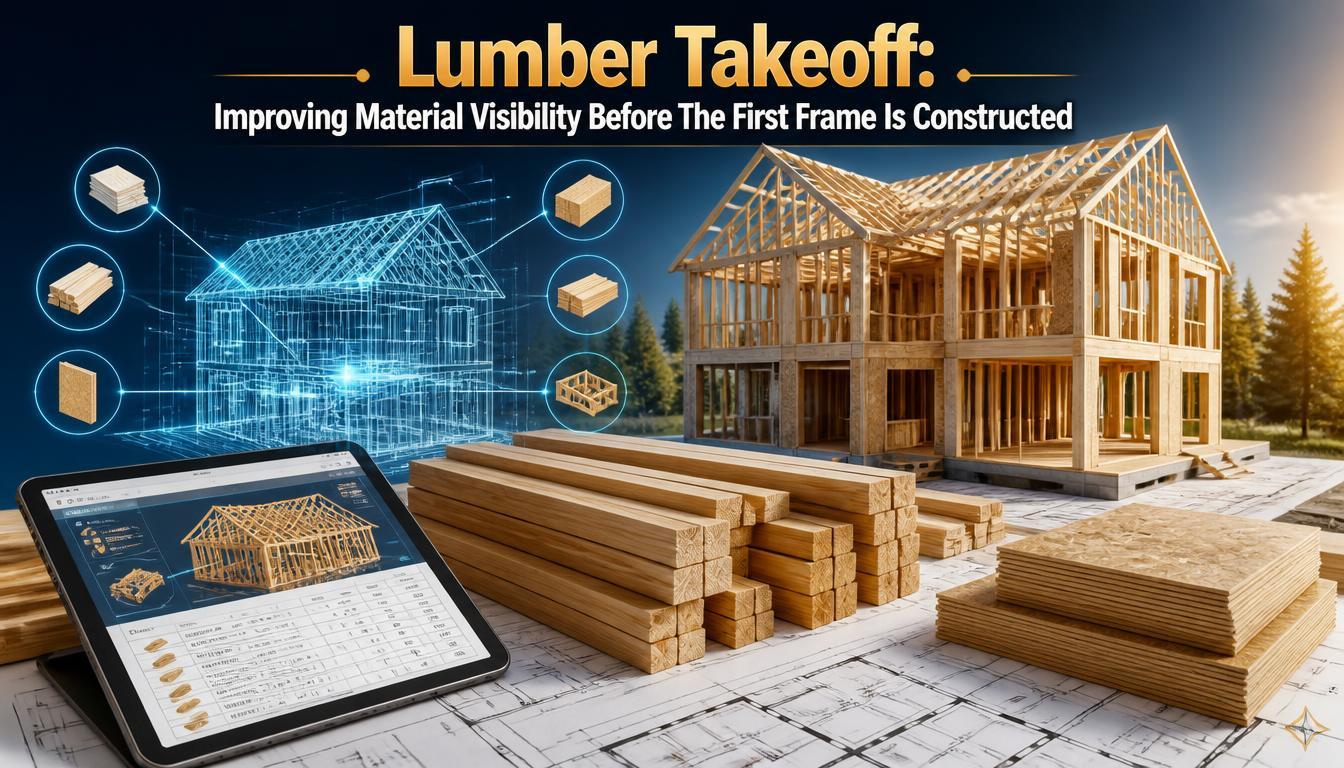
A framing package that was priced last month can already be out of date by the time the lumber is ordered. This does not always mean that one made a mistake. Lumber prices can change quickly, so lumber takeoff needs to account for quantities, lead times, and possible price changes before they affect the budget or become a change order.
Firms such as SMA Estimating LLC that offer lumber takeoff services do more than count studs. They give builders a clear and current picture of how much the framing package will cost and when the materials need to be ordered.
Why Is Lumber Pricing Harder To Pin Down Than Most Materials?
A considerable amount of the United States' softwood lumber comes from Canada, which has duties applied to the wood. In mid-2026, the combined antidumping and countervailing duties on most of the Canadian softwood lumber sit at roughly 35.16%, with the U.S. Department of Commerce signaling a drop to 24.83% later this year (NAHB). This can change the final cost of lumber by a large amount, even when the mill price stays the same. If someone does not include these costs in construction material estimating, an estimate may already be out of date.
What Does "Material Visibility" Actually Mean In Practice?
Material visibility is knowing each of the three elements: quantity, price, and lead time, not just one or two of them.
|
Visibility Component |
What It Answers |
|
Quantity |
How many board feet, exactly, does this job need? |
|
Price exposure |
What's the cost risk between order and delivery? |
|
Lead time |
When does this need to be ordered to hit the framing date? |
A lumber takeoff that gets the quantity right but ignores price changes and lead time only solves one-third of the problem.
How Does A Takeoff Actually Establish Material Quantities?
A takeoff establishes framing material quantities by turning drawings into a detailed, line-by-line count instead of relying on a square-foot estimate.
-
Studs, plates, and blocking counted per wall assembly.
-
Joists and rafters counted per framing schedule.
-
Sheathing calculated by area, accounting for waste and layout.
-
Engineered lumber (LVLs, headers) called out individually, since substitutions aren't interchangeable.
Skipping any one of these can make the takeoff leave gaps that cause supply problems during the project.
Why Does Lumber Cost Estimation Need To Happen Before Design Is Even Finalized?
Lumber prices can change because of tariffs and trade reviews before construction documents are complete.
Trade reviews for Canadian softwood lumber happen every year, and rates can change by 10 percentage points or more in one review. If a builder does lumber cost estimation early in the design and does not update estimates before ordering, the final cost can be higher than expected.
What Should A Complete Lumber Takeoff Deliver?
A number a builder can use, backed by the details behind it, not just one total.
Quantities broken down by assembly, current unit prices with the date they were checked, and a lead-time note for materials that need to be ordered early. If a takeoff is missing any of these three, it only gives part of the information needed to plan the materials.
Final Word
A good lumber takeoff is not just a quantity count. It shows exactly what a framing package needs, what it will cost, and when the materials need to be ordered. Get this information early, and builders can avoid cost surprises and delays between design and delivery. SMA Estimating LLC follows this approach for every lumber project. They count quantities carefully, check current prices, and flag materials that need to be ordered early so they do not cause framing delays.

 English
 Arabic
 French
 Spanish
 Portuguese
 Deutsch
 Turkish
 Dutch
Dutch
 Italiano
 Russian
 Romaian
 Portuguese (Brazil)