


Why Everyone Suddenly Seems to Be Wearing On Clouds
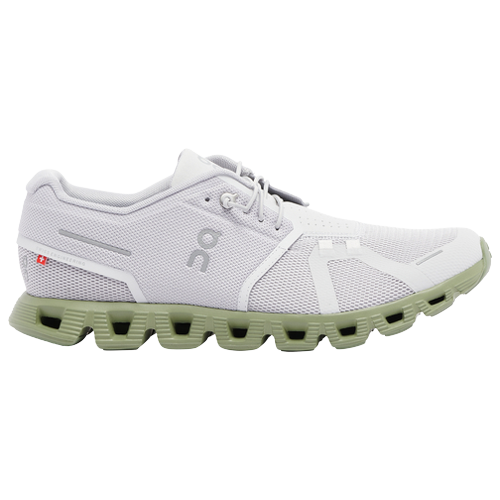
Look down at feet in any busy airport, coffee shop, or office hallway these days, and there's a good chance you'll spot a familiar silhouette — a shoe with a distinctive, pod-covered sole, worn by a runner, a commuter, or someone simply out running errands. On Clouds shoes have quietly become one of those rare products that seem to show up everywhere at once. So what actually explains that shift, beyond clever marketing?
It Started With a Genuine Problem, Not a Trend
Unlike many footwear crazes that begin with a viral moment, On's popularity has a slower, more grounded origin story. The brand was founded by people who understood the sport from the inside — former professional triathlete Olivier Bernhard, along with co-founders David Allemann and Caspar Coppetti, built the company around solving a real, specific frustration: the tension between cushioning and responsiveness in running shoes. Most shoes at the time forced runners to choose one or the other. On Clouds answer was CloudTec, a sole made of individual compressible pods rather than a single foam layer, designed to deliver both a soft landing and an energetic push-off.
Because the shoe solved a genuine problem rather than chasing a fashion moment, its early adoption came primarily from serious runners who noticed a real difference in how their legs and joints felt after long runs. That authentic word-of-mouth foundation is part of why the brand's popularity has proven durable rather than fleeting.
The Slow Build, Then the Sudden Spike
On's rise wasn't overnight. The first On Clouds shoe launched in 2012, and for several years, the brand remained largely within running and endurance sport circles. The turning point came as the shoes started appearing in unexpected places — fashion editorials, cinematographers on magazine covers, and eventually a high-profile partnership with tennis star Roger Federer, who became both an investor and a public face of the brand.
That crossover moment mattered. It signaled that On wasn't just a performance shoe for athletes — it was becoming a recognizable style statement in its own right. From there, adoption accelerated quickly, moving from niche running stores into mainstream retail, both online and in person, across multiple continents.
Comfort That's Easy to Notice, Even for Non-Runners
A large part of On's broad appeal comes down to something simple: you don't need to be an athlete to notice the difference. The On CloudTec cushioning system responds to impact regardless of whether that impact comes from a five-mile run or a day spent walking around a city. This universality has made the shoes attractive to a much wider audience than typical performance running shoes — people who work on their feet all day, frequent travelers, and casual walkers have all found genuine, practical value in the technology, not just runners chasing a personal best.
A Design Language That Works Everywhere
Beyond performance, On Sneakers Canada minimalist aesthetic deserves real credit for its widespread adoption. Many performance running shoes are visually loud — bold colors, aggressive lines, exaggerated soles designed to look "fast." On took the opposite approach with much of its lineup, favoring clean silhouettes and understated colorways that look just as at home with jeans and a blazer as they do with running shorts. That versatility removed a major barrier: people no longer needed a separate "athletic" shoe and a separate "everyday" shoe. One pair could comfortably do both.
Variety Without Losing Identity
As the brand expanded, it resisted the temptation to just multiply variations of a single model. Instead, On built out a genuinely differentiated lineup — lightweight everyday trainers, max-cushioned long-distance shoes, stability-focused training shoes, waterproof models, and even a children's range — while keeping the underlying On CloudTec identity consistent across all of them. This meant that no matter which specific need someone had, there was a legitimate On shoe designed for it, all recognizably part of the same family.
The Sustainability Conversation Joined In
As consumer priorities shifted over the past several years, so did On Clouds product development. The brand introduced initiatives like Cyclon, a shoe subscription and recycling program, and began incorporating a meaningful percentage of recycled materials — particularly recycled polyester — into shoe uppers. For a growing number of buyers, particularly younger consumers, this kind of environmental responsibility has become a real factor in purchasing decisions, and On's willingness to build it into the product rather than treat it as an afterthought helped the brand stay relevant to that shift.
Word of Mouth in the Age of Social Media
It's worth acknowledging the role that organic online visibility played in accelerating On's growth. Unlike brands that rely heavily on paid advertising, much of On's spread happened through everyday people posting about their shoes, comparing models, and sharing honest before-and-after impressions of comfort and fit. In an era where audiences are often skeptical of traditional advertising, this kind of authentic, peer-driven discovery carries significant weight — and it happened to align well with a product that genuinely delivered on its core promise.
A Brand Built for How People Actually Live
Perhaps the simplest explanation for On's widespread popularity is that it matches how modern life actually works. Few people today have rigid, separate categories for "exercise time" and "everyday time" — schedules blend together, and so do wardrobes. A shoe that performs well during a light jog, holds up through a full day of walking, and still looks appropriate at a casual dinner solves a real, practical problem for a lot of people, without requiring multiple pairs of specialized footwear.
The widespread presence of On Clouds shoes isn't the product of a single clever marketing campaign — it's the cumulative result of solving a genuine technical problem, building a design language that fits seamlessly into everyday life, and responding honestly to changing consumer values around sustainability. That combination is a large part of why, once you start noticing On shoes, it can feel like they're suddenly everywhere — because, increasingly, they are.

 English
 Arabic
 French
 Spanish
 Portuguese
 Deutsch
 Turkish
 Dutch
 Russian
 Romaian
 Portuguese (Brazil)
 Greek