


Why Does My Dishwasher Leave White Residue on Dishes?
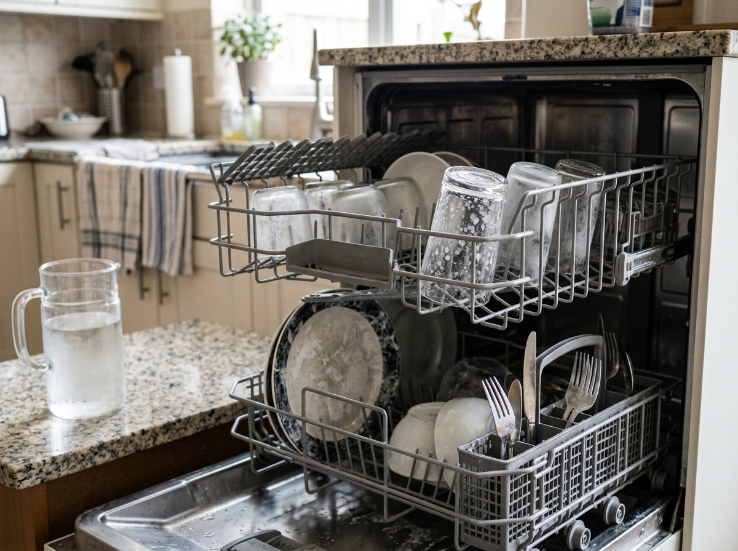
Finding white spots or a chalky film on clean dishes can be frustrating, especially when the dishwasher has just completed a full cycle. Glasses may look cloudy, plates can feel rough, and utensils may have a dull coating that does not rinse away easily. The residue can come from mineral deposits, detergent buildup, hard water, or problems with rinsing and water movement inside the dishwasher.
The good news is that white residue does not always mean the dishwasher is failing. A few changes to detergent use, loading, and routine maintenance can improve the results. When the problem keeps returning, however, the appliance may have a water circulation, heating, dispenser, or drainage issue. This guide explains the common causes and what you can safely check before arranging dishwasher repair in Orlando, FL.
What Causes White Residue on Dishes?
White residue usually develops when minerals or detergent remain on dishes after the wash and rinse stages. Hard water contains dissolved minerals that can collect on glassware and other surfaces as the water dries. The appearance can range from light spots to a heavier cloudy film that becomes more noticeable over time.
Detergent can create a similar result when too much is used or when the detergent does not dissolve and rinse properly. Water temperature, cycle selection, loading, and the dishwasher's water flow can all affect how well the detergent is removed. Looking at when the residue appears and which dishes are affected can help narrow down the likely cause.
Could Hard Water Be Causing the White Film?
Hard water is a common reason dishes develop cloudy spots or mineral deposits. When water containing dissolved minerals dries on a surface, those minerals can remain behind and create a white or hazy appearance. Glassware often makes the problem easier to notice because the film can change how clear the glass looks.
Orlando-area homes can have different water conditions and plumbing setups, so one kitchen may experience more visible mineral residue than another. That does not mean every dishwasher problem in the area is caused by hard water. If the residue appears on nearly every load and is most noticeable on glasses, mineral buildup is one possibility worth considering.
A simple test can sometimes provide a clue. Clean one affected glass by hand using an appropriate method recommended for removing mineral deposits. If the haze changes significantly after cleaning, mineral residue may be contributing to the problem. If the same coating returns after several dishwasher cycles, the water and washing process should be looked at more closely.
Can Too Much Dishwasher Detergent Leave White Residue?
Yes. More detergent does not automatically produce cleaner dishes. Using more than the manufacturer's recommended amount can leave a film when the dishwasher cannot fully dissolve and rinse away the excess product. The problem can become more noticeable with shorter cycles or lower water temperatures.
Check the detergent instructions for your dishwasher and the product you use. Follow the amount recommended for the load and water conditions instead of filling the dispenser as much as possible. Different detergent types are formulated differently, so switching products can also change the amount of residue left behind.
Do not add extra detergent simply because the dishes look dirty. If the dishwasher is already leaving a film, increasing the detergent dose may make the issue harder to solve. Start with the recommended amount, make sure the dispenser opens correctly, and observe whether the residue changes over the next few cycles.
Is the Dishwasher Detergent Dispenser Working Correctly?
The detergent dispenser has to release the product at the appropriate stage of the cycle. If the dispenser is blocked, damaged, or not opening correctly, detergent may not dissolve or distribute as intended. In some cases, a portion of the detergent can remain inside the dispenser after the cycle.
Inspect the dispenser for hardened detergent, residue, or anything that could prevent the door from opening. Keep large plates, pans, and utensils from blocking the dispenser because the door may not be able to open fully during the wash. Follow the manufacturer's cleaning instructions instead of forcing the dispenser mechanism.
If the dispenser appears clean and unobstructed but still does not work correctly, the problem may involve the latch, spring, control system, or another internal component. That type of issue is better diagnosed than guessed because replacing the wrong part will not solve the residue problem.
Can Water Temperature Affect Dishwasher Residue?
Water temperature has a direct effect on how detergent dissolves and how effectively the dishwasher cleans. If the incoming water is not hot enough for the selected cycle and detergent, the cleaning process may not work as expected. Residue can remain when the detergent does not dissolve well or when food and detergent are not removed fully during rinsing.
The dishwasher itself may also use a heating system to manage water temperature during parts of the cycle, depending on the model. A heating problem can therefore affect more than drying performance. You may also notice poor cleaning, longer cycles, or dishes that remain wet after the cycle.
Avoid changing temperature settings blindly. Check the manufacturer's recommendations for your model and detergent first. If the dishwasher consistently struggles to clean, rinse, and dry even when the settings are correct, the heating system or another internal component may need professional testing.
Why Are My Glasses Cloudy After Washing?
Cloudy glasses are often associated with mineral deposits, detergent residue, or repeated exposure to the dishwasher's washing conditions. The first clue is the type of cloudiness. A removable film may be related to deposits left on the surface, while damage to the glass itself may not be reversible through normal cleaning.
Compare glasses from different loads and look for patterns. If only certain items are affected, the issue may relate to the material, shape, or location of those items in the dishwasher. If nearly every glass becomes cloudy after a cycle, the water quality, detergent, or washing process deserves more attention.
Avoid treating every cloudy glass with increasingly aggressive cleaners. Some glass surfaces can become permanently affected over time, so it is better to identify the cause before repeated treatment. Adjusting the detergent amount, improving loading, and checking the dishwasher's water and rinse performance can help determine whether the haze is caused by removable residue.
Could a Rinse Aid Help Reduce White Spots?
Rinse aid can help water drain more effectively from dish surfaces during the final stages of a dishwasher cycle. This can reduce visible spotting and improve drying, particularly on glassware. Whether it helps depends on your dishwasher, water conditions, detergent, and the type of residue you are seeing.
Use rinse aid according to the appliance and product instructions. Adding more than recommended is not a guaranteed solution and can create its own problems. Check the dispenser regularly and make sure it is not empty or blocked.
Rinse aid is most useful when the main problem is water remaining on dishes and leaving spots as it dries. It will not correct a clogged filter, failed heating component, blocked spray arm, or other mechanical problem. When residue continues despite proper use, the dishwasher itself may need inspection.
Can a Dirty Filter Cause White Residue?
A dirty filter can affect overall dishwasher performance by allowing food particles and dirty wash water to remain in the system. It may not be the direct cause of every white spot, but poor filtration can interfere with cleaning and rinsing, which can leave a coating on dishes.
Check the filter according to the manufacturer's instructions and clean it when needed. Remove visible debris carefully and make sure the filter is seated correctly after cleaning. A loose or incorrectly installed filter can create additional problems rather than solving the original one.
If the filter becomes dirty again very quickly, look at how the dishwasher is being loaded and what is being placed inside it. Large food scraps should be removed before loading. Routine filter care is a simple maintenance step, but persistent residue after proper cleaning may point to another problem in the wash or rinse system.
Can Blocked Spray Arms Leave a Film on Dishes?
Spray arms need clear openings so water can reach dishes during the wash and rinse cycles. Food particles or mineral deposits can partially block those openings and reduce water coverage. When some areas of the dishwasher receive less water, detergent and food residue may remain on dishes.
Inspect the spray arms only in the way described by the manufacturer's instructions. Look for visible debris around the openings and check whether the arms can move freely when the dishwasher is not running. Do not force a spray arm off if you are unsure how it is attached.
Loading can also block water movement. Large trays, pots, and pans can prevent the spray from reaching smaller items behind them. Place dishes according to the rack layout recommended for the appliance, leaving enough space for water to circulate through the load.
Could the Dishwasher Be Using Too Little Water?
Water volume and circulation affect the dishwasher's ability to wash and rinse dishes. If the appliance is not filling correctly, or if water is not circulating as intended, detergent and minerals may remain on the surfaces after the cycle. This problem can be harder to identify because the dishwasher may appear to complete the program normally.
Listen for the normal sequence of filling, washing, draining, and rinsing rather than focusing only on the final result. A significant change in the sounds or timing of the cycle can provide a useful clue. Do not remove internal components simply to check the water level unless your model's instructions specifically provide a safe procedure.
A persistent change in cleaning performance is worth investigating, particularly when the dishwasher previously worked well. Problems involving the inlet system, circulation pump, controls, or other internal parts generally require testing to identify the actual cause.
How Can You Prevent White Residue From Returning?
Start with the basics. Use the correct amount of detergent, keep the filter clean, and make sure dishes are loaded without blocking the spray arms or detergent dispenser. Scrape large food particles from plates before loading and follow the cycle recommendations for the type of load.
Check rinse aid levels if your dishwasher uses it and clean the spray arms when the manufacturer recommends doing so. If mineral buildup is common in your kitchen, pay attention to the condition of glasses, the dishwasher interior, and other surfaces that come into regular contact with water.
Avoid making several changes at the same time when you are trying to identify the cause. Change one factor, such as detergent quantity or loading arrangement, and observe the result over several cycles. This makes it easier to understand what is actually helping.
When Should You Consider Dishwasher Repair?
White residue alone does not always mean the dishwasher needs a repair. However, service becomes more appropriate when cloudy dishes appear along with other performance problems. Weak cleaning, poor drying, unusual noises, standing water, error codes, or repeated cycle interruptions can suggest that a component is not working correctly.
A dishwasher may have a problem with its heating system, water inlet, circulation pump, dispenser, sensor, filter housing, or control system. Several different failures can create similar cleaning symptoms, so replacing a component based only on guesswork can waste money.
When routine cleaning and loading changes do not improve the results, professional diagnosis can help identify whether the cause is mineral buildup, detergent use, water delivery, heating, circulation, or another appliance issue. The existing dishwasher repair in Orlando, FL service page provides a relevant path when the problem continues after basic troubleshooting.

 English
 Arabic
 French
 Spanish
 Portuguese
 Deutsch
 Turkish
 Dutch
Dutch
 Italiano
 Russian
 Romaian
 Greek
Greek