


What Makes PRP Hair Treatment Effective for Hair Growth?
Hair thinning and excessive shedding can gradually affect a person’s appearance and confidence. While temporary shedding may sometimes resolve on its own, persistent hair loss can require a more focused approach. Modern hair restoration treatments now offer several options for people who want to support existing hair and improve overall scalp health. Among these options, Platelet-Rich Plasma (PRP) therapy has gained attention as a minimally invasive treatment for certain types of hair loss.
PRP Hair Treatment in Islamabad uses concentrated platelets taken from the patient’s own blood and introduces them into targeted areas of the scalp. The treatment is designed to support the environment around existing hair follicles and may encourage healthier hair growth over time. Its effectiveness depends on several factors, including the cause of hair loss, follicle condition, treatment planning, and individual response.
How Does PRP Hair Treatment Work?
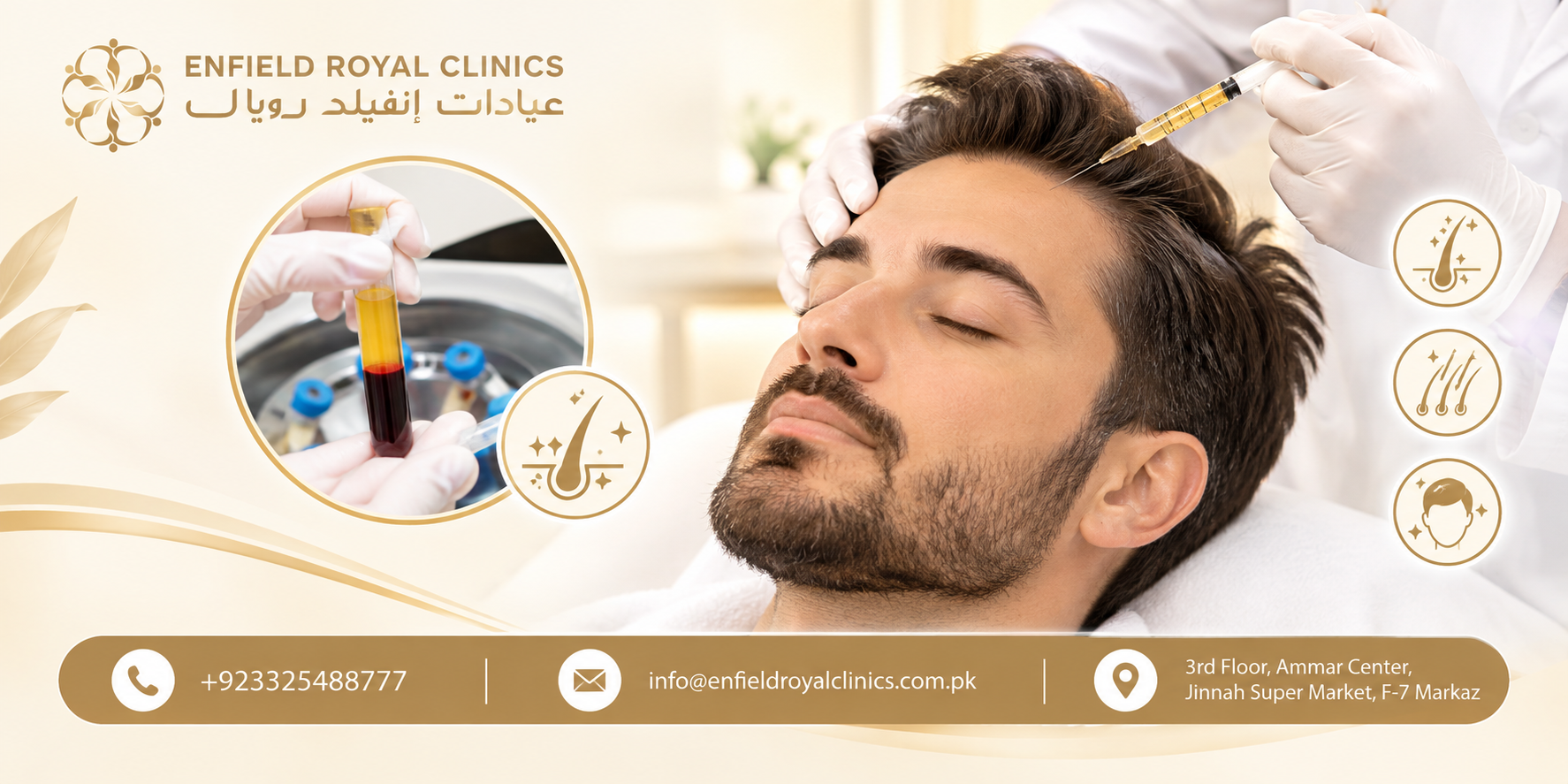
PRP treatment begins with a small blood sample collected from the patient. The sample is processed to separate the platelet-rich plasma from other blood components. This concentrated plasma contains platelets and growth factors that have important roles in the body's natural healing and tissue-repair processes.
After preparation, the PRP is carefully administered into areas of the scalp affected by thinning. The purpose is to deliver concentrated growth factors close to the hair follicles that may benefit from additional support.
Rather than creating new hair follicles, PRP aims to support follicles that are still active but may be weakened or producing finer hair. This makes the treatment particularly relevant for some patients with early or moderate hair thinning.
Why Are Platelets Important for Hair Growth?
Platelets are naturally involved in the body's repair processes. They contain various growth factors and proteins that participate in tissue healing and cellular activity.
When PRP is introduced into the scalp, these components may help support the surrounding tissue and create a more favorable environment for existing follicles. Improved follicular support may contribute to stronger-looking hair and better hair density in appropriate candidates.
The response is not identical for every patient. Hair growth is influenced by genetics, hormones, nutrition, age, overall health, and the underlying reason for hair loss. Therefore, PRP should be viewed as a treatment that may encourage or support hair growth rather than a guaranteed solution for every type of baldness.
What Factors Make PRP Effective for Hair Growth?
Several factors can influence how well a patient responds to PRP. One of the most important is the condition of the existing hair follicles. PRP is generally more relevant when follicles are still present and capable of producing hair.
The cause and stage of hair loss also matter. Someone experiencing gradual thinning may respond differently from a person with long-standing hair loss and extensive follicle loss.
Treatment planning is another important factor. The areas treated, the preparation of PRP, injection technique, and recommended treatment schedule can all influence the overall experience. A personalized plan allows treatment to be considered according to the patient's specific hair-loss pattern rather than using the same approach for everyone.
Consistency can also matter because hair growth occurs gradually. Patients may need a series of treatments when recommended rather than expecting major changes after one session.
How Can PRP Improve the Appearance of Thinning Hair?
One potential benefit of PRP is its ability to support existing follicles that are producing thin or weak strands. As follicles receive support, some patients may experience improvements in the appearance of hair thickness and density.
For suitable individuals, PRP may help reduce the visual effects of thinning by encouraging stronger-looking growth. Changes can be particularly noticeable when treatment is started while follicles are still active.
However, PRP does not work like a hair transplant. A transplant physically moves follicles into areas where additional coverage is needed, whereas PRP focuses on supporting follicles already present in the scalp.
This distinction is important when setting realistic expectations. PRP may improve the quality and appearance of existing hair, but it cannot reliably recreate follicles that have permanently stopped functioning.
What Happens During a PRP Hair Treatment Session?
A typical session starts with an assessment of the scalp and areas experiencing hair loss. A small amount of blood is then collected and processed to prepare the platelet-rich plasma.
Once the PRP is ready, the scalp is prepared and the concentrated plasma is delivered into selected areas through multiple small injections. The treatment is generally performed without major surgery and does not require follicle transplantation.
Some patients may experience temporary tenderness, mild swelling, redness, or sensitivity in the treated areas. These effects can vary and usually settle as the scalp recovers.
After treatment, appropriate aftercare can help minimize irritation and support recovery. Patients may receive specific instructions regarding scalp washing, strenuous activity, hair products, and other activities immediately following the procedure.
When Can Patients See Hair Growth Results?
PRP does not produce instant hair growth because hair follicles naturally follow different growth cycles. Any improvement generally develops gradually.
Some patients may initially notice changes in hair shedding or texture before visible improvements in density become apparent. Further changes may occur over the following months as the hair-growth cycle progresses.
The timeline depends on several individual factors, including the cause of hair loss, follicle health, age, general health, and treatment plan. Some patients may require multiple sessions to achieve the desired level of support.
It is important to understand that results vary. PRP may produce noticeable improvements for some suitable patients, while others may experience a more limited response.
Who May Benefit from PRP Hair Treatment?
PRP may be considered for adults experiencing certain forms of gradual hair thinning where viable follicles remain. It can be especially relevant for people who want a minimally invasive approach before considering more invasive hair restoration procedures.
Potential candidates may notice:
- Gradual reduction in hair density
- Thinning around the crown
- A widening hair part
- Finer hair strands
- Increased shedding
- Early signs of pattern-related hair loss
However, PRP may not be appropriate for every person experiencing hair loss. Hair loss can result from hormonal changes, nutritional deficiencies, scalp disorders, stress, medications, genetics, and other medical conditions. Identifying the underlying cause is therefore an important part of treatment planning.
Frequently Asked Questions
1. What makes PRP effective for hair growth?
PRP contains concentrated platelets and growth factors that may support the scalp environment and existing hair follicles. Its effectiveness can depend on follicle health, the cause of hair loss, treatment planning, and individual response.
2. Can PRP make thinning hair look thicker?
PRP may help improve the appearance of hair thickness in suitable patients by supporting existing follicles. Results vary, and it cannot guarantee the same level of improvement for everyone.
3. How many PRP sessions are needed for hair growth?
The number of sessions varies according to the patient's hair-loss pattern, scalp condition, and treatment goals. A personalized treatment plan can determine whether multiple sessions may be appropriate.
4. Is PRP suitable for advanced hair loss?
PRP may have limited benefits when follicles are no longer active. It is generally more relevant when viable follicles are still present. An assessment can help determine whether PRP or another hair restoration approach is more suitable.
Final Thoughts
The effectiveness of PRP hair treatment comes from its focus on supporting existing hair follicles rather than surgically replacing them. By delivering concentrated platelets and growth factors to selected areas of the scalp, the treatment may encourage a healthier environment for hair growth.
For suitable patients, PRP Hair Treatment in Islamabad can be part of a personalized approach to managing certain types of hair thinning. Realistic expectations are essential because results depend on the cause of hair loss, follicle condition, treatment plan, and individual response. Professional assessment and consistent follow-up can help determine whether PRP is an appropriate option for supporting healthier-looking hair.
For more information visit Enfield royal clinic in islamabad

 English
 Arabic
 French
 Spanish
 Portuguese
 Turkish
 Dutch
Dutch
 Italiano
 Russian
 Romaian
 Portuguese (Brazil)
 Greek
Greek