


Racing Shoes & Gloves: Lightweight Gear for Competitive Drivers
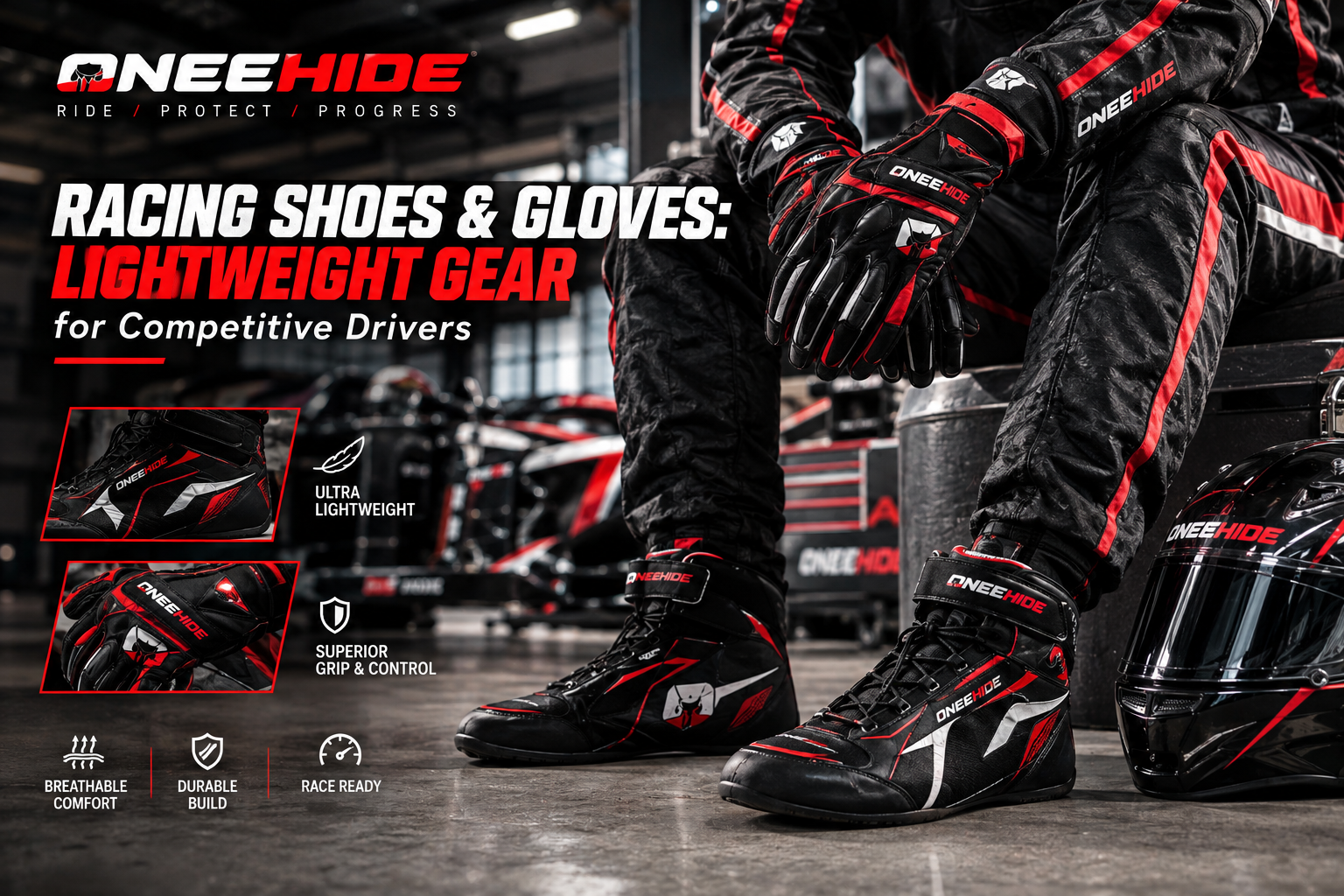
Competitive driving demands precision, concentration, and equipment that can respond quickly to the driver's movements. Racing shoes and gloves are two important pieces of protective gear because they combine safety, grip, sensitivity, and comfort without adding unnecessary bulk.
Unlike ordinary footwear and gloves, motorsport-specific versions are designed around the needs of drivers operating pedals, steering wheels, switches, and other controls inside a demanding environment. FIA Standard 8856-2018 includes shoes and gloves among the protective clothing covered by its requirements for automobile drivers.
Why Lightweight Race Gear Matters
Every movement inside a race car needs to be deliberate. Drivers constantly make small adjustments through their hands and feet, whether they are controlling the steering wheel, modulating the brake pedal, or managing the throttle.
Heavy or poorly designed equipment can make these actions less comfortable. Lightweight construction can help reduce fatigue while allowing drivers to maintain a natural range of movement. The objective is not simply to make equipment as light as possible, however. Racewear still needs to provide the protection and functionality required by the applicable competition regulations.
FIA guidance describes racing gloves as a balance between heat protection, comfort, and dexterity, reflecting the importance of preserving steering sensitivity while providing protection.
Important Features of Racing Gloves
Racing gloves provide protection for the hands while giving the driver a secure connection with the steering wheel. Racing shoes and gloves for track performance improve the riding experience
Flame-Resistant Materials
Fire protection is one of the fundamental characteristics of regulated motorsport gloves. FIA 8856-2018 establishes performance requirements for protective clothing intended to protect drivers from heat and flame. The standard covers gloves as well as shoes, overalls, socks, and other protective garments.
SFI also has a dedicated driver-accessories specification, SFI 3.3, covering gloves and shoes among other protective equipment.
Drivers should therefore check the certification required by their particular series rather than selecting gloves based only on their appearance.
Grip and Steering Control
A racing glove should provide a secure grip without making the steering wheel feel disconnected from the driver's hands. Palm materials, stitching, and surface construction can all affect how confidently a driver can hold and manipulate the wheel.
A suitable glove should also avoid excessive material around the fingers. Bulky construction may reduce tactile feedback, which is especially important when drivers need to make precise steering corrections.
Finger Mobility
Drivers need to move their fingers naturally while gripping the wheel, operating switches, and making adjustments. Flexible construction can make the gloves more comfortable during long sessions.
SFI Specification 3.3 requires gloves to have separate sections for each finger and thumb, demonstrating the importance of appropriate finger construction in regulated driver accessories.
What Makes a Good Racing Shoe?
Racing shoes are designed specifically for interaction with the pedals. Their construction differs from standard driving shoes because drivers need precise pedal feedback combined with protection and secure foot placement.
Thin and Responsive Soles
A relatively thin, responsive sole can help drivers feel changes in pedal pressure. This is particularly useful when controlling braking and throttle inputs where small adjustments can influence vehicle behavior.
However, the sole should still provide adequate protection and durability. A balance between sensitivity and structural support is essential.
Secure Foot Position
A racing shoe should remain securely positioned on the foot during aggressive driving. A well-designed fastening system helps prevent unwanted movement and can improve consistency during repeated pedal operations.
The heel and ankle areas are also important. Drivers should be able to move naturally between pedals without the shoe creating excessive resistance or discomfort.
Flame Protection
Protection from heat and fire is another major consideration. FIA Standard 8856-2018 specifically covers protective shoes for automobile drivers. FIA guidance notes that shoes approved under the 2018 standard provide protection against second-degree burns for a specified period during its testing methodology.
For competitions using SFI requirements, Specification 3.3 also addresses shoes and boots and requires fire-resistant or fire-retardant material in specified portions of their construction.
Choosing the Right Fit
Fit is just as important as material and certification. Gloves that are too loose can move around the hand, while gloves that are excessively tight may restrict finger movement.
Drivers should check the manufacturer's sizing measurements and pay attention to finger length, palm width, and wrist fit. The glove should remain secure while allowing the fingers to bend naturally around the steering wheel.
Shoes require similar attention. A racing shoe should hold the foot securely without creating excessive pressure points. The driver's heel should remain stable, and the toes should have enough room for comfortable movement.
Trying the equipment in a seated driving position can provide a better indication of its real-world fit than testing it while standing.
Racing Shoes and Gloves for Track Performance
The relationship between shoes and gloves and overall driving performance is mainly about control, consistency, and feedback. Gloves can help maintain a controlled steering grip, while shoes can provide the pedal sensitivity needed for precise braking and acceleration.
During a long track session, comfort also becomes important. Excessive heat, uncomfortable stitching, restricted movement, or poor fit can create distractions. Properly designed gear can reduce these issues and help drivers concentrate on driving tasks.
It is useful to think of both products as parts of a complete safety system rather than isolated accessories. They should work alongside the driver's suit, helmet, socks, underclothing, and other required protective equipment.
Check the Applicable Racing Standards
Not every motorsport event follows exactly the same equipment rules. Some competitions use FIA standards, while others may specify SFI requirements or additional regulations established by the sanctioning organization.
The FIA maintains technical lists identifying protective clothing homologated under its standards. Its current Technical List No. 74 covers protective clothing homologated according to FIA Standard 8856-2018.
The SFI Foundation likewise maintains specifications and manufacturer information for motorsport safety equipment. SFI explains that its specifications establish uniform testing procedures and minimum performance standards, while manufacturers certify compliance for their products.
Before purchasing equipment, drivers should compare the product's certification markings with the current rulebook for their event.
Care and Maintenance of Race Gear
Even high-quality racing equipment needs regular inspection. Gloves should be checked for worn stitching, damaged palms, loose material, and deterioration around the fingers or wrist.
Shoes should also be inspected for sole wear, damaged seams, weakened closures, and changes in the material. Cleaning should follow the manufacturer's instructions so that the protective properties of the equipment are not compromised.
Because safety requirements can change between events and organizations, drivers should also periodically review their equipment requirements rather than assuming that previously accepted gear remains legal indefinitely.
Build a Complete Driver Protection Setup
Racing shoes and gloves combine several functions that matter inside a competition car. Gloves need to balance grip, dexterity, comfort, and thermal protection, while shoes need to provide secure pedal control, responsive feedback, durability, and appropriate protection.
The best selection starts with the regulations governing the event, followed by certification, fit, construction, and driving requirements. Choosing equipment with these factors in mind allows drivers to build a more comfortable and consistent setup while ensuring that essential protective requirements remain part of the decision.

 English
 Arabic
 French
 Portuguese
 Deutsch
 Turkish
 Dutch
Dutch
 Italiano
 Russian
 Romaian
 Portuguese (Brazil)
 Greek
Greek