


How to Prove Negligence in a Cherry Hill Slip and Fall Case
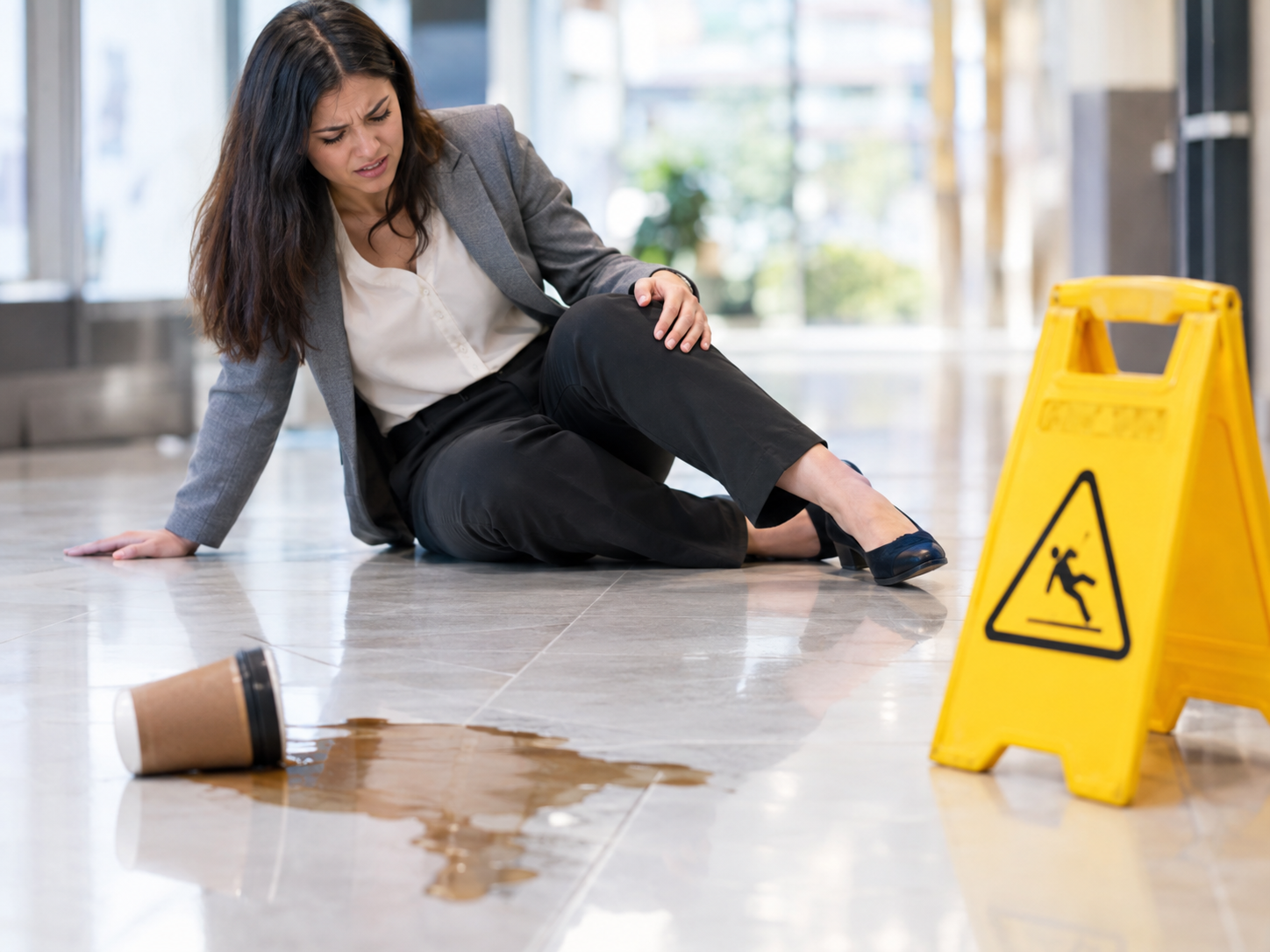
A slip and fall can happen in seconds, but proving who was responsible may take much more work. If you were injured in a store, restaurant, apartment building, parking lot, office, or other property in Cherry Hill, you may wonder whether the property owner can be held responsible for your losses.
New Jersey premises liability law generally requires an injured person to establish more than the fact that a fall occurred. In a typical business-invitee case, the evidence may need to show that a dangerous condition existed, the property owner had actual or constructive notice of it, reasonable care was not taken, and the condition caused the injury and resulting damages.
Understanding these requirements can help you protect important evidence and make better decisions after an accident.
What Is Negligence in a Slip and Fall Case?
Negligence generally means failing to use reasonable care under the circumstances. In a premises liability claim, this can involve an owner, business, landlord, or property manager failing to reasonably address a hazardous condition.
Examples may include:
- Liquid or food spilled on a walking surface
- Uneven flooring or damaged pavement
- Broken or missing steps
- Poorly maintained sidewalks
- Insufficient lighting
- Snow or ice hazards
- Loose carpeting or mats
- Objects left in a walkway
- Other dangerous conditions that create an unreasonable risk of injury
The specific facts matter. A property owner is not automatically liable simply because someone fell on the property.
The Four Important Parts of a Slip and Fall Claim
For a business-invitee slip and fall claim, New Jersey courts have identified several important elements, including notice of the dangerous condition, failure to use reasonable care, causation, and damages.
1. A Dangerous Condition Existed
First, you generally need evidence identifying the condition that caused the accident.
For example, saying that you "slipped near the entrance" may not be enough. Evidence showing that you slipped on water, a broken tile, an uneven surface, or another specific hazard can make the circumstances much clearer.
Photographs can be particularly useful because conditions can change quickly after an accident.
2. The Property Owner Knew or Should Have Known
Notice is often one of the most important issues in a Cherry Hill slip and fall claim.
Actual notice generally means the property owner or an employee actually knew about the hazardous condition before the accident.
Constructive notice can apply when the condition existed long enough, or was sufficiently apparent, that a reasonably careful property owner should have discovered and corrected it. New Jersey courts have recognized that characteristics of a dangerous condition and eyewitness testimony can help establish constructive notice.
For example, evidence that a spill had been present for an extended period could be relevant to whether employees should reasonably have discovered it.
However, the mere existence of a dangerous condition does not automatically establish constructive notice.
Evidence That Can Help Prove Negligence
Strong evidence can make it easier to understand what happened and why the property owner may have been responsible.
Consider preserving:
Photos and Videos
Take photographs of the exact location where you fell and the condition that caused the fall, if you are physically able to do so.
Try to capture:
- The entire area
- The hazardous condition
- Lighting conditions
- Nearby warning signs
- The surrounding floor or pavement
- Any visible damage
- The position of relevant objects
Multiple angles can be more helpful than a single close-up photograph.
Witness Information
People who saw the fall or noticed the hazardous condition may provide valuable information. Get their names and contact information when possible.
A witness may also know how long the condition was present or whether employees had previously been warned about it.
Incident Reports
If the accident happened at a business, report the incident to management and ask whether an accident or incident report was prepared.
Avoid guessing about the cause of your accident. Provide accurate facts about what happened and where you were injured.
Surveillance Video
Many businesses use security cameras. Video footage may show the condition before the accident, your fall, employee activity, or whether someone had an opportunity to correct the hazard.
Because surveillance systems may automatically overwrite older footage, identifying and preserving relevant video can be important.
Medical Records
Medical documentation can help connect the accident to your injuries. Keep records of emergency treatment, doctor visits, diagnostic testing, prescriptions, physical therapy, and other related care.
Your medical records may also help establish the seriousness and duration of your injuries.
Why Timing Can Matter
One of the biggest questions in many premises liability cases is how long the dangerous condition existed before the fall.
Suppose someone slips on a freshly spilled drink moments after it reaches the floor. It may be difficult to show that employees had a reasonable opportunity to discover and clean it.
Now consider a spill that had remained on the floor long enough to become dirty, develop visible characteristics, or be noticed by multiple people. Those facts could potentially support an argument that the condition should have been discovered earlier.
New Jersey case law recognizes that the characteristics of a condition can sometimes help establish constructive notice.
This is why photographs, witnesses, employee statements, surveillance footage, and inspection records can become important.
What If You Were Partly Responsible?
An insurance company or property owner may argue that you were distracted, failed to watch where you were walking, ignored a warning sign, or otherwise contributed to the accident.
That does not necessarily end a claim.
New Jersey uses comparative negligence rules under which damages can be reduced according to the injured person's percentage of fault, subject to the state's statutory rules.
For that reason, it is important to look at the entire situation rather than assuming that one disputed fact determines the outcome.
How a Slip and Fall Attorney Can Help
A slip and fall attorney Cherry Hill residents can turn to may help investigate the circumstances surrounding an accident, identify potentially responsible parties, organize evidence, communicate with insurers, and evaluate whether the available evidence supports a premises liability claim.
Legal representation may be especially useful when liability is disputed, the injuries are significant, multiple parties are involved, or an insurance company questions the claim.
If you are searching for the best personal injury lawyer, focus on more than online descriptions. Look for an attorney who can explain the legal issues clearly, understands New Jersey premises liability law, and takes the time to review the evidence specific to your accident.
Steps to Take After a Cherry Hill Slip and Fall
If you have recently been injured, consider taking these practical steps:
- Seek appropriate medical attention.
- Photograph the dangerous condition as soon as reasonably possible.
- Write down what happened while the details are fresh.
- Collect contact information from witnesses.
- Report the incident to the appropriate property representative.
- Keep medical bills and treatment records.
- Preserve photographs, messages, receipts, and other relevant documents.
- Avoid making statements that speculate about fault.
- Consider speaking with a qualified New Jersey personal injury attorney before accepting a settlement.
Final Thoughts
Proving negligence in a Cherry Hill slip and fall case usually requires evidence showing more than simply that an accident occurred. The condition that caused the fall, the property's responsibility, notice of the hazard, the failure to exercise reasonable care, and the resulting injuries all can be important.
Because every accident is different, the strength of a claim depends on its specific facts and available evidence. Preserving that evidence early can make a significant difference when determining what actually happened and whether another party may be legally responsible.

 English
 French
 Spanish
 Portuguese
 Deutsch
 Turkish
 Dutch
Dutch
 Italiano
 Russian
 Romaian
 Portuguese (Brazil)
 Greek
Greek