


Turn Everyday Play Into Learning
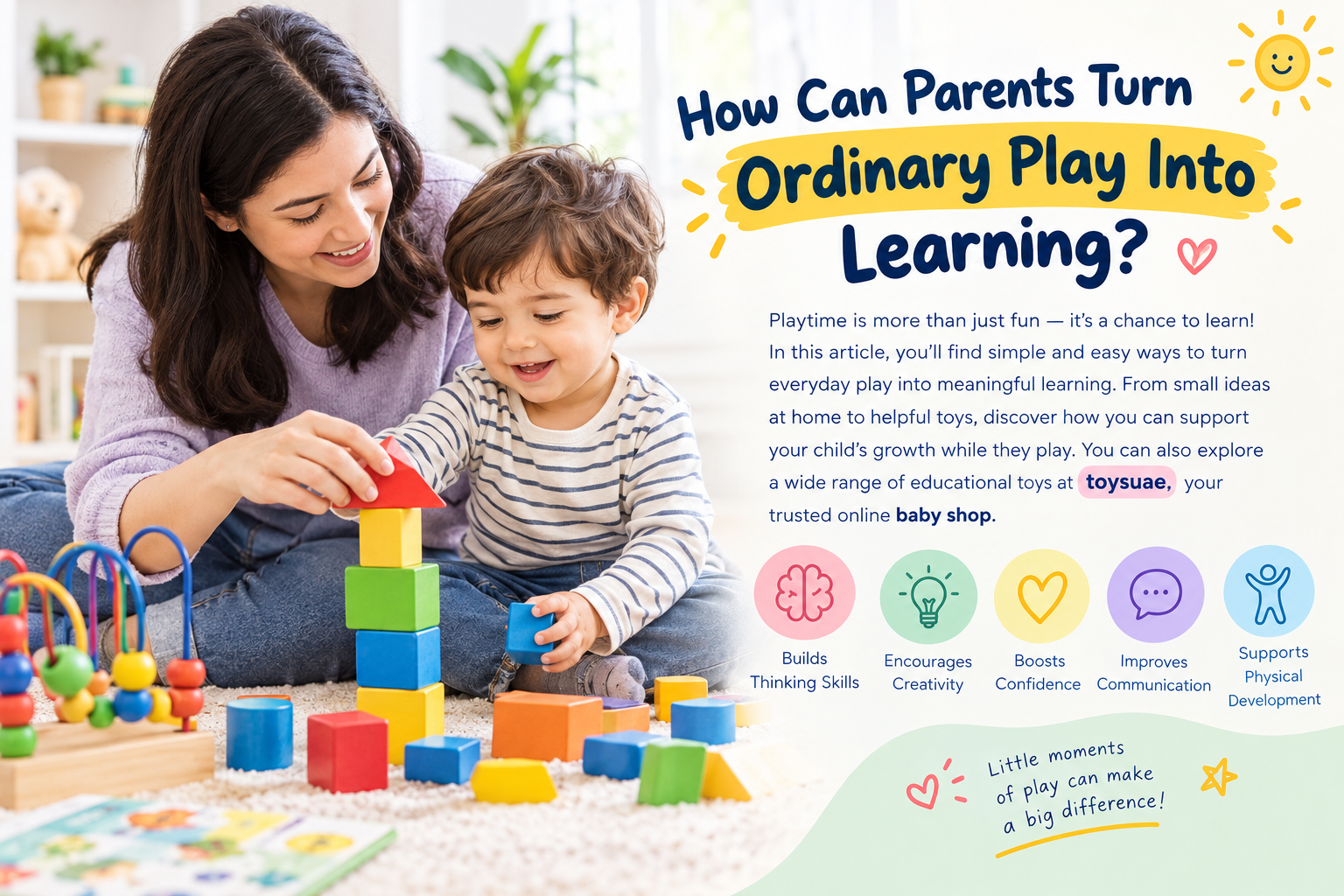
Discover simple ways to turn everyday play into learning. Help your child build thinking, creativity, communication, confidence, and life skills through fun.
Turn Everyday Play Into Learning
Baby shop choices are not the only way to support a child's learning. Some of the best learning moments can happen with things you already have at home. A few blocks, a ball, a picture book, or even a simple household activity can become an opportunity to learn. The important thing is not to make every activity feel like a lesson. Instead, parents can follow their child's interests and add small learning moments to normal play.
Toddlers and young children learn by doing. They touch, move, ask questions, copy others, make mistakes, and try again. When parents join this process, ordinary play can become a fun way to build important skills.
Let Your Child Lead the Play
One of the easiest ways to turn play into learning is to let your child decide what they want to do. If your child picks up some blocks, let them build. If they start pushing a toy car around the room, follow their game. If they begin pretending to cook, join their little story.
You can then add simple questions such as:
- “What are you building?”
- “Where is the car going?”
- “What color is this block?”
- “Can we make it taller?”
- “What should we cook?”
These questions encourage children to think and talk without making play feel like school.
Use Everyday Activities as Learning Opportunities
Children do not need special activities every day. Normal routines can teach them many useful skills.
Cooking Together
While preparing food, children can help with simple, safe tasks. You can talk about colors, shapes, sizes, and numbers.
For example, ask your child to count three bananas or identify which fruit is bigger. You can talk about hot and cold, full and empty, or more and less.
Always keep safety in mind and keep children away from hot surfaces, sharp objects, and anything they should not touch.
Cleaning and Sorting
Sorting laundry, putting toys away, or organizing objects can become a simple learning activity. Ask your child to put all the red toys together or separate large blocks from small ones. This helps them notice differences and understand basic groups. At the same time, they are learning that everyday tasks can be shared with others.
Turn Building Into Problem-Solving
Building toys are excellent for learning because children have to think about what they are doing. Give your child some blocks and let them create something.
Instead of showing them exactly how to build it, ask questions:
- “What can we make?”
- “Why did the tower fall?”
- “Can we make it taller?”
- “What could we put underneath it?”
These questions encourage problem-solving and allow children to learn from their own attempts. It is perfectly fine if the tower falls down. Trying again is part of learning.
Make Storytelling Part of Play
Storytelling does not require a large collection of books. You can create a story using toys your child already has. Take a toy car and say, “The little car wants to visit the park. Where should it go?” Let your child decide what happens next.
You can use dolls, animals, blocks, toy vehicles, or even drawings to create simple stories. This type of play can support language, imagination, memory, and communication. It also gives parents a chance to learn more about what their child is thinking.
Turn Counting Into a Game
Children can practice early math skills during normal play. Count blocks while building a tower. Count toy cars while putting them away. Count steps while walking. Ask your child how many cups are on the table.
You can also introduce simple comparisons:
- Which group has more?
- Which block is bigger?
- Which tower is taller?
- Can we find two blue toys?
Keep these activities short and playful. Young children do not need long lessons to start understanding numbers and comparisons.
Encourage Creativity Without Giving Every Answer
Creativity grows when children have the freedom to make their own choices.Give your child crayons and paper and let them draw whatever they want. Give them blocks and let them decide what to build. Provide simple pretend-play items and allow them to create their own story.
Try not to correct every little detail.
If your child draws a purple sun, there is no need to say that the sun is usually yellow. You can simply ask, “Tell me about your picture.” This shows your child that their ideas are important.
Use Toys as Tools for Learning
Toys can support learning when children actively interact with them. Puzzles can encourage matching and problem-solving. Blocks can support building and creativity. Balls can encourage movement and coordination. Pretend-play toys can help with language and social skills.
When browsing toys online, think about what your child can actually do with a toy rather than choosing something simply because it looks exciting. A useful toy can become even more meaningful when a parent joins the play.
Turn Outdoor Play Into Discovery
Outdoor play provides many natural learning opportunities. Take a short walk and talk about what you see. Ask your child to find a small leaf, a big stone, or something green. Listen for birds together. Look at clouds and ask what shapes they resemble.
You can also collect safe natural objects and sort them by size or color when you return home.
These simple activities encourage children to observe their surroundings and ask questions.
Keep Learning Fun
The most important thing is not to turn every moment into a lesson. Children need time to play freely without being questioned or corrected. Sometimes the best thing a parent can do is simply watch and enjoy the game.
If your child loses interest, move on to something else. If they want to repeat the same activity many times, let them. Repetition is a normal part of learning.
You can also find age-appropriate toys and activities online through options such as a baby store uae, but you do not need a new toy for every learning activity.
For example, toysuae offers an online place to explore children's toys, but meaningful learning can also happen with the simple things already around your home.
Final Thoughts
Ordinary play can become meaningful learning when parents give children space to explore and gently guide them with questions, conversation, and encouragement. Build a tower, count toys, tell a story, sort colors, draw a picture, or explore the outdoors. These small activities can help children develop thinking, communication, creativity, movement, and confidence.
The goal is not to make childhood feel like school. The goal is to help children discover that learning can happen anywhere—and that learning can be fun.
Frequently Asked Questions
How can parents make play educational?
Parents can ask simple questions, talk about what the child is doing, encourage problem-solving, and let the child make choices. Everyday play can support learning without feeling like a formal lesson.
Do I need special educational toys?
No. Special toys can be helpful, but they are not necessary. Blocks, balls, books, household objects, and outdoor activities can all create learning opportunities when used safely.
How can I teach numbers during play?
Count toys, blocks, steps, snacks, or other safe objects. You can also compare groups by asking which has more or less.
How does pretend play help children learn?
Pretend play can support language, imagination, communication, social skills, and problem-solving. Children can act out everyday situations and create their own stories.
Should I correct my child's mistakes during play?
Not always. Give your child time to try and solve problems independently. Instead of immediately correcting them, ask questions that help them think about another solution.
How long should learning through play last?
There is no fixed amount of time. Follow your child's attention and interest. A short activity can be useful, and repeated play is also a normal part of learning.
Can outdoor play be educational?
Yes. Outdoor play can teach children about nature, movement, colors, shapes, sounds, size, and their surroundings. Simple walks can become opportunities for observation and conversation.
What is the most important part of learning through play?
Enjoying the activity together is one of the most important parts. When children feel comfortable, supported, and interested, they are more likely to explore, ask questions, and learn naturally.

 English
 Arabic
 French
 Portuguese
 Deutsch
 Turkish
 Dutch
Dutch
 Italiano
 Russian
 Romaian
 Portuguese (Brazil)
 Greek
Greek