


What Are the Main Types of Lip Fillers?
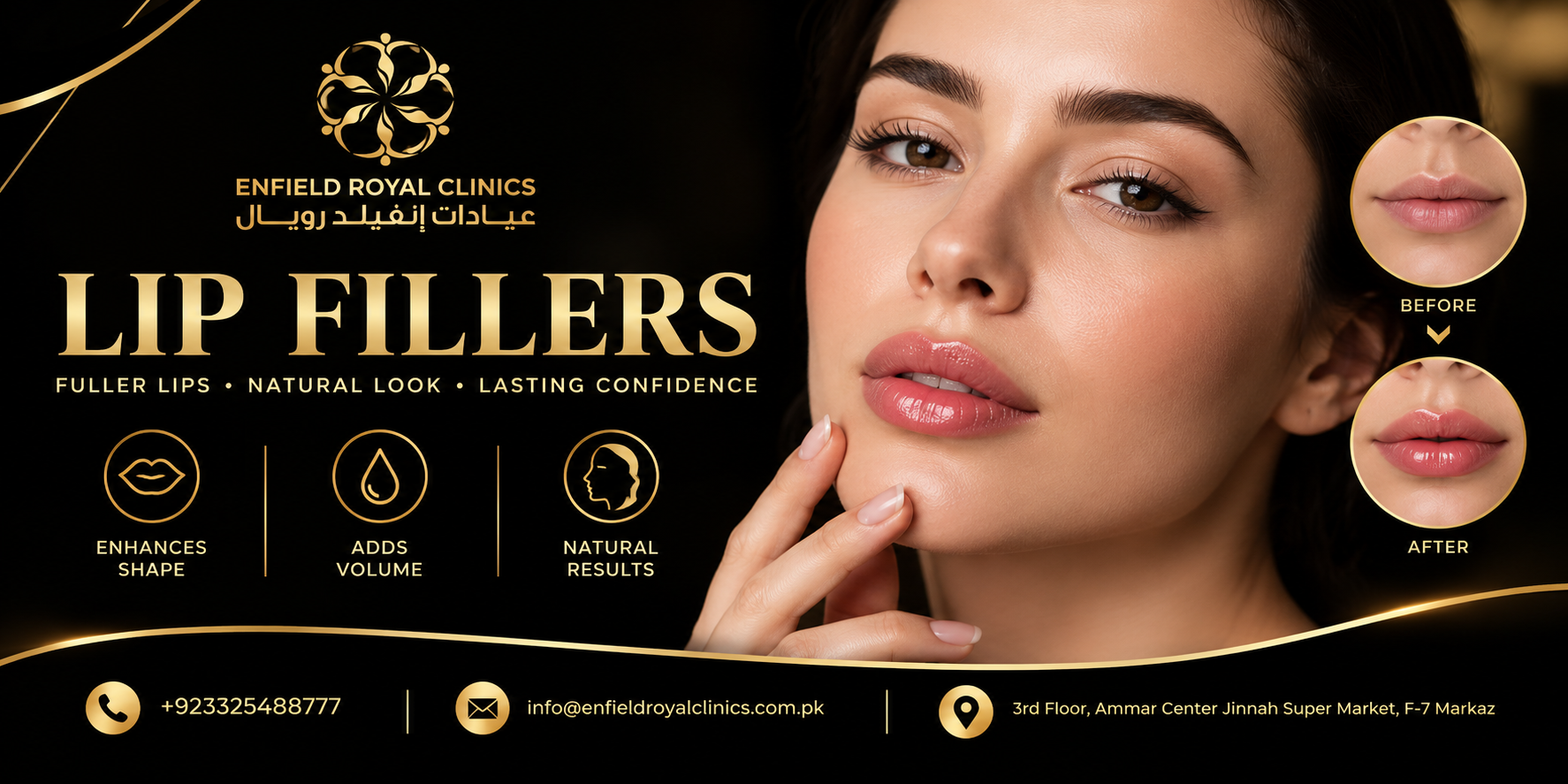
Lip fillers have become a widely requested cosmetic treatment for people who want fuller lips, better definition, or a more balanced facial appearance. However, not all lip fillers are the same. Different products have different formulations, consistencies, and characteristics, which can influence how they feel, how they are injected, and the results they may provide.
For individuals researching Lip Fillers in Islamabad, understanding the main types of fillers can help them prepare for a consultation and make informed decisions. Most modern lip fillers use hyaluronic acid, but other filler materials exist. The appropriate option depends on the person's lip structure, cosmetic goals, medical history, and the professional's assessment.
1. Hyaluronic Acid Lip Fillers
Hyaluronic acid (HA) fillers are among the most commonly used products for lip enhancement. Hyaluronic acid is a substance naturally present in the body that helps retain moisture and supports tissue hydration. In cosmetic fillers, it is formulated into a gel that can add volume and improve the appearance of the lips.
HA fillers are available in different formulations. Some gels are softer and more flexible, while others provide greater structure. A qualified medical professional selects a suitable product based on the intended treatment and the person's natural anatomy.
Hyaluronic acid lip fillers may help with:
-
Adding volume to naturally thin lips.
-
Improving the definition of the lip border.
-
Enhancing the shape of the upper and lower lips.
-
Addressing certain minor asymmetries.
-
Softening the appearance of some age-related changes around the mouth.
One important feature of HA fillers is that certain products can be dissolved using an enzyme called hyaluronidase when medically appropriate. This may be useful in selected situations, but it does not make the treatment risk-free or guarantee that every complication can be reversed.
For people considering Lip Fillers in Islamabad, HA fillers may be discussed during a consultation because their temporary effects and range of formulations allow treatment to be tailored to individual needs.
2. Soft and Flexible Lip Fillers
Some hyaluronic acid fillers have softer, more flexible gel characteristics. These products may be considered when the treatment goal is subtle fullness, a supple appearance, or gentle enhancement of the lip contours.
Because the lips move frequently during talking, eating, and smiling, flexibility is an important consideration when selecting a filler. The product should be appropriate for the delicate tissue and the intended injection area.
Soft fillers may be considered for people who want a modest enhancement rather than a dramatic increase in volume. They can also be used in carefully planned treatments that focus on the appearance of the lip border or overall shape.
However, softness alone does not determine whether a filler is suitable. Product formulation, injection depth, technique, and individual anatomy all influence the result.
A consultation helps establish whether the desired improvement requires additional volume, better definition, or a combination of both. Patients should also understand that even a soft filler can cause swelling, bruising, lumps, or other complications if used inappropriately.
3. Firmer or More Structured Lip Fillers
Some HA fillers have a firmer consistency and are designed to provide more structural support. Depending on the specific product and its approved use, a medical professional may consider these formulations when a patient needs more noticeable volume or enhanced definition.
The goal is not simply to choose the firmest product. The filler must be appropriate for the lips, where natural movement and a comfortable appearance are important.
A structured filler may be considered for certain enhancement goals, but excessive product or unsuitable placement can create an unnatural appearance. The practitioner's knowledge of facial anatomy and product characteristics is therefore essential.
When comparing filler options, patients can ask:
-
What is the product designed to achieve?
-
Is it suitable for use in the lips?
-
How might its consistency affect the result?
-
What side effects and complications are possible?
-
How long are the results expected to last?
These questions help patients understand the differences between products without assuming that one formulation is best for everyone.
4. Collagen-Stimulating and Other Non-HA Fillers
Hyaluronic acid is not the only material used in injectable cosmetic treatments. Other dermal fillers may contain substances such as calcium hydroxylapatite or poly-L-lactic acid, which are used in selected applications to provide structural support or stimulate collagen production.
However, these materials are not interchangeable with standard lip fillers, and many are not approved or recommended for direct lip augmentation. Their properties, risks, and suitability differ from those of HA gels.
Some non-HA fillers are longer-lasting or more difficult to reverse. Unlike hyaluronic acid fillers, they cannot simply be dissolved with hyaluronidase. Their use in or around the lips requires particular caution because of the area's anatomy and the potential for persistent lumps or other complications.
Patients should not assume that a filler suitable for the cheeks or other facial areas is also suitable for the lips. The exact product and its approved indications should be confirmed with a qualified medical professional.
For those exploring Lip Fillers in Islamabad, the focus should be on selecting a product specifically appropriate for the intended area rather than choosing a material based on claims of longer-lasting results.
5. Temporary Fillers Versus Longer-Lasting Options
Another way to compare fillers is by how long their effects may remain visible. Most hyaluronic acid lip fillers are temporary. Many last approximately six to twelve months, although the duration varies with the product, individual metabolism, amount injected, and other factors.
Temporary fillers appeal to some people because their effects gradually fade. Patients can reassess their preferences over time rather than committing to a permanent change.
Longer-lasting or permanent filler materials may seem attractive to people who want to avoid repeat appointments. However, they can also be more difficult to manage if an unwanted result or complication occurs.
The distinction is important because longer-lasting does not necessarily mean safer or more suitable. Permanent materials may cause delayed complications, including persistent nodules, inflammation, or changes in appearance that are difficult to correct.
Patients should discuss the expected duration of any proposed product and understand what options are available if the result is unsatisfactory. They should also avoid repeat injections before the previous treatment has been properly assessed.
A well-informed decision considers the intended result, safety profile, and reversibility of the product rather than duration alone.
6. How to Choose the Right Lip Filler Type
The most suitable lip filler depends on the individual's goals and medical circumstances. There is no single product that works best for every person.
A qualified medical professional should examine the lips, review medical history, and explain which products are appropriate for the intended use. The consultation should also cover realistic expectations, recovery, possible side effects, and complication management.
Several factors may influence product selection.
Desired appearance: A person seeking subtle definition may have different needs from someone seeking greater volume.
Natural lip structure: Existing fullness, lip proportions, and facial anatomy influence the treatment plan.
Previous treatments: Earlier fillers or complications may affect which options are suitable.
Medical history: Allergies, active infections, relevant health conditions, and medications should be discussed before treatment.
Product quality and professional expertise: The product should be authentic and appropriate for the lips, and the injector should have suitable medical training and experience.
Patients should know the name of the product being used and have the opportunity to ask questions before giving consent. Treatment should take place in a hygienic clinical setting with a clear plan for recognizing and managing complications.
Common temporary side effects include swelling, bruising, redness, and tenderness. More serious risks include infection, persistent lumps, and vascular occlusion, in which filler blocks a blood vessel and may damage tissue. Severe or increasing pain, pale or blue-grey skin, unusual mottling, or any vision changes after injections require urgent medical assessment. Vision changes are an emergency.
Elective filler treatment is generally postponed during pregnancy and breastfeeding because safety information is limited. Active cold sores or infections around the mouth may also require treatment to be delayed.
People considering Lip Fillers in Islamabad should prioritize an individualized assessment and transparent safety information over trends or promises of guaranteed results.
For more information visit Enfield royal clinic in islamabad
Frequently Asked Questions
1. What is the most common type of lip filler?
Hyaluronic acid fillers are among the most commonly used options for lip enhancement. They come in different formulations and can be selected according to the person's anatomy and desired results.
2. Are all lip fillers made from hyaluronic acid?
No. Other injectable materials exist, but they are not all appropriate for lip augmentation. Some are difficult to reverse, so the product's intended use and safety profile should be checked carefully.
3. How long do hyaluronic acid lip fillers last?
Many HA lip fillers last around six to twelve months, although the duration depends on the product and individual factors. Results gradually fade as the body breaks down the filler.
4. Can lip fillers be dissolved if a person dislikes the result?
Certain hyaluronic acid fillers can be dissolved with hyaluronidase under medical supervision. This option is not available for every filler material and does not eliminate all risks or guarantee complete correction.

 English
 Arabic
 Spanish
 Portuguese
 Deutsch
 Turkish
 Dutch
 Italiano
 Russian
 Romaian
 Portuguese (Brazil)
 Greek