


The Benefits of Amla and Bhringraj in Traditional Hair Care
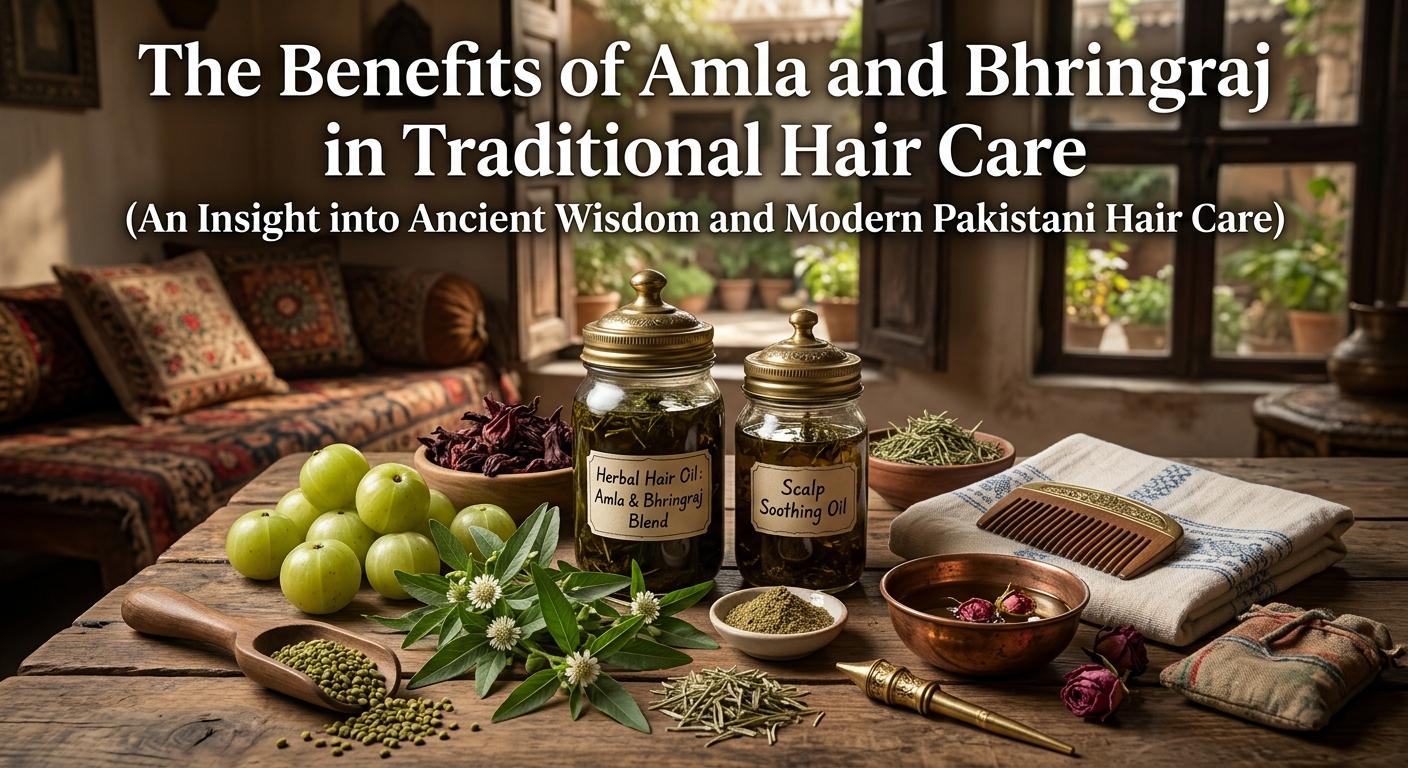
Ask almost any grandmother in Pakistan or India about her hair care secrets, and two names will come up again and again: amla and bhringraj. For centuries, these two herbs have been the backbone of traditional hair care, steeped in oils, ground into pastes, and passed down through families as trusted household knowledge. Today, as more people return to simple, natural routines, both ingredients are enjoying a revival.
But what exactly are they, what are they traditionally valued for, and how can you use them well? Let’s explore both herbs, look honestly at what the research says, and learn how to bring them into your own routine.
What Is Amla?
Amla, also known as Indian gooseberry or Emblica officinalis, is a small, pale green, sour fruit that grows across South Asia. It is one of the most important ingredients in Ayurvedic and Unani medicine and is eaten, juiced, pickled, and dried for many purposes. In hair care, it is used as a powder, a fresh pulp, an extract, or an infusion in oil.
Amla is known to be an exceptionally rich natural source of vitamin C and contains antioxidants such as tannins and polyphenols. These compounds are one reason it has such a strong reputation in traditional care for the scalp and hair.
What Is Bhringraj?
Bhringraj, botanically known as Eclipta alba or Eclipta prostrata, is a small leafy plant that grows in moist, tropical areas. In Ayurveda, it is called the “king of herbs” for hair, a title earned through centuries of use. Its leaves are traditionally crushed, dried, or infused in oil, and the resulting preparation is massaged into the scalp.
Bhringraj is commonly used in oil rather than as a paste, which is why you will find it listed in many herbal blends. It has a distinctive, earthy scent and a deep greenish tone when infused properly.
The Traditional Benefits of Amla for Hair
Traditionally, amla has been valued for several reasons.
Nourishment. Because amla is rich in vitamin C and antioxidants, it has long been used to keep hair and scalp feeling nourished. Vitamin C also plays a role in the body’s production of collagen, a protein important for skin health.
Shine and softness. Many people find that amla leaves hair looking glossier and feeling softer, which is why it is a staple in conditioning masks and shampoos.
Scalp comfort. Traditional practitioners have used amla to keep the scalp feeling cool, clean, and balanced, particularly in hot climates.
Strength. Amla has been associated with stronger-feeling hair, which makes sense when you consider that well-conditioned strands are less prone to breakage.
The Traditional Benefits of Bhringraj for Hair
Bhringraj’s traditional reputation is just as impressive.
Scalp conditioning. Bhringraj oil massage is a classic remedy for dry, tired-feeling scalps, and many people appreciate its calming, cooling quality.
Support for healthy-looking hair. In Ayurvedic tradition, bhringraj is believed to promote thicker, healthier hair, which is why it features so heavily in blends designed for hair growth.
Relaxation. Bhringraj oil is often used in head massage to ease tension and promote restful sleep, and the relaxing ritual itself may be part of its appeal.
Conditioning. Used in a carrier oil, it adds softness and helps reduce dryness in the hair lengths.
What Does the Research Say?
It is important to be honest here. Both herbs have a long history of traditional use, but modern scientific evidence is still limited.
Some laboratory and animal studies have explored extracts from Eclipta alba, with certain studies showing interesting results on hair growth in animals. A few small studies on amla extract and its compounds have also looked at its effects on hair follicles. However, large, well-designed human trials are still lacking for both herbs. This means we cannot claim that amla or bhringraj will definitely cause your hair to grow faster or thicker.
What we can say is that both are safe and well-loved in traditional use for most people, they are excellent for conditioning and scalp care, and they are reasonable ingredients to include in a routine, provided expectations remain realistic. Think of them as supportive helpers, not miracle workers.
Why Amla and Bhringraj Work So Well Together
In many traditional formulas, amla and bhringraj appear side by side. Part of the reason is complementary function. Amla contributes antioxidant richness, shine, and conditioning, while bhringraj is valued for its scalp-soothing, massage-friendly nature. Combined in a nourishing carrier oil such as coconut, sesame, or almond, they create a blend that moisturizes, softens, and supports the scalp.
This combination is also popular because it fits so naturally with the tradition of scalp massage, which may support circulation and helps release tension. A good hair oil for hair growth often features these herbs for exactly this reason, even though the oil itself is only one part of a healthy hair routine.
How to Use Amla at Home
Amla is simple to use and works in several ways.
Amla hair mask. Mix two tablespoons of amla powder with enough water or plain yogurt to make a smooth paste. Apply it to your scalp and lengths, leave it for twenty to thirty minutes, and rinse thoroughly. Because amla can leave a slight tint, especially on blonde or grey hair, test a small section first.
Amla rinse. Soak a tablespoon of dried amla pieces or powder in a cup of warm water for a few hours, strain, and use the liquid as a final rinse after shampooing.
Amla and oil. Many people add a spoonful of amla powder to their regular oil and warm it gently, though homemade infusions need careful preparation and should be used fresh.
How to Use Bhringraj at Home
Bhringraj is most commonly used in oil form. If you buy dried bhringraj leaves, you can infuse them in a carrier oil by gently heating them over very low heat for a short time, then letting the oil cool and straining it. This takes care, because overheating can ruin the oil or cause burns, and homemade infusions can spoil, so store them in a clean container and use them within a few weeks.
For many beginners, buying a ready-made bhringraj oil is simpler and more reliable. If you prefer ready-made products, look for brands that clearly list real herbs in the ingredients. Desi Khazanay, for example, creates herb-inspired oils based on traditional recipes, which can suit people who like the idea of amla and bhringraj in their routine without preparing infusions themselves. Whatever you choose, read the label and be realistic about the timeline for results.
How to Choose a Quality Herbal Oil
Not every oil that mentions amla or bhringraj on the front actually contains much of them. Ingredients are listed in order of quantity, so check that the herbs appear near the top rather than at the very end. Look for natural carrier oils like coconut, sesame, or almond, and be cautious of products dominated by mineral oil, strong artificial fragrance, or colorants.
Also consider your scalp. Oily scalps do better with lighter formulas used in smaller amounts, while dry scalps usually welcome richer blends. When choosing a hair oil for hair growth, pick the texture you will actually enjoy using, because consistency matters more than any single ingredient.
The Right Way to Apply Herbal Oil
Warm a small amount of oil by placing the bottle in warm water or rubbing a few drops between your palms. It should feel comfortably warm, never hot. Part your hair into sections and apply the oil to your scalp with your fingertips. Massage in slow, circular motions for five to ten minutes, using the pads of your fingers, not your nails.
Spread any leftover oil through the lengths and ends. Leave it on for at least an hour, or overnight if your scalp tolerates it, protecting your pillow with a cap or old cloth. When washing, apply shampoo to your dry, oiled hair first, then add water and lather. Rinse well. Once or twice a week is plenty for most people.
Safety and Patch Testing
Natural does not mean risk-free. Amla and bhringraj are generally well tolerated, but any herb can cause irritation or allergy in sensitive individuals. Always patch test a new product on your inner forearm and wait 24 hours. Avoid using any oil on broken, inflamed, or infected skin, and stop if you notice redness, burning, or persistent itching.
If you are pregnant, breastfeeding, or have a skin condition like eczema or psoriasis, check with a doctor before adding new herbal products. Keep in mind that fresh amla pastes and homemade infusions can spoil quickly, so make small batches.
Common Mistakes to Avoid
Using too much oil leaves the scalp heavy and difficult to clean. Oiling too often can cause buildup and itching, especially for oily scalps. Applying oil that is too hot can burn the skin. Many people also give up too early. Hair grows only about half an inch per month, so it takes at least three to four months to judge any routine.
Finally, do not expect herbs to solve medical problems. If your hair fall is caused by iron deficiency, thyroid issues, hormonal changes, or stress, no oil can replace proper treatment.
Support Your Hair From Within
Traditional herbs work best when paired with good nutrition. Hair is made largely from protein, and it relies on iron, zinc, vitamin D, B vitamins, and healthy fats. Eggs, lentils, leafy greens, nuts, seeds, fish, and fruit all help. Interestingly, eating amla itself, whether fresh, as juice, or in murabba, is also a traditional way of supporting the body’s vitamin C intake. Drink enough water, sleep well, and manage stress.
Handle your hair gently too. Avoid rough towels, tight hairstyles, and excessive heat styling, and trim your ends regularly.
When to See a Professional
If you notice sudden or heavy hair fall, bald patches, a rapidly widening part, or a scalp that is painful, scaly, or persistently itchy, consult a doctor or dermatologist. Early diagnosis makes treatment more effective.
Final Thoughts
Amla and bhringraj have earned their place in traditional hair care through generations of use. They nourish, condition, and soothe, and they turn a simple oil massage into a comforting ritual. While science has yet to fully confirm every traditional claim, there is little doubt that they make a lovely addition to a gentle, consistent routine.
Start small, choose a well-made hair oil for hair growth that suits your scalp, and be patient with the process. With steady care, good nutrition, and a little time, these two time-honored herbs can help your hair feel softer, stronger, and healthier.

 English
 Arabic
 Spanish
 Portuguese
 Deutsch
 Turkish
 Dutch
 Italiano
 Russian
 Romaian
 Portuguese (Brazil)
 Greek