


5CO02 Assessment Writing Tips for Higher Grades
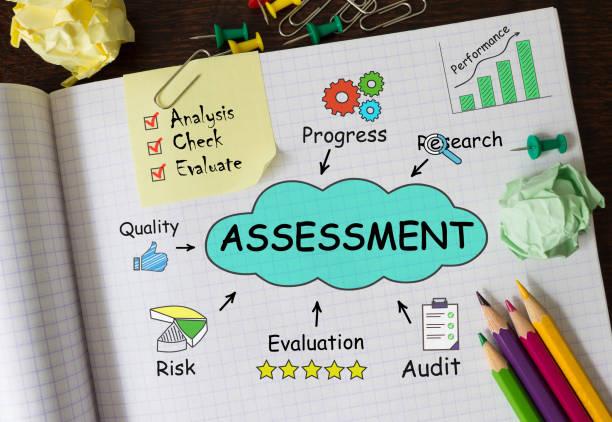
Writing a strong 5CO02 assessment is not simply about putting more information on the page. If you want to achieve a better result, you need to show that you can use evidence to reach sensible conclusions, question the information in front of you and apply what you have learned to a people-practice situation.
That is important because evidence-based practice is a central part of the CIPD Profession Map. CIPD describes it as using evidence and data to create insight, solve problems, develop ideas and measure impact. Its current guidance also stresses that good decisions should draw on multiple sources of evidence rather than relying on assumptions or professional opinion alone.
With that in mind, here are the approaches I would use if I were preparing a 5CO02 assessment and wanted my writing to demonstrate genuine understanding rather than just meet a word count.
1. Read the question before researching
It sounds obvious, but it is surprisingly easy to start researching a topic before properly working out what the question is asking.
I find it more useful to break the question into smaller parts first.
Look for the instruction or command word. Words such as explain, analyse, assess, evaluate and recommend require different approaches.
For example, if the question asks you to evaluate something, describing what it is isn't enough. You need to consider its value, strengths, weaknesses, limitations and relevance before reaching a reasoned judgement.
If the question asks you to recommend an approach, your recommendation should come from the evidence you have discussed. It shouldn't appear as an unrelated opinion at the end of the answer.
A simple technique is to write the question at the top of your planning document and underline the key instruction. Then keep checking your paragraphs against it.
If a paragraph doesn't help you answer the question, ask yourself whether it really needs to be there.
2. Understand what evidence-based practice means
One of the biggest improvements you can make to a 5CO02 assignment is understanding that evidence-based practice is more than adding references to your work.
CIPD explains that evidence-based practice involves using high-quality evidence from multiple sources to inform decisions. These sources include scientific research, organisational data, professional expertise and the views of stakeholders.
That gives you a useful way of thinking about your assessment.
Imagine an organisation has a problem with employee turnover. You could simply say that turnover is high and suggest improving employee engagement.
But an evidence-based approach asks more questions.
What does the organisation's turnover data actually show? Are particular departments or employee groups affected? What are employees saying? What does published research tell us about possible causes? What does professional experience suggest? Are there other explanations for the figures?
Suddenly, you're not just describing a problem. You're investigating it.
That distinction is at the heart of good 5CO02 Evidence-Based Practice work.
3. Don't let your assignment become descriptive
If I had to identify one writing habit worth changing, it would be this: don't spend too much time telling the reader what something is.
Definitions have their place, but they should normally be a starting point rather than the whole discussion.
For example, you might explain that SWOT analysis considers strengths, weaknesses, opportunities and threats. That's useful background.
But the stronger part of your answer would be explaining whether SWOT is suitable for the particular problem you're investigating.
What can the tool reveal?
What can it fail to reveal?
Would another analytical method provide better insight?
What additional evidence would you need?
That is where analysis begins.
Academic critical writing generally requires you to examine evidence and arguments rather than simply repeat information. This is why a shorter paragraph containing genuine evaluation can be more valuable than a much longer paragraph containing definitions and descriptions.
4. Use several types of evidence
The CIPD's current evidence-based practice guidance is particularly useful for 5CO02 because it emphasises combining different evidence sources.
When researching a people issue, consider four broad areas:
- Scientific or academic research
- Organisational data
- Professional expertise
- Stakeholder perspectives
Each has advantages and limitations.
For example, an employee survey might tell you how employees feel, but it may not explain the underlying cause. Organisational statistics can show a pattern but may not explain why that pattern exists. Academic research can provide broader evidence, but findings from another organisation may not automatically apply to your own situation.
This is why combining sources is so useful.
If several sources point towards the same conclusion, your argument becomes more convincing. If they disagree, that disagreement can actually give you something valuable to analyse.
5. Choose sources carefully
You don't need 30 references simply to make your bibliography look impressive.
I'd rather see a smaller number of relevant, credible sources being used properly.
For a CIPD assignment, useful sources can include:
- CIPD research and professional guidance
- Peer-reviewed journal articles
- Academic books
- Government publications
- Relevant legislation and official guidance
- Reputable research organisations
- Reliable organisational information
The source should fit the claim you're making.
For example, CIPD is an obvious authoritative source for professional standards and people-practice guidance. The CIPD Profession Map describes the people profession as principles-led, evidence-based and outcomes-driven. It was developed with input from people professionals, employers and academics and is reviewed periodically.
That makes it far more useful for establishing professional expectations than an anonymous blog.
6. Question the evidence you find
Finding a source isn't the end of the research process.
Ask yourself whether the evidence is actually strong enough to support the point you're making.
Consider:
- Who produced the information?
- What was the purpose of the research?
- How recent is it?
- What methodology was used?
- How large was the sample?
- Does the evidence apply to the situation you're discussing?
- Are there obvious limitations?
- Do other credible sources agree?
This is particularly important when you're discussing research findings.
One study may suggest that a particular HR intervention works, but that doesn't automatically mean it will work in every organisation.
CIPD makes a similar point in its evidence-based HR guidance: evidence needs to be critically appraised, and practitioners should avoid treating a single piece of research as conclusive.
That kind of caution can actually strengthen your writing.
7. Apply everything to the scenario
This is where many otherwise reasonable assignments lose impact.
You can demonstrate that you understand a theory, model or concept, but your answer becomes much stronger when you explain what it means in the organisation or situation you're discussing.
Suppose you're looking at employee absence.
Instead of writing several paragraphs about the general causes of absence, connect the discussion to the evidence available in your case.
Perhaps absence is concentrated in one department. Perhaps the organisation has recently changed working patterns. Perhaps employee feedback suggests workload is an issue.
Now your discussion has somewhere to go.
You can consider possible explanations, compare them with research and identify what additional evidence would be useful.
The CIPD Profession Map specifically highlights situational decision-making and an outcomes-driven approach.
Your assessment should reflect that thinking.
8. Don't just present numbers interpret them
If your 5CO02 task includes organisational data, don't make the mistake of thinking that calculating a percentage is the same as analysing it.
Suppose an organisation's employee turnover has increased from 10% to 15%.
The calculation is straightforward.
The interesting question is why.
You could investigate whether:
- The increase occurred across the whole organisation or only one team
- Particular job roles have been affected
- Turnover has changed gradually or suddenly
- Recruitment has changed
- Employee engagement has changed
- Management structures have changed
- External labour-market conditions may have influenced the figures
You also need to recognise that correlation doesn't automatically establish causation.
The CIPD notes that good-quality organisational data is an important component of evidence-based decision-making, but data still needs to be interpreted appropriately.
So don't stop at “the figures show…”.
Ask what the figures might mean.
9. Use qualitative evidence carefully
Numbers aren't the only evidence worth considering.
Employee interviews, focus groups, survey comments and stakeholder feedback can provide context that quantitative data cannot.
For instance, an engagement survey might reveal that employees are dissatisfied with communication from managers. That doesn't automatically prove that poor communication is the main cause of high turnover, but it gives you something worth investigating.
Look for recurring themes and differences in people's experiences.
At the same time, don't over-generalise.
If five employees mention the same problem, you shouldn't automatically write that all employees believe this. Explain the limitation and consider whether more evidence is needed.
That shows balanced judgement.
10. Connect HR decisions with business outcomes
Another useful 5CO02 assessment writing tip is to avoid discussing HR activity in isolation.
Think about the effect on both people and the organisation.
For example, if you are discussing a learning and development initiative, possible measures might include:
- Employee participation
- Knowledge or skill development
- Changes in behaviour
- Performance
- Productivity
- Retention
- Quality
- Customer outcomes
- Financial results
Not every measure will be appropriate in every situation.
The point is to explain why a particular measure would help determine whether the intervention worked.
This fits with CIPD's emphasis on being outcomes-driven and understanding how people practices create value for both people and organisations.
11. Bring ethics into your analysis
Ethical considerations shouldn't be something you add in the final two sentences simply because you remembered them.
People professionals regularly deal with decisions involving fairness, confidentiality, employee wellbeing and competing interests.
CIPD identifies ethical practice as a core professional behaviour and places principles-led decision-making alongside evidence-based and outcomes-driven practice.
When considering a recommendation, therefore, ask yourself:
Who could benefit?
Could anyone be disadvantaged?
Is the approach fair?
Are employee views being considered?
Is personal information being handled appropriately?
Could the decision create unintended consequences?
These questions can turn a basic recommendation into a much more thoughtful professional evaluation.
12. Make your recommendations evidence-led
A recommendation should feel like the natural conclusion of your argument.
A useful way to structure your thinking is:
Problem → Evidence → Options → Evaluation → Recommendation → Measurement
For example, if employee feedback indicates that managers are struggling with communication, don't automatically jump to “provide management training”.
There may be several possible explanations.
Perhaps managers need training. Perhaps workloads are unrealistic. Perhaps communication systems are poor. Perhaps senior leadership needs to clarify expectations.
Consider the alternatives and explain why your preferred option is the most appropriate given the available evidence.
Then explain how the organisation could measure whether it worked.
That is much more persuasive than simply writing, “The organisation should introduce training because it would improve communication.”
13. Keep your writing straightforward
You don't need complicated vocabulary to demonstrate Level 5 thinking.
In fact, overly complicated writing can make your argument harder to follow.
I'd aim for:
- Short-to-medium paragraphs
- Clear topic sentences
- Specific examples
- Relevant evidence
- Logical transitions
- Clear conclusions
- Consistent referencing
For example, instead of writing:
It can therefore arguably be postulated that the aforementioned methodology may potentially facilitate the achievement of improved organisational outcomes.
Just say:
This approach could improve organisational outcomes because it addresses the underlying issue identified in the evidence.
Clear writing is not simplistic writing.
The quality comes from the reasoning.
14. Leave time for a proper final review
Don't treat proofreading as simply checking spelling.
Before submitting your 5CO02 assessment, read it against the criteria again.
I'd use this checklist:
- Have I answered every part of the question?
- Have I followed the command word?
- Have I used credible sources?
- Have I evaluated the evidence?
- Have I considered limitations?
- Have I applied the discussion to the scenario?
- Have I interpreted the data?
- Are my recommendations supported by evidence?
- Have I considered ethical implications?
- Is my referencing consistent?
- Have I removed unnecessary repetition?
- Does my conclusion reflect the argument I actually made?
If you can answer “yes” to most of these, you're in a much stronger position than you would be simply by adding more words.
When extra 5CO02 support can be useful
Sometimes the problem isn't understanding the subject. It's knowing whether your answer is doing enough.
You may understand evidence-based practice but still struggle with structuring an argument, interpreting a question or deciding whether a paragraph is analytical enough.
In that situation, feedback can be useful because it gives you another perspective on your structure and reasoning. If you're considering external academic guidance, you can also look at 5CO02 assignment Help for support related to the unit.
Any support should complement your own learning rather than replace it. Your final assessment should represent your own understanding, judgement and work.
Final thoughts
A higher-quality 5CO02 assessment isn't created by trying to make every sentence sound academic.
It comes from thinking more carefully.
Start with the question. Understand what the assessment is asking you to demonstrate. Find reliable evidence, but don't accept every source uncritically. Compare different types of evidence and recognise their limitations. Apply your discussion to the situation you're dealing with, interpret data rather than merely repeating it, and make recommendations that can be justified.
Most importantly, keep asking yourself one question:
“What does this evidence actually tell me, and what should I do with it?”
That question captures much of what evidence-based practice is about.
The CIPD's current Profession Map places evidence-based practice alongside principles-led and outcomes-driven professional practice, while its evidence-based practice guidance emphasises critical appraisal and the use of multiple evidence sources.

 Arabic
 French
 Spanish
 Portuguese
 Deutsch
 Turkish
 Dutch
Dutch
 Italiano
 Russian
 Romaian
 Portuguese (Brazil)
 Greek
Greek