


Sales Meeting Scheduling: How to Book More Qualified Meetings
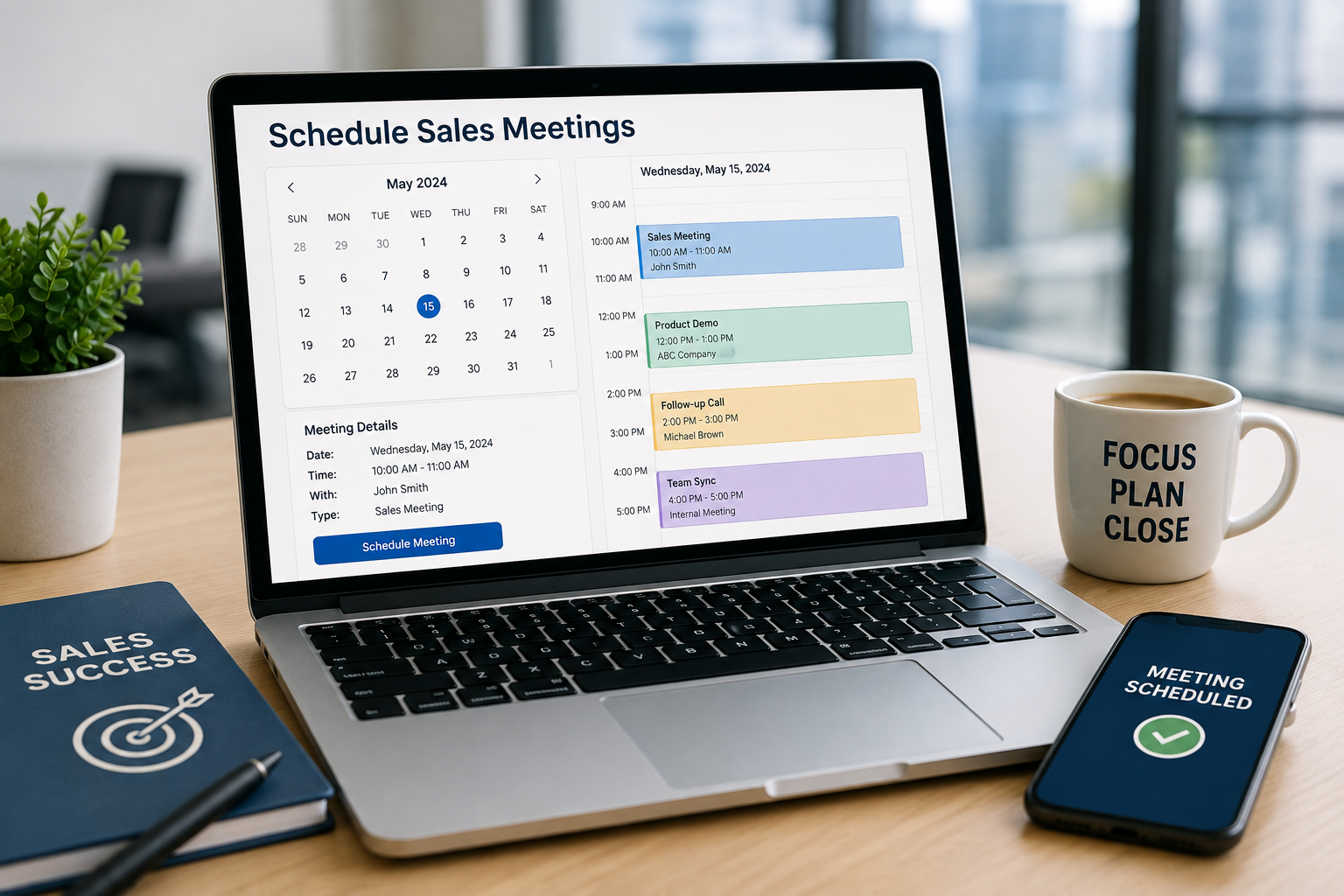
Sales teams often focus heavily on generating leads, sending outreach, and hitting activity targets. But none of that matters if those efforts do not result in conversations with the right buyers.
Sales meeting scheduling is a critical part of the B2B sales process. The goal is not simply to put more meetings on a salesperson’s calendar. It is to schedule more qualified sales meetings with prospects who have a genuine business need, the authority or influence to make a decision, and a realistic reason to consider a solution.
When meeting quality improves, sales representatives spend less time on unproductive calls and more time having conversations that can lead to revenue.
What Is Sales Meeting Scheduling?
Sales meeting scheduling is the process of identifying prospects, engaging them through sales outreach, qualifying their interest, and booking a time for a sales conversation.
It can involve several activities, including:
-
Prospect research and account selection
-
Email and phone outreach
-
Lead qualification
-
Appointment setting
-
Calendar management
-
Meeting confirmation
-
Pre-meeting preparation
For modern B2B sales teams, effective scheduling goes beyond finding an available time slot. It requires understanding whether the prospect is actually worth a salesperson's time.
A calendar filled with poorly qualified meetings may look productive, but it can create significant inefficiencies for the sales organization.
Why Qualified Meetings Matter More Than More Meetings
A common sales mistake is measuring success based only on the number of meetings booked.
For example, a salesperson might schedule 30 meetings in a month. If only five prospects have a legitimate business problem and buying potential, the apparent success of those 30 meetings is misleading.
A better approach is to focus on meeting quality.
Qualified meetings typically involve prospects who:
-
Fit the company's ideal customer profile
-
Have a relevant business challenge
-
Have a potential need for the solution
-
Are involved in the buying process
-
Have a reasonable timeline
-
Are willing to discuss their situation
This allows sales representatives to focus their time where it has the greatest potential impact.
1. Define Your Ideal Customer Profile
Effective sales meeting scheduling starts before the first outreach message.
Your team needs a clear understanding of the customers most likely to benefit from your product or service. This is your ideal customer profile (ICP).
Consider factors such as:
-
Industry
-
Company size
-
Revenue
-
Geographic market
-
Business model
-
Technology environment
-
Common business challenges
-
Buying triggers
Without a clear ICP, sales development representatives may schedule meetings with almost anyone who responds.
That can increase meeting volume while reducing conversion rates.
A well-defined ICP gives your team a framework for deciding which prospects deserve outreach and which ones should be deprioritized.
2. Use Better Qualification Criteria
Qualification should happen before the meeting reaches the salesperson's calendar.
This does not mean interrogating prospects with a long list of questions. Instead, sales teams should identify the information that genuinely determines whether a conversation is worth having.
Useful qualification areas can include:
Need: Does the prospect have a problem your solution can address?
Fit: Does the company match your ideal customer profile?
Authority: Is the person involved in evaluating or influencing the purchase?
Timing: Is there a realistic reason to consider a solution now?
Business impact: Is the problem important enough to justify action?
The exact criteria will vary by company, but the principle is consistent: qualify for potential value, not just interest.
3. Personalize Your Outreach
Generic outreach makes it difficult to stand out.
Instead of sending the same sales message to every prospect, tailor your communication around the prospect's business situation.
Research the company, industry, role, recent changes, and potential challenges. Then connect your message to something relevant.
For example, rather than saying:
"We help companies improve sales performance. Would you be available for a quick call?"
A more relevant message might connect your solution to a specific business challenge the prospect is likely facing.
Personalization gives prospects a reason to respond and helps salespeople attract buyers who actually have a relevant problem.
4. Make Scheduling Easy
Even interested prospects may fail to book a meeting if scheduling requires too much effort.
Reduce friction by giving prospects a simple way to choose a suitable time.
Calendar scheduling tools can help prospects:
-
View available time slots
-
Select a convenient meeting time
-
Receive automatic confirmation
-
Add the meeting to their calendar
-
Reschedule when necessary
However, convenience should not replace qualification.
The objective is to make it easy for qualified prospects to schedule, rather than making it easy for everyone to book time with your sales team.
5. Set Expectations Before the Meeting
A prospect is more likely to attend and participate in a meeting when they understand what the conversation will cover.
Your confirmation email should provide useful information such as:
-
Meeting purpose
-
Expected duration
-
Who will attend
-
Topics that will be discussed
-
Any preparation required
For example, instead of simply confirming a 30-minute sales call, explain that the meeting will focus on understanding the prospect's current process, challenges, and potential areas for improvement.
This creates a more productive starting point for the conversation.
6. Reduce No-Shows
No-shows waste valuable sales time and can disrupt the entire sales team's schedule.
Automated reminders can help reduce this problem. Consider sending reminders at appropriate intervals before the meeting.
You can also improve attendance by making the meeting valuable from the beginning.
A prospect who understands exactly why the meeting matters is more likely to show up than someone who simply clicked a calendar link several days earlier.
If a prospect repeatedly reschedules or fails to attend, that can also be a qualification signal. Your team should determine whether continued follow-up is justified.
7. Train Reps to Qualify, Not Just Book
Sales meeting scheduling should not be treated as a separate administrative task.
Sales development representatives and appointment setters need the skills to recognize meaningful buying signals.
Training should help reps understand:
-
What makes a prospect qualified
-
Which questions reveal business needs
-
How to identify buying intent
-
How to handle objections
-
When not to schedule a meeting
-
How to communicate value
This is where sales training becomes especially important.
A trained sales team can distinguish between someone who is simply curious and someone who has a problem worth solving.
8. Measure Meeting Quality
If your organization only tracks meetings booked, you are missing important information.
Measure what happens after the meeting.
Useful metrics include:
-
Meetings booked
-
Meeting attendance rate
-
Qualified meeting rate
-
Meetings progressing to opportunities
-
Opportunity conversion rate
-
Pipeline generated
-
Revenue generated
-
Average sales cycle
These metrics reveal whether your scheduling process is producing real business results.
For example, if meeting volume increases by 30% but qualified opportunities decline, the problem may be poor qualification rather than insufficient outreach.
Turn More Conversations Into Revenue
Effective sales meeting scheduling is not about filling calendars. It is about creating the right conversations.
The strongest sales teams combine clear qualification criteria, targeted prospecting, personalized outreach, convenient scheduling, and effective sales training.
When these elements work together, sales representatives spend more time speaking with prospects who have genuine needs and less time chasing meetings that were never likely to become opportunities.
Conclusion
Sales meeting scheduling is most effective when the goal is quality, not quantity. By targeting the right prospects, using clear qualification criteria, personalizing outreach, making scheduling easy, and preparing prospects before the call, sales teams can create more valuable conversations.
The right sales training and measurement also help teams continuously improve meeting quality and conversion rates. Ultimately, a strong scheduling process gives sales reps more time with the buyers who matter most, and creates a healthier, more predictable pipeline.

 English
 Arabic
 French
 Spanish
 Portuguese
 Deutsch
 Turkish
 Dutch
Dutch
 Italiano
 Russian
 Portuguese (Brazil)
 Greek
Greek