


How Do You Know If You Need Invisible Braces?
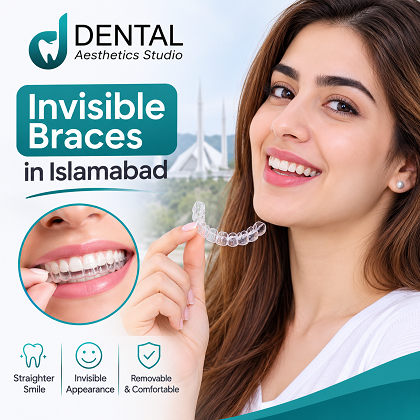
Having straight teeth is not only important for an attractive smile but also supports good oral health. However, many people experience dental alignment problems that affect their confidence and ability to maintain proper oral hygiene. Invisible braces offer a discreet way to correct several orthodontic concerns without using traditional metal brackets and wires.
But how do you know if you need invisible braces? Certain signs, such as crowded teeth, noticeable gaps, and bite problems, may indicate that orthodontic treatment could benefit you. If you are considering invisible braces in Islamabad, understanding these signs can help you decide when to consult a dentist.
1. Your Teeth Are Crooked:
Crooked teeth are one of the most common reasons people consider orthodontic treatment. When teeth grow at different angles or overlap, they can affect your smile and make cleaning difficult.
Invisible braces gradually move crooked teeth into better positions. However, treatment suitability depends on the severity of the misalignment.
2. You Have Gaps Between Your Teeth:
Noticeable spaces between teeth can affect the appearance of your smile. These gaps may develop because of differences in tooth size, missing teeth, or natural spacing.
Invisible braces can help close suitable gaps by gradually moving the teeth closer together.
3. Your Teeth Are Overcrowded:
Dental overcrowding happens when there is not enough space in your jaw for all your teeth to fit properly. As a result, some teeth may overlap, twist, or become misaligned.
Invisible braces can correct many mild to moderate overcrowding cases. Your dentist will examine your teeth to determine whether clear aligners are suitable.
4. You Have an Overbite or Underbite:
Bite problems occur when the upper and lower teeth do not meet correctly.
Common examples include:
-
Overbite: Upper front teeth overlap the lower front teeth excessively.
-
Underbite: Lower front teeth extend beyond the upper front teeth.
-
Crossbite: Some upper teeth sit inside the lower teeth when biting.
-
Open bite: Upper and lower teeth do not meet properly when the mouth is closed.
Invisible braces can correct certain bite problems, depending on their severity and underlying cause.
5. You Experience Difficulty Cleaning Your Teeth:
Misaligned or crowded teeth can make brushing and flossing more challenging. Food particles and plaque may accumulate in areas that are difficult to reach.
If you regularly struggle to clean between your teeth, an orthodontic assessment may help determine whether correcting their alignment could improve your oral hygiene.
6. Your Teeth Have Shifted Over Time:
Sometimes, teeth that were previously straight begin moving out of position. This can happen when retainers are not worn after orthodontic treatment or because of natural changes over time.
Invisible braces may help correct certain cases of shifting teeth and restore better alignment.
7. You Feel Uncomfortable About Your Smile:
If crooked teeth, gaps, or overlapping teeth make you feel less confident when smiling, orthodontic treatment may be worth considering.
Invisible braces offer a discreet option for people who want to improve their smiles without the noticeable appearance of traditional braces.
8. You Have Uneven Tooth Alignment:
Uneven tooth alignment can affect how your upper and lower teeth fit together. It may also create uneven pressure when biting or chewing.
Invisible braces can gradually improve suitable alignment problems through a personalised treatment plan.
Are Invisible Braces Suitable for Everyone?
No, invisible braces are not suitable for every orthodontic condition. They generally work well for many mild to moderate alignment problems, but complex cases may require traditional braces or additional dental procedures.
Your dentist will evaluate your teeth, gums, jaw alignment, and overall oral health before recommending treatment.
What Happens During an Invisible Braces Consultation?
During your consultation, the dentist examines your teeth and discusses your smile concerns. Digital scans or dental impressions may be used to understand your alignment and plan treatment.
The dentist may also explain:
-
Whether invisible braces are suitable for your condition.
-
How long treatment may take.
-
How frequently you need to change aligners.
-
The expected treatment results.
-
The importance of wearing aligners consistently.
This assessment helps create a treatment plan based on your individual dental needs.
Final Thoughts:
Crooked teeth, gaps, overcrowding, bite problems, and shifting teeth are common signs that you may benefit from orthodontic treatment. Invisible braces can help correct many of these concerns while offering a discreet alternative to traditional braces.
If you notice any of these signs, consider scheduling a dental consultation. Dental Aesthetics Studio can help you understand your orthodontic needs and explore suitable options for achieving a healthier, straighter smile.

 English
 Arabic
 French
 Spanish
 Portuguese
 Deutsch
 Turkish
 Dutch
 Italiano
 Russian
 Portuguese (Brazil)
 Greek