


Amazon SEO Services: Frequently Asked Questions Every Amazon Seller Should Know
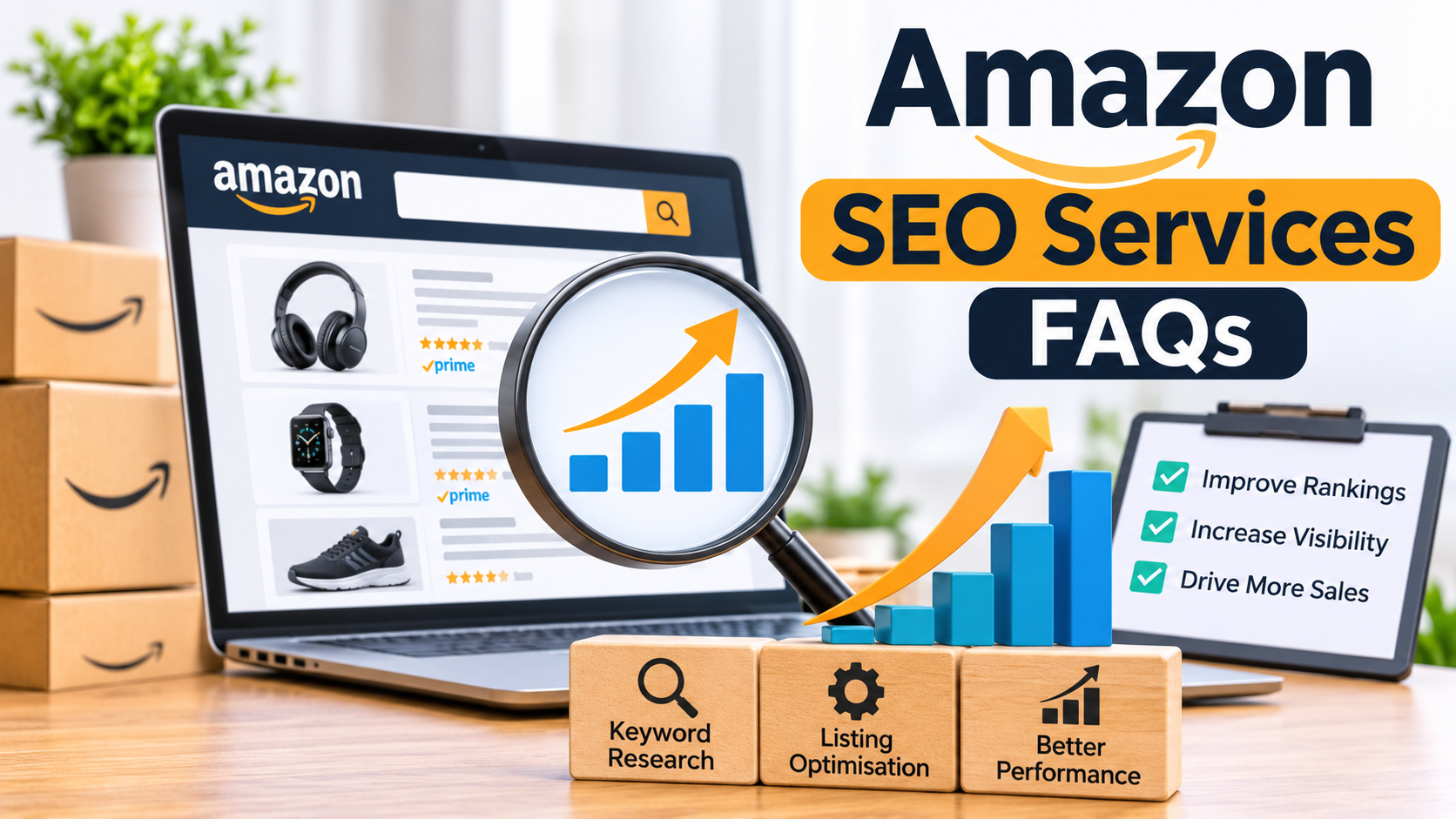
Selling products on Amazon requires more than uploading product listings and waiting for customers to find them. With thousands of competing products in almost every category, sellers need an effective optimisation strategy to improve visibility, attract potential buyers and increase sales. Professional Amazon search engine optimisation services help businesses improve product rankings, target relevant search terms and create listings that appeal to customers. Understanding how optimisation works can help sellers make better decisions and build a stronger presence in the Amazon marketplace.
1. What Are Amazon SEO Services?
Amazon SEO Services focus on improving product listings so they appear more prominently in Amazon search results. The process involves researching relevant keywords, optimising product titles, writing informative bullet points, improving descriptions and enhancing product images.
Amazon uses its own search algorithm, commonly known as A9, to determine which products appear for particular customer searches. Although the algorithm considers several ranking factors, relevance and sales performance play important roles.
Effective optimisation helps sellers:
-
Improve product visibility in search results.
-
Target relevant customer search queries.
-
Increase organic product traffic.
-
Improve listing quality and readability.
-
Encourage customers to make purchasing decisions.
-
Build long-term marketplace performance.
A well-optimised listing provides useful information while naturally incorporating keywords that match customer search intent.
2. Why Is Amazon SEO Important for Sellers?
Amazon is a competitive marketplace where customers often compare several products before making a purchase. If a product does not appear in relevant search results, potential customers may never discover it.
Amazon optimisation helps businesses improve organic visibility without depending entirely on paid advertising. It also ensures that product pages communicate the right information to potential buyers.
Some important benefits include:
Better organic rankings: Relevant keywords and well-structured listings can improve product discoverability.
Increased traffic: Optimised listings can attract shoppers searching for specific products and features.
Improved conversions: Clear descriptions, attractive images and informative bullet points help customers understand product benefits.
Reduced advertising dependency: Strong organic visibility can support a more balanced marketing strategy.
Long-term growth: Regular listing improvements help businesses maintain relevance as customer search behaviour changes.
3. How Does Amazon SEO Work?
Amazon SEO works by improving different elements of a product listing to make it relevant to customer searches and encourage purchases.
The process generally involves several activities:
-
Keyword research: Identify the search terms customers use when looking for products.
-
Title optimisation: Include important keywords while keeping product titles clear and informative.
-
Bullet point optimisation: Highlight product features, specifications and benefits.
-
Product description: Provide detailed information that answers common customer questions.
-
Backend search terms: Add relevant keywords in the appropriate backend fields without unnecessary repetition.
-
Image optimisation: Use high-quality product images that clearly communicate product features.
-
Performance monitoring: Review rankings, traffic and conversion performance to identify improvement opportunities.
These activities work together to improve listing relevance and the overall shopping experience.
4. Which Factors Affect Amazon Product Rankings?
Several factors can influence how products perform in Amazon search results. Sellers should understand these elements when developing an optimisation strategy.
Important ranking considerations include:
-
Keyword relevance: Products should contain search terms that accurately describe the item.
-
Sales performance: Consistent sales can contribute to stronger product visibility.
-
Conversion rate: Listings that encourage customers to purchase can support better performance.
-
Customer reviews: Positive customer feedback can influence purchasing decisions.
-
Pricing: Competitive pricing can make products more attractive to shoppers.
-
Stock availability: Maintaining sufficient inventory helps avoid missed sales opportunities.
-
Listing quality: Complete and informative product pages provide a better customer experience.
Amazon's ranking system is dynamic, so sellers should regularly review listing performance rather than relying on a one-time optimisation process.
5. How Can Keyword Research Improve Amazon Listings?
Keyword research is one of the most important parts of marketplace optimisation. It helps sellers understand how customers search for products and which phrases should appear in product listings.
For example, a seller offering wireless headphones might target search phrases such as:
-
Wireless Bluetooth headphones
-
Noise-cancelling headphones
-
Wireless headphones with microphone
-
Over-ear Bluetooth headphones
-
Headphones for travelling
A suitable keyword strategy should include primary, secondary and long-tail search terms. Primary keywords describe the main product category, while secondary and long-tail phrases target more specific customer requirements.
Sellers can use Amazon search suggestions, competitor listings and keyword research tools to identify relevant opportunities.
However, keywords should always be incorporated naturally. Excessive repetition can make listings difficult to read and negatively affect the customer experience.
6. What Is the Difference Between Amazon SEO and Amazon PPC?
Amazon SEO and Amazon PPC are two different approaches to improving product visibility.
Amazon SEO focuses on organic visibility through keyword research, listing improvements and product page optimisation. Amazon PPC uses paid advertising campaigns to display products in sponsored placements.
Here are the main differences:
|
Feature |
Amazon SEO |
Amazon PPC |
|---|---|---|
|
Traffic source |
Organic search |
Paid advertisements |
|
Cost structure |
Optimisation investment |
Advertising spend |
|
Visibility |
Organic placements |
Sponsored placements |
|
Main focus |
Listing relevance and quality |
Campaign targeting |
|
Results |
Usually gradual |
Can generate immediate exposure |
|
Long-term value |
Builds organic visibility |
Depends on ongoing campaign investment |
Both approaches can complement each other. SEO supports long-term organic growth, while PPC helps sellers reach potential customers through targeted advertising.
7. When Should a Business Hire an Amazon SEO Agency?
Businesses should consider working with an Amazon SEO Agency when product listings struggle to gain visibility, organic sales remain low or competitors consistently outperform existing products.
Professional support can be particularly useful for:
-
New sellers launching products on Amazon.
-
Established brands entering new marketplaces.
-
Businesses managing large product catalogues.
-
Sellers experiencing declining organic rankings.
-
Brands struggling with keyword research.
-
Businesses looking to improve listing conversions.
An experienced optimisation team can review existing listings, identify weaknesses and develop a strategy based on product categories, competition and customer search behaviour.
AMZ Agency provides Amazon marketplace optimisation support to help brands improve listing quality, strengthen organic visibility and develop sustainable growth strategies.
8. How Often Should Amazon Product Listings Be Optimised?
Amazon listings should be reviewed regularly to ensure that product information remains relevant and competitive. However, frequent changes without proper analysis can make it difficult to understand which improvements are producing results.
A monthly review is a useful starting point for most sellers. Businesses should monitor keyword rankings, search visibility, conversion rates, sales performance and customer feedback.
Listings may require additional updates when:
-
Customer search trends change.
-
Competitors introduce new products.
-
Product specifications are updated.
-
New keywords become relevant.
-
Conversion rates decline.
-
Amazon introduces category or content requirements.
Regular monitoring allows sellers to identify potential issues early and make informed optimisation decisions.
9. Can Amazon SEO Help New Products Rank Faster?
Yes, a well-planned optimisation strategy can help new products become more discoverable. However, achieving strong rankings takes time and depends on several factors, including competition, keyword relevance, pricing, product demand and sales performance.
New sellers should begin with thorough keyword research and create informative product listings before launching products.
Other useful activities include:
-
Using clear and professional product images.
-
Writing keyword-focused product titles.
-
Highlighting important product benefits.
-
Setting competitive prices.
-
Maintaining sufficient inventory.
-
Using relevant advertising campaigns to generate initial exposure.
There is no guaranteed ranking timeframe. Consistent monitoring and continuous listing improvements are important for building organic performance.
10. What Should Sellers Look for in Amazon SEO Experts?
Choosing the right optimisation partner can make a significant difference to marketplace performance. Sellers should look for professionals with practical experience in Amazon listing optimisation, keyword research and marketplace management.
Consider the following points before selecting a service provider:
-
Experience with different Amazon product categories.
-
Knowledge of Amazon search and listing requirements.
-
A structured keyword research process.
-
Understanding of organic ranking factors.
-
Experience with A+ Content and Storefront optimisation.
-
Transparent reporting and performance monitoring.
-
Strategies tailored to individual business objectives.
A reliable provider should explain the optimisation process clearly and focus on measurable improvements rather than promising guaranteed rankings.
Conclusion
Building a successful Amazon business requires consistent attention to product visibility, listing quality and customer experience. Effective optimisation helps sellers reach relevant shoppers, communicate product benefits and improve organic marketplace performance.
Investing in Amazon SEO Services can provide businesses with a structured approach to keyword research, listing improvements and ongoing performance monitoring. Whether launching a new product or improving an established catalogue, a well-planned strategy can create opportunities for sustainable growth and stronger marketplace competitiveness.
Frequently Asked Questions (FAQs)
1. How long does Amazon SEO take to show results?
Results depend on competition, product demand, listing quality and keyword difficulty. Some improvements may become visible within a few weeks, while achieving stronger organic rankings can take several months.
2. Can Amazon SEO increase organic sales?
Yes. Better keyword targeting, improved product information and stronger listing presentation can attract relevant shoppers and support higher conversion rates. However, sales also depend on pricing, reviews, product quality and demand.
3. Are Amazon SEO and Google SEO the same?
No. Both involve keyword optimisation, but Amazon focuses primarily on product discovery and purchasing behaviour. Google SEO aims to improve website visibility in search engine results.
4. Do small businesses need Amazon SEO?
Yes. Small businesses can benefit from listing optimisation because it helps products reach relevant customers and compete more effectively. A focused keyword strategy can also help smaller brands identify less competitive search opportunities.
5. Can Amazon SEO improve product visibility without advertising?
Yes. Organic optimisation can improve product discoverability without requiring sellers to pay for every click. However, results are not guaranteed, and combining organic optimisation with PPC can support a broader growth strategy.

 Arabic
 French
 Spanish
 Portuguese
 Deutsch
 Turkish
 Dutch
 Italiano
 Russian
 Romaian
 Portuguese (Brazil)
 Greek