


Discover the Best Top Networking 2026 Alongside Trending Technology News, Digital Solutions, and Modern Innovations
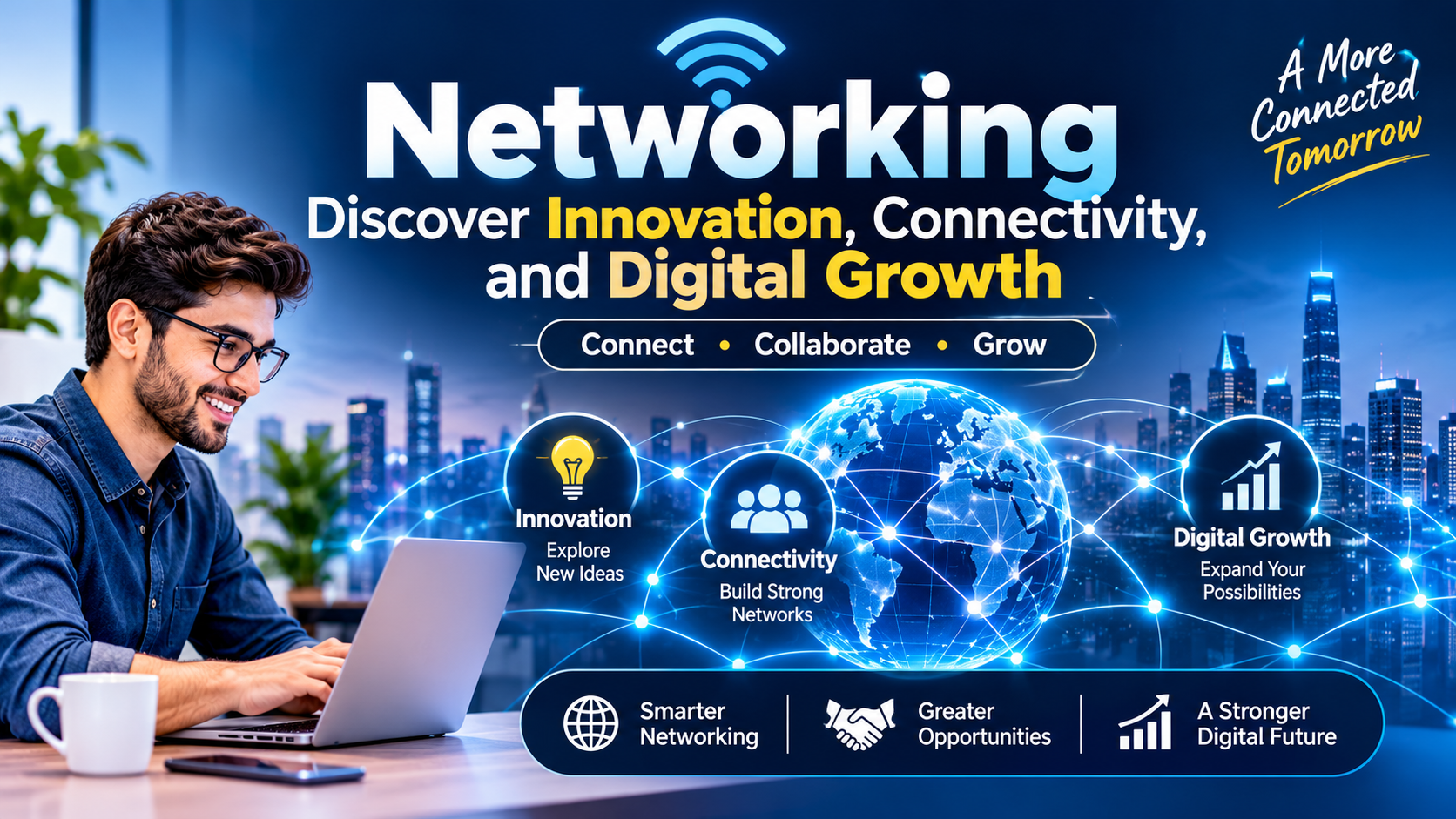
The digital landscape in 2026 is defined by unprecedented convergence, where high-speed connectivity, autonomous intelligence, and resilient digital ecosystems merge into a single operational fabric. Organizations and tech enthusiasts alike are witnessing a fundamental departure from static infrastructure toward programmable, self-healing environments that anticipate user needs before bottlenecks occur. Whether you are managing enterprise cloud architectures or exploring cutting-edge consumer gadgets, staying ahead requires understanding how modern networks power every layer of daily life. From ultra-low-latency wireless protocols to decentralized edge computing, the breakthroughs emerging this year are setting a permanent new baseline for speed, reliability, and digital efficiency.
Navigating this rapid evolution means recognizing how diverse sectors borrow inspiration from seamless connectivity and user-centric hardware design. Just as forward-thinking consumers look for streamlined, dependable experiences in lifestyle tech—such as the sleek engineering found in a Kado Bar—enterprises demand the exact same frictionless reliability from their core network infrastructure. Simplicity, portability, and consistent performance have become universal benchmarks across every modern industry. As boundaries dissolve between physical hardware and cloud-native intelligence, the most successful innovations are those that eliminate complexity while delivering uninterrupted results.
The Evolution of AI-Native Networking in 2026
Artificial intelligence has transitioned from an experimental add-on into the foundational operating layer of modern connectivity. Instead of relying on human administrators to manually configure routers, diagnose latency spikes, or patch vulnerabilities, AI-native networks continuously monitor telemetry and optimize traffic flows in real time. This shift allows distributed systems to scale dynamically during massive computational workloads while maintaining strict energy efficiency across data centers.
-
Predictive Congestion Management: Machine learning models analyze historical and live packet behavior to reroute traffic milliseconds before bottlenecks degrade application performance.
-
Self-Healing Infrastructure: Automated remediation engines isolate faulty nodes, roll back misconfigurations, and restore optimal service without human intervention.
-
Intent-Based Orchestration: Network operators define high-level business outcomes, and autonomous software agents translate those goals into granular routing and security policies across hybrid clouds.
-
AI-RAN Monetization: Telecommunications providers are transforming radio access networks into shared compute platforms capable of hosting edge AI workloads alongside standard mobile data.
Breakthrough Technology News Reshaping Global Connectivity
This year’s headline technology news centers on the commercialization of next-generation wireless standards and the rapid expansion of non-terrestrial networks. While Wi-Fi 7 has solidified its position as the enterprise standard for high-density environments, early hardware coalitions are already demonstrating foundational prototypes for Wi-Fi 8 and 6G. Simultaneously, low-Earth orbit satellite constellations are integrating directly with terrestrial cellular networks, eliminating dead zones across maritime routes, remote logistics corridors, and rural communities.
-
Commercial SGP.32 eSIM Adoption: IoT deployments now utilize device-initiated profile switching, allowing connected sensors and vehicles to automatically select the strongest local carrier without physical SIM swaps.
-
800Gb Ethernet Fabrics: Hyperscale data centers are aggressively deploying ultra-high-speed Ethernet switches to handle massive east-west data transfers between distributed GPU clusters.
-
Direct-to-Cell Satellite Integration: Mobile operators are rolling out standardized non-terrestrial services that provide seamless failover connectivity when ground-based towers are out of reach.
-
Open-Source Network Operating Systems: Platforms like SONiC continue gaining traction, freeing organizations from proprietary hardware lock-in while lowering total infrastructure costs.
Scalable Digital Solutions for Hybrid Enterprises
Modern businesses operate across fluid boundaries where remote employees, branch offices, and cloud applications interact continuously. Legacy perimeter defenses and rigid virtual private networks have proven too sluggish to support real-time collaboration tools and data-intensive workflows. Consequently, enterprises are consolidating networking and cybersecurity into unified, cloud-delivered frameworks that follow users regardless of their physical location. Even in fast-moving retail and consumer product spaces, agile supply chains depend on cloud-connected inventory trackers to monitor popular items like Kado Bar Rizz across global distribution hubs with instant accuracy.
-
Secure Access Service Edge (SASE): Combines software-defined wide-area networking with cloud-native security inspection to deliver fast, protected access to distributed applications.
-
Zero-Trust Network Access (ZTNA): Enforces continuous identity verification and least-privilege permissions for every device and session rather than trusting local network boundaries.
-
Unified Observability Platforms: Correlates metrics across endpoints, wireless access points, and multi-cloud environments into a single dashboard for rapid root-cause analysis.
-
Edge Compute Micro-Centers: Processes latency-sensitive data locally inside retail stores, factories, and hospitals before syncing summarized insights to central cloud repositories.
Modern Innovations Driving Hardware and Edge Efficiency
Beyond software-defined orchestration, hardware engineering in 2026 prioritizes sustainability, miniaturization, and raw computational throughput. Semiconductor breakthroughs have enabled specialized network interface cards and smart switches to offload encryption and packet inspection directly onto silicon, freeing up central processors for core business logic. Meanwhile, power-efficient architectures help organizations meet strict environmental targets without sacrificing peak bandwidth.
-
Silicon Photonics Interconnects: Replaces traditional copper wiring inside server racks with optical pathways, dramatically reducing heat generation and latency during high-volume data transfers.
-
High-Output Power over Ethernet (PoE++): Delivers both gigabit data and substantial electrical power over a single cable, simplifying deployments for smart lighting, cameras, and wireless access points.
-
Post-Quantum Cryptography Readiness: Next-generation security chips incorporate quantum-resistant encryption algorithms to safeguard sensitive corporate and government communications against future decryption threats.
-
Virtual SIM (NuSIM) Integration: Embeds cellular identity directly into device system-on-chip hardware, shrinking circuit board footprints and reducing manufacturing waste.
Essential Strategies for Future-Proofing Your Digital Infrastructure
Adapting to the rapid pace of technological innovation requires a disciplined, modular approach to infrastructure planning. Organizations that treat networking as a strategic business enabler rather than a utility cost consistently outperform competitors in agility and customer satisfaction. By prioritizing open standards, automated compliance, and continuous workforce upskilling, technology leaders can build resilient ecosystems ready for whatever breakthroughs arrive next.
-
Adopt Modular, Vendor-Agnostic Architectures: Avoid single-vendor dependencies by selecting hardware and software solutions built on open APIs and interoperable standards.
-
Automate Regulatory and Security Auditing: Deploy policy engines that continuously enforce regional data sovereignty laws and generate real-time compliance logs.
-
Prioritize Resilience Over Raw Speed: Design redundant network paths and multi-carrier failover mechanisms so mission-critical operations remain online during regional outages.
-
Invest in Cross-Functional Technical Skills: Equip IT teams with expertise in Python automation, cloud architecture, and AI-driven security operations to maximize modern toolsets.
Navigating the Future of Connected Ecosystems
The convergence of autonomous networking, satellite integration, and intelligent edge solutions marks a defining milestone in modern digital transformation. As 2026 progresses, the gap between visionary concepts and everyday commercial reality continues to narrow, empowering businesses and individuals to operate with unprecedented speed and confidence. Embracing these advancements means focusing on adaptable systems that balance high-tech sophistication with effortless usability. Whether optimizing global enterprise data flows or enjoying refined, modern lifestyle conveniences like Kado Bar NI40000 Zero Nic, the future belongs to innovations engineered for reliability, clarity, and seamless performance.

 English
 Arabic
 French
 Spanish
 Portuguese
 Deutsch
 Turkish
 Dutch
 Italiano
 Romaian
 Portuguese (Brazil)
 Greek